 PDF version of this entire document


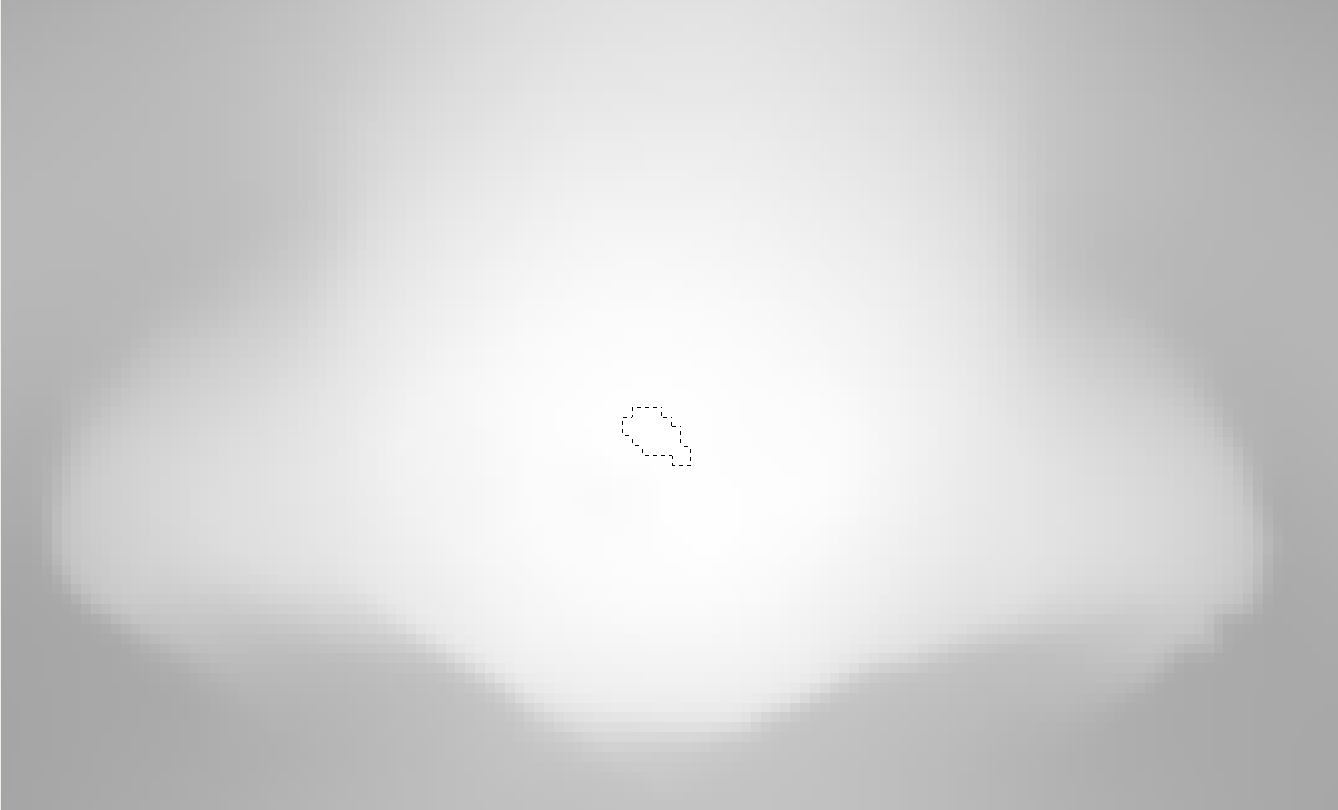
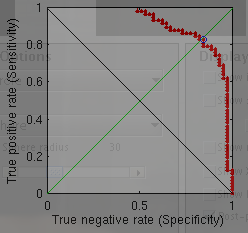
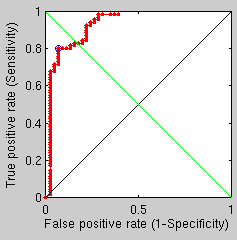
One of the remaining issues - one that leads to errors where alignment leaves much to be desired - was studied more closely with aims of overcoming problematic cases. The harder images were enrolled into a gallery, which then had applied to them the FMM-based algorithm with alignment redone. Basically, one of the challenges is that the nose tip, for instance, may be seen as existing at one of 10-50 different spots, as all share the same Z value (discrete and within range which is taking an integer value). To demonstrate this, showing a region of equivalence helps. There is basically a flat quantised surface where the choice of point can determine the accuracy of the FMM-based method. In the experiments, two alternative methods were studied. One looks for the first point which is closest to the camera and another averages the location of all such points and therefore takes the point roughly at the centre. In terms of performance, given the same difficult set, things did not improve much. The performance in both case is comparable, so other methods will be studied.
|
|
|