


Archive for the ‘Graphics’ Category
 Filed under:

Linux Video for the Day
It gets better/best towards the end. If you don’t believe me, skip the first 5 minutes.
It does not show some of the latest Beryl flash and features, e.g. wall plugin, window previews, burning/fragmenting windows…
‘Bling Factor’ versus Linux
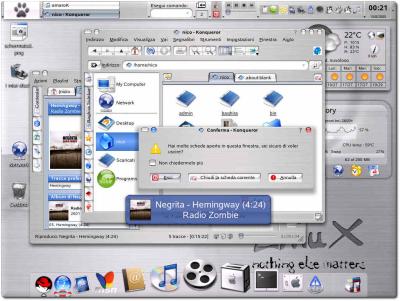
Linux with KDE in its Baghira glory
 ncreasingly, people choose to customise their GNU/Linux installation so that it mimics Mac OS X. Just have a look at this screenshot to get a taste of one recent example. But is that what it all comes down to? Are looks all that matters? Can it steal customers?
Businesses need brains for productivity, not eye candy for play. This applies not only to the server room and the office. Package management in, e.g. Ubuntu GNU/Linux, is simpler than that which is found in Mac OS X. Cost and endless hardware support is yet another matter. Linux supports merely every architecture and, provided you do not buy Windows-only/exclusive peripherals (or Winmodems), Linux will handle everything without a hardware refresh cycle.
The notion of “appealing” is not synonymous with merits. It’s more related to superficial instincts which will not ensure and excitement that won’t last for long. I personally disable all shadows, translucency and I have no interest in eye candy (e.g. Compiz/Beryl with XGL/AIGLX) that detracts and distracts. Show-ware for the show room; but it’s not long-lasting.
X11 Config File from the Future
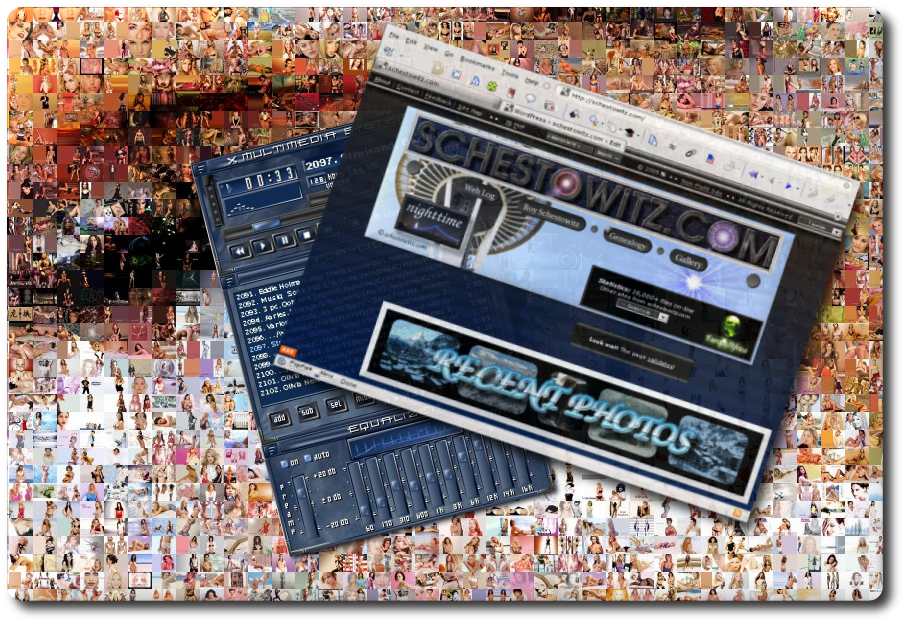
Wallpaper from Houghi (click image above
to enlarge; non-lossy PNG version)
 N ten years from now, Microsoft may have Singularity — another closed source implementation that resembles or fully mimics UNIX. But where would Linux be?
# /.../

# X11 config file
Section "InputDevice"

  Driver       "voice"

  Identifier   "VoiceServer[1]"

  Option       "Device" "/dev/input/vsrv0"

  Option       "Protocol" "Standard"

EndSection
Section "InputDevice"

  Driver       "glove"

  Identifier   "GloveRight[1]"

  Option       "Buttons" "50"

  Option       "Device" "/dev/input/glove1"

  Option       "Protocol" "Standard"

EndSection
Section "InputDevice"

  Driver       "glove"

  Identifier   "GloveLeft[1]"

  Option       "Buttons" "50"

  Option       "Device" "/dev/input/glove0"

  Option       "Protocol" "Standard"

EndSection
Section "Monitor"

  DisplaySize  32000 32000

  HorizSync    300-450

  Identifier   "Monitor[0]"

  ModelName    "MONITOR"

  Option       "DPMS"

  VendorName   "@@@"

  VertRefresh  430-750

EndSection
Section "Screen"

  DefaultDepth 128

  SubSection "Display"

    Depth      128

    Modes      "100000x90000"

  EndSubSection

  Device       "Device[0]"

  Identifier   "HeadMountedDisplay[0]"

  Monitor      "Monitor[0]"

EndSection
Section "ServerLayout"

  Identifier   "Layout[all]"

  InputDevice  "GloveLeft[0]" "CorePointerLeft"

  InputDevice  "GloveRight[1]" "CorePointerRight"

  InputDevice  "VoiceServer[1]" "Voice"

  Option       "Clone" "yes, please"

  Option       "Xinerama" "on"

  Screen       "HeadMountedDisplay"

EndSection
Section "Extensions"

  Option "Composite" "Enable"

  Option "Taste" "Enable"

  Option "Smell" "Enable"

EndSection
GNOME on Linux Outvistas Windows Vista
The dentiny of Longhorn?
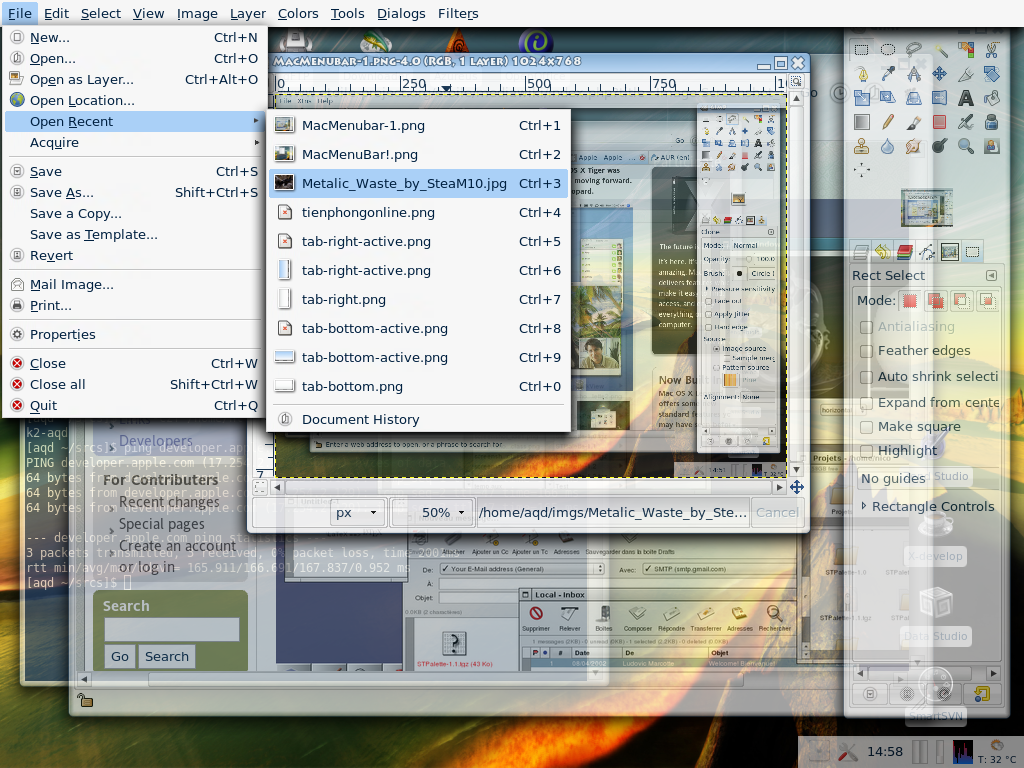
truly enjoy a good Linux screenshot. Here is a nice OS X-type menubar, as well as a showcase for Composite transparency in X server. The menus are a brand-new GTK modification.
Move over to another operating system (Windows Vista under a Linux hypervisor) and find that there still appear to be many problems with the latest beta. It’s a good thing that Microsoft does not name/label its operating systems by the year. With all these delays, this could become very embarrassing and confusing. And I also found the following article this morning.
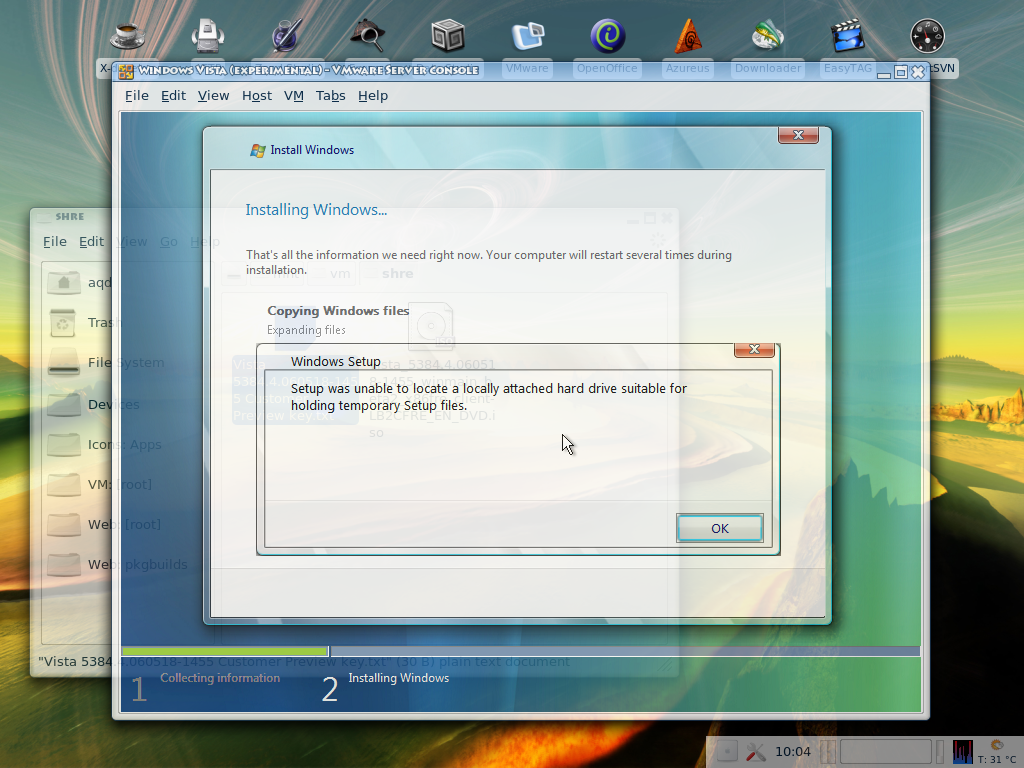
“I have been testing Microsoft operating systems since Windows 95, and this is the buggiest OS I’ve seen this late in development,” says Joe Wilcox, an analyst with Jupiter Research. “Look at the older operating systems, and by Beta 2 there is a stable foundation on which the [independent software vendors] can build. Right now, Vista is like a ship on stormy seas.”
XGL, Linux Beauty, and Usability
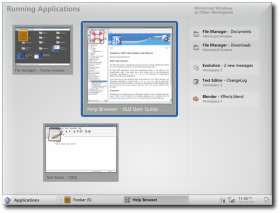
 ERE is the latest find (a video) which illustrates how beautiful and powerful Linux has become. It is a showcase of dual-head with Compiz/XGL, all under a GNOME desktop. Some continue to argue, backed by myths, that GNOME and KDE are ugly and/or hard to use. I refuted both claims, I hope. Some would say that Fedora does not look so nice ‘out of the box’ (truly a matter of personal opinion). Nevertheless, just like any Linux distribution, it’s extensible and customisable. Here are two visual examples that I could quickly find on
 KDE-look.org:


Related item: GNOME and XGL Showcases