PDF version of this entire document
On their own, simple surface-to-surface metrics seem to be weak as classifiers, but in cases of GMDS similarity, values falling around the margins (i.e. close to threshold of ambiguity) can be made more reliable by enhancing and increasing the amount of data. Current work refines methods of detecting and modifying GMDS/stress scores that are low despite inherent differences that might be non-isometric. This essentially combines geodesic metrics on the surface with Euclidean ones, ruling out what would otherwise be false positives.
|
The previous results demonstrated the great weakness of purely Euclidean
measures that use the residual, where every small bit of misalignment
almost dominates the difference. The challenge has since then been
to identify a Euclidean distances-based measure which is robust to
this type of variation and then complement the purely geodesic distances-based
measure (notably GMDS). In this first batch of experiments, a volumetric-type
Euclidean distance (gap between the surfaces put on top of each other)
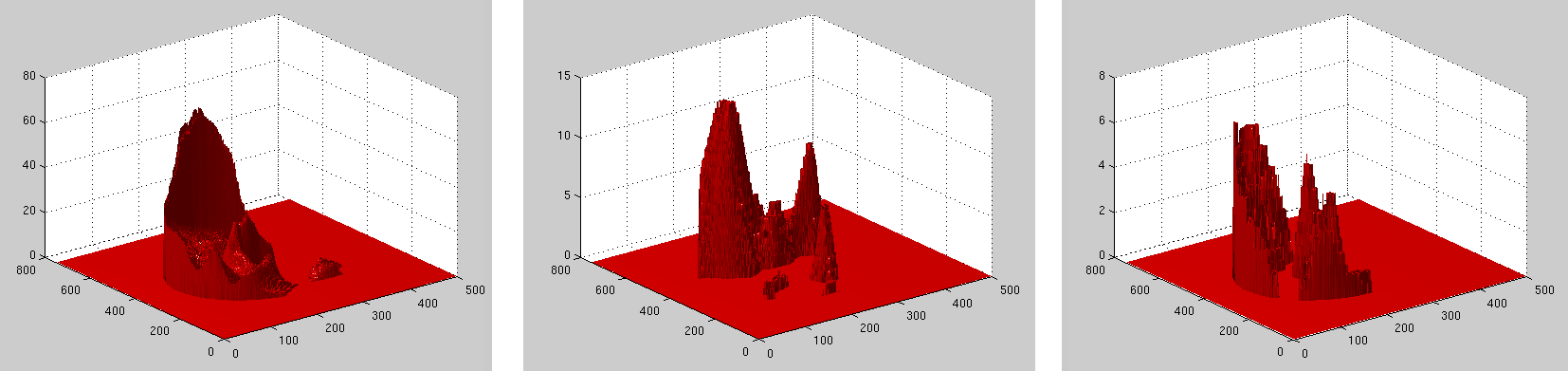
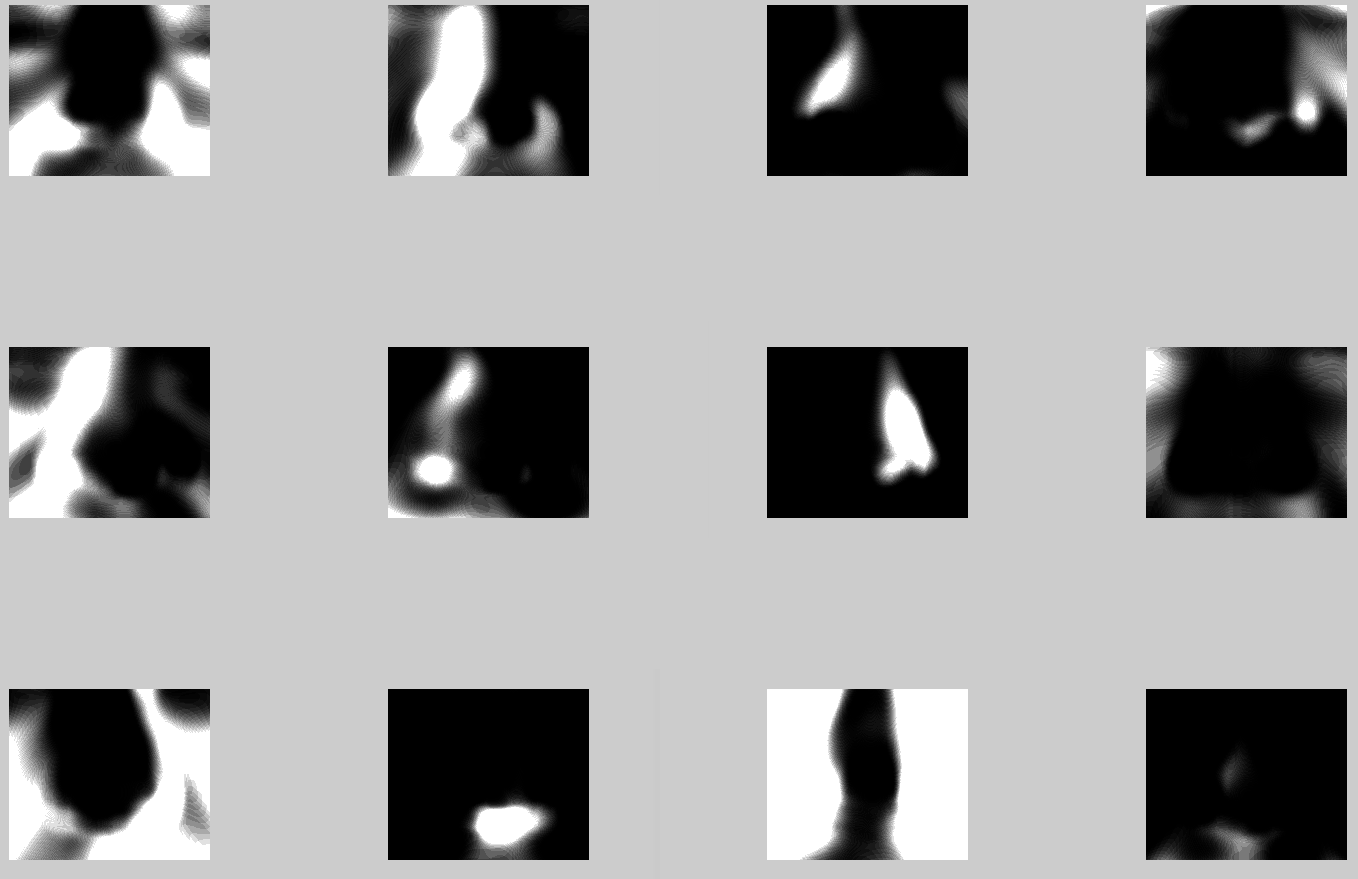
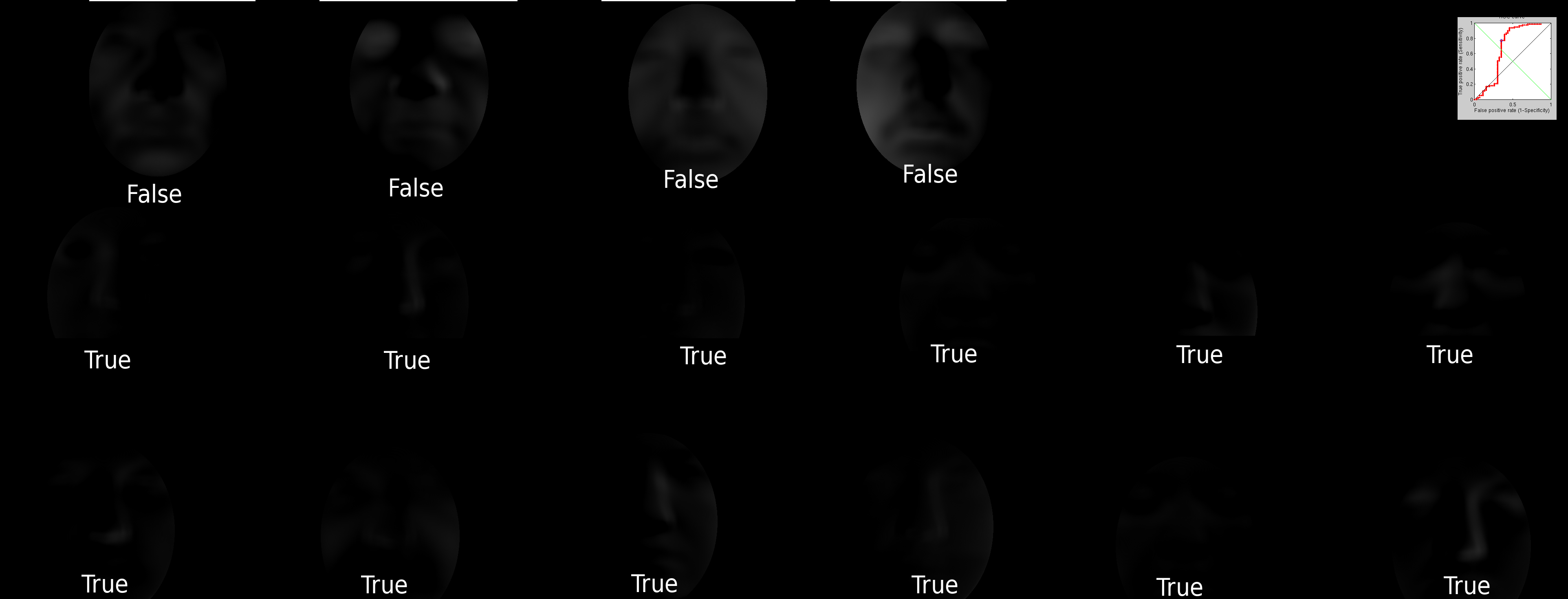
gets measured. In order to demonstrate the great variation, even within
pairs of the same individual imaged, a figure was produced (see Figure
![[*]](/IMG/latex/crossref.png) , showing areas of very high contrast,
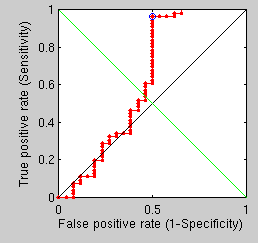
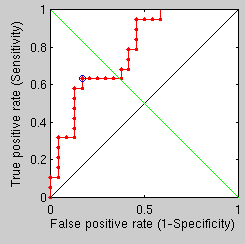
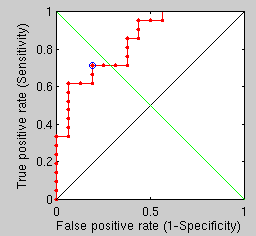
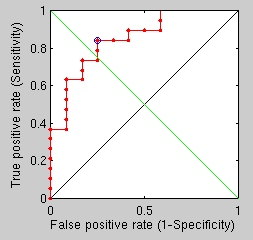
e.g. at the sides of faces. The ROC curve in Figure
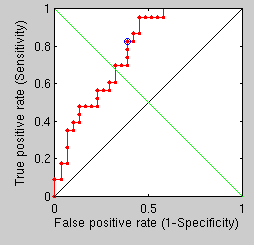
shows the problem. By aligning around the nose and then considering
just the nose area we can possibly get better results (although still
rather poor, as shown in Figure
and Figure ) that are based on Euclidean
properties. Another Euclidean-based measure worth exploring might
be distances between particular points of interest, e.g. eye corners
and nose tip. The goal is to eliminate cases where two images are
identified as belonging to the same person based on geodesic properties
alone, even though based on other criteria this is clearly not always
the reliable thing to do.
, showing areas of very high contrast,
e.g. at the sides of faces. The ROC curve in Figure
shows the problem. By aligning around the nose and then considering
just the nose area we can possibly get better results (although still
rather poor, as shown in Figure
and Figure ) that are based on Euclidean
properties. Another Euclidean-based measure worth exploring might
be distances between particular points of interest, e.g. eye corners
and nose tip. The goal is to eliminate cases where two images are
identified as belonging to the same person based on geodesic properties
alone, even though based on other criteria this is clearly not always
the reliable thing to do.
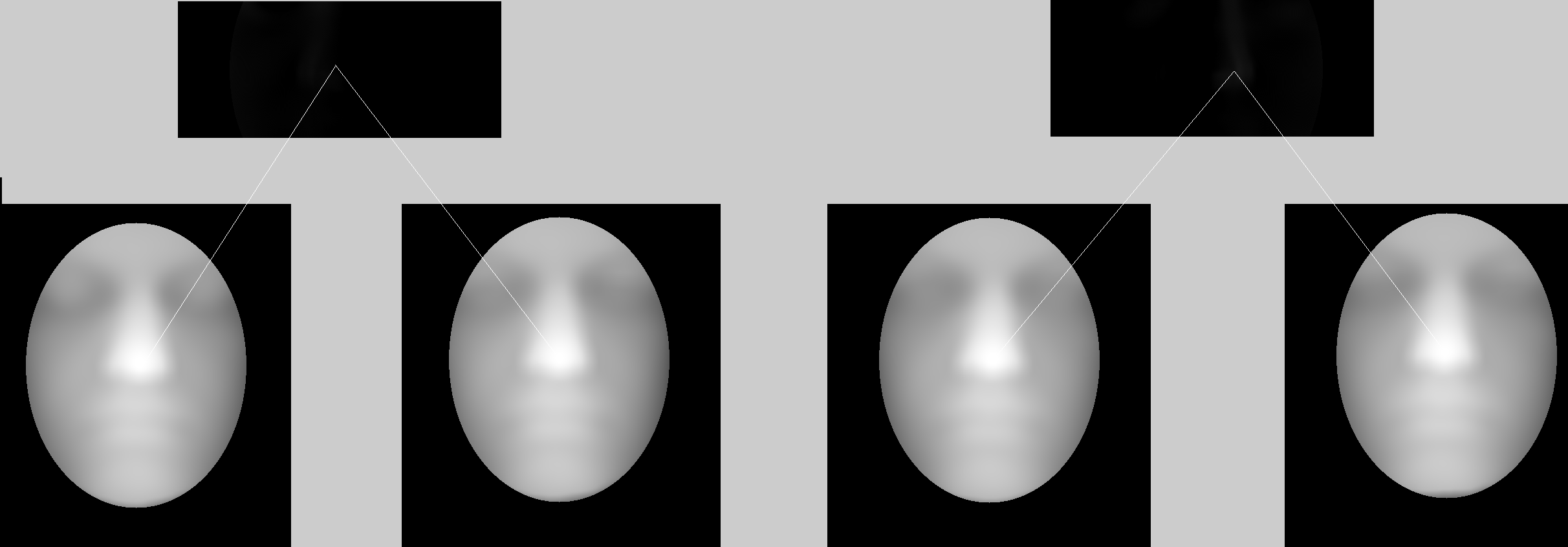
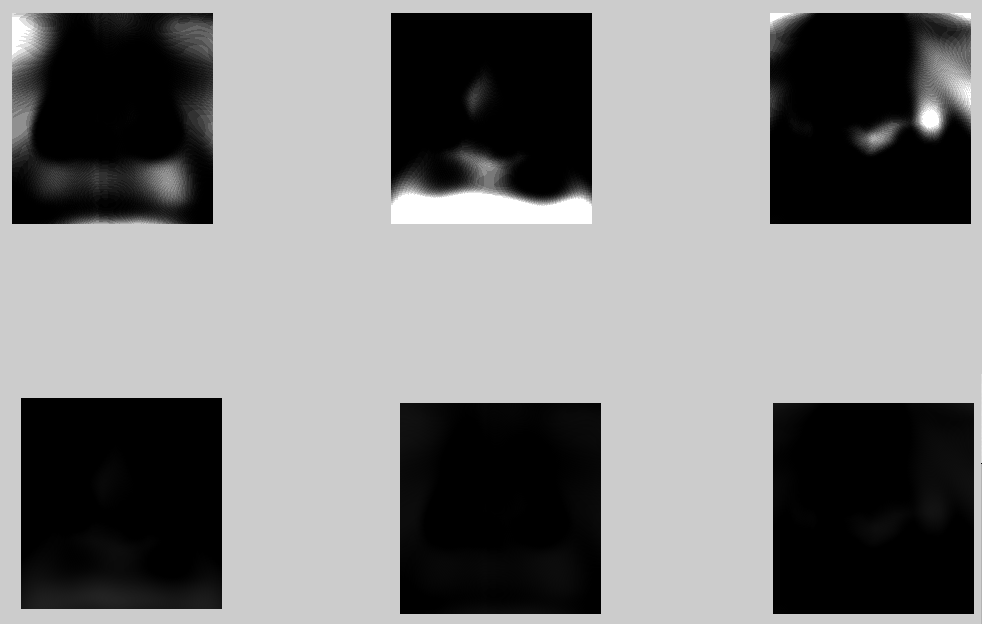
To make it more robust to movement around the nose tip, the surfaces
are shifted a controlled amount in X and Y in search of an optimal
match . A good couple of matches
are shown in.
For recognition based on surface sum-of-squared-differences, the best achieved recognition rate is currently around 80%, which gives it vastly inferior discriminative power compared to GMDS (as expected). In order to make a fusion of these two, e.g. using the weaker one as a mere regulariser, careful thought is needed because one can degrade from the usefulness of the other. One idea which was tested earlier is the invocation of a more complex classifier only in cases where classification is on the margin, i.e. GMDS is unable to comfortably discern real pairs from false ones. For the small test set used so far this can yield perfect recognition, but it requires further testing to be generalisable.
|
By applying a similarity test that falls back onto Euclidean measures when GMDS is unable to make a clear distinction (score between 3 and 4), the algorithm is now able to classify all image pairs (72 images in total) correctly. Increasing the number of those pairs might present new issues and, shall any such issues arise, we can design a workaround. To claim 100% recognition based on just 72 images does not make sense, so I will increase the number of images.
Roy Schestowitz 2012-01-08