PDF version of this entire document


Further experiments - in particular ones with increased resolution (as in number of sampled vertices) - did give some decent results, but these did not necessarily supersede or consistently outpace the performance previously seen (at about 3,500 vertices).
In order to make further improvements by harnessing a fundamental
rethink, the FMM code from 2006 (IEEE publication) was studied as
it already thoroughly addressed/studied/justified the problem of facial
recognition as applied by measuring geodesic distances between fiducial
points with locally-acquired data (see Figure ![[*]](/IMG/latex/crossref.png) .
Geodesic masks, such as those that we tried exploiting before (in
earlier GMDS experiments), had been used back then as well.
.
Geodesic masks, such as those that we tried exploiting before (in
earlier GMDS experiments), had been used back then as well.
Returning to the problem we are tackling and applying various forms
of masks (also with a small buffer to latch onto) has not yet produced
superior results. The main limitation does not appear to be resolution,
especially not once a certain threshold is approached. There is some
inherent variation there and a piecewise process is what we work on
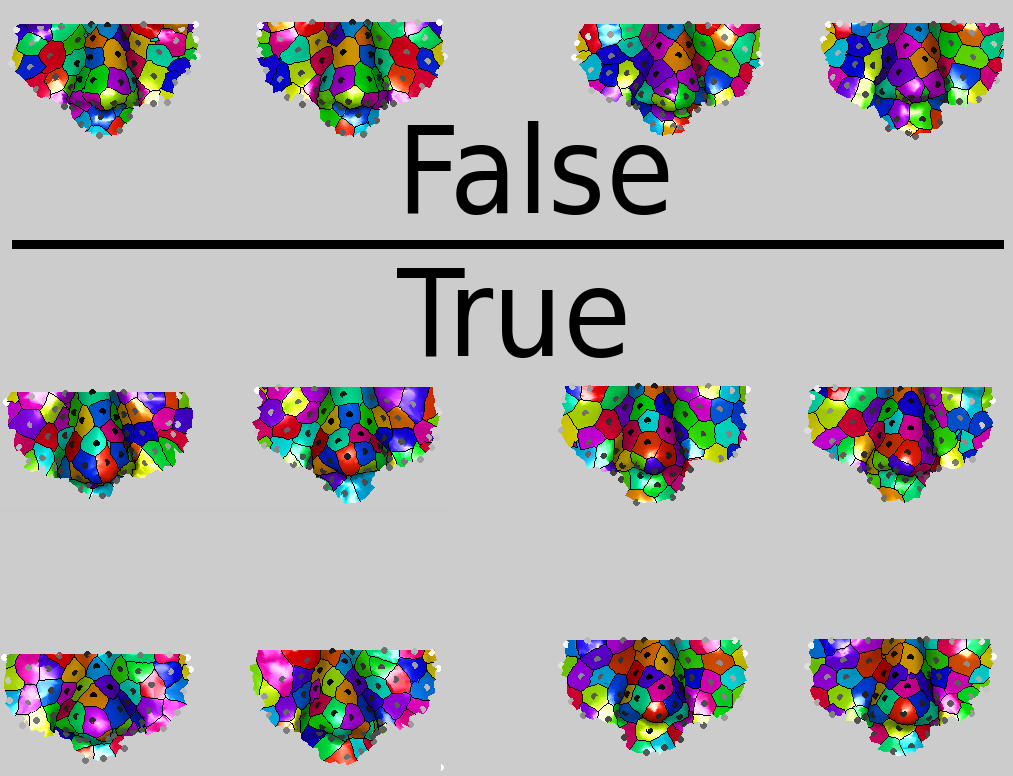
implementing at the moment (Figure .
This clearly works a lot better than the Euclidean approach as it
is robust to simple geometric changes. But even upon closer inspection
it seems clear that GMDS can be too 'permissive' in the sense that
it matches different noses very well, without a great enough penalty
in the stress sense. The trick is making GMDS tests more stubborn
and rigid.
|
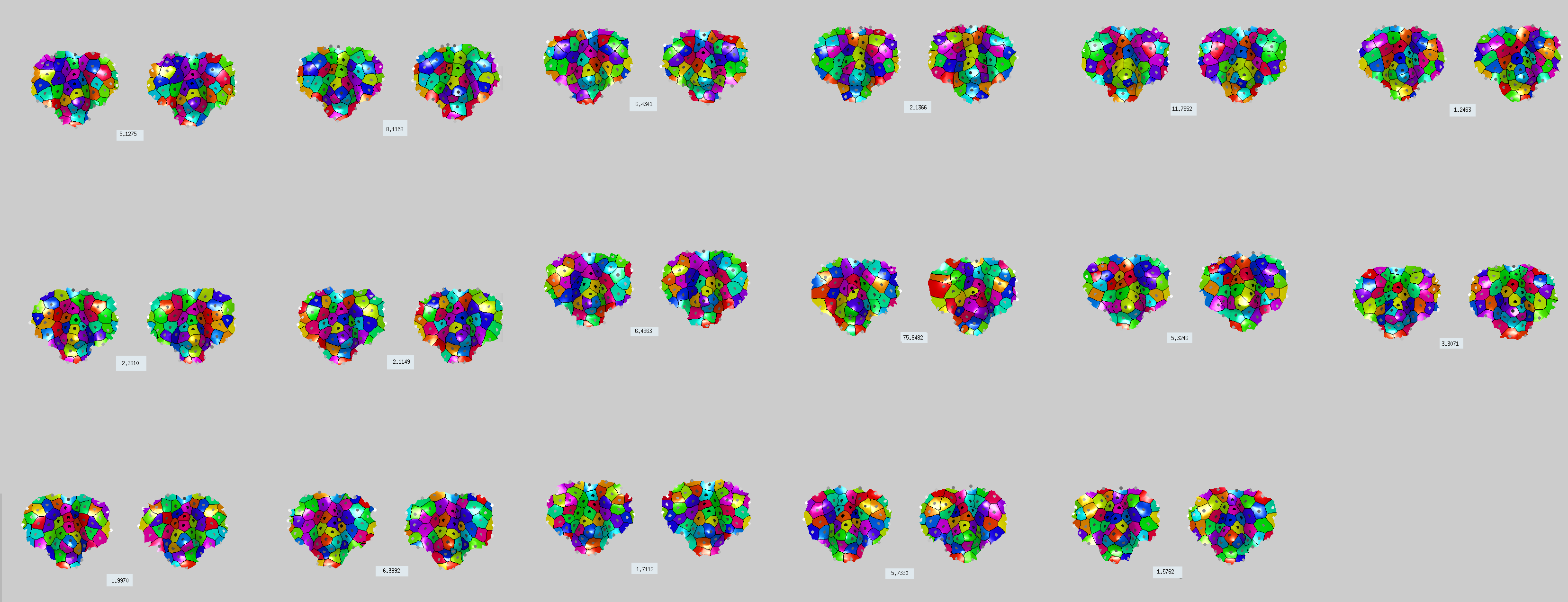
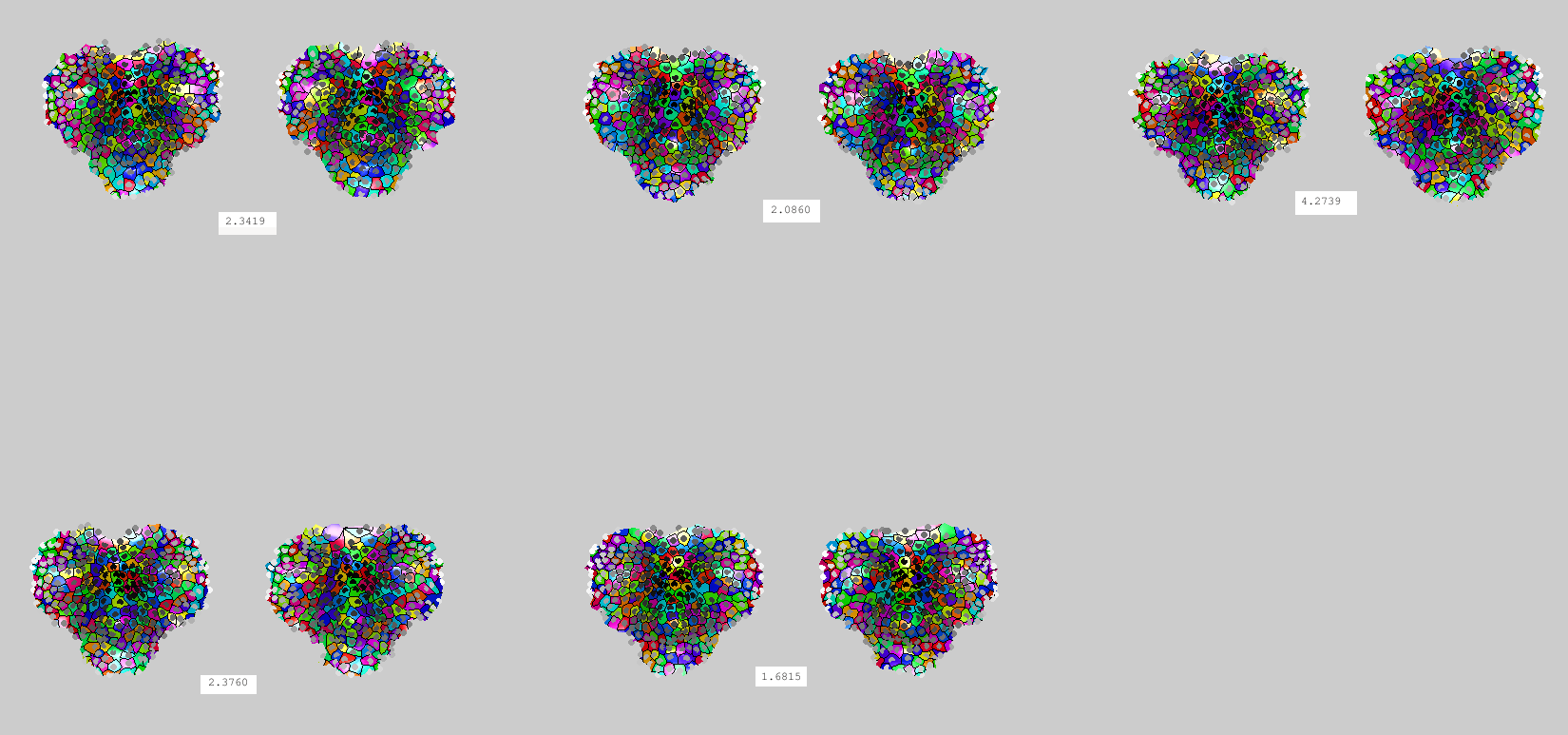
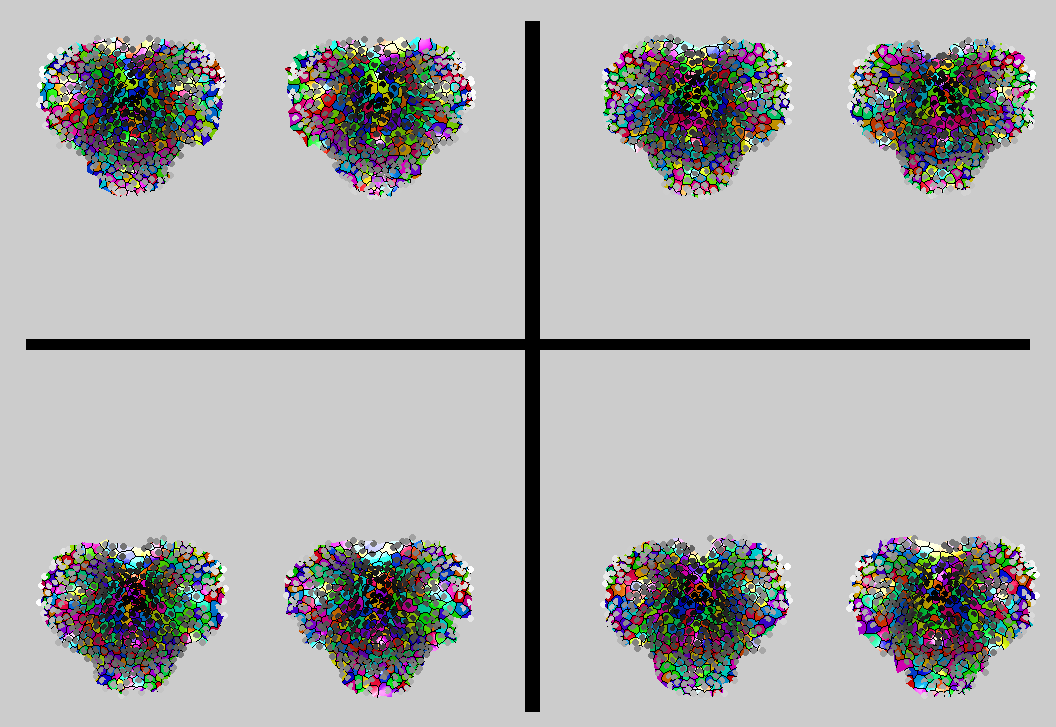
Purely geodesic comparison with no errors can be demonstrated in small experiments. We spent a long time running and tweaking the more valuable among the experiments to examine the effect of various parameters in the similarity measure, e.g. by raising the number of points from 50 to 250, and 350 (other parameters helped differently).
With boundaries that are Euclidean altogether removed, we are no longer limiting ourselves to any criteria either than geodesic and then, combining it with a Euclidean measure as before (for borderline cases), perfect classification can be attained for the smaller experiments conducted to test the surface, so to speak (with 60 images). For ROC curves, bigger experiments will be designed.