Pitfalls of Telephone Communication
 Filed under:

 VER the past few years I have come to loathe telephones. At first, it was just plain disdain for cellular communication. That kind of disdain dates back to the day when it was first introduced to in the public sector (as opposed to prestigious businesses). More recently, I decided to disconnect my phone or refuse to answer, having already avoided giving out my numbers. Snail mail likewise, but it’s an entirely different topic, which I will attempt to steer away from.
Why have I chosen to abstain from verbal communication that is job-related? For starters, electronic form saves space. I tend to scan every important paper anyway, but it is not searchable and it is time-consuming to acquire a copy. It is also difficult to file sensibly.
Moving on to a major pitfall of telephone-based comminication, negotiating tasks over the telephone is not efficient in terms of time. Moreover, nothing is logged in textual form, despite the rapid and rich communication, which is vocal. On top of that, vocal output from streams of consciousness is unorganised. It is the flawed way of talking, which results in serialisation of improperly-correlated ideas. In practice, this means that TODO lists that are agreed upon over the phone will be unpolished and badly written.
One more important issue is uncertainty and inaccuracies. I am inclined to prefer E-mail as it can be re-polished before the point of despatch. It can also looked at as a reference later. It can be duplicated, even forwarded to other people without any effort. Think about an E-mail containing “I spoke to Fred Bloggs yesterday and he said that…” versus just a forwarding of some mail within seconds.
Finally, to balance this discussion and give an opposite viewpoint, research suggests that textual communication can be damaging to relationships between peers. It conceals sensible tone and manner and adds tremendously to ambiguity.
According to recent research published in the Journal of Personality and Social Psychology, I’ve only a 50-50 chance of ascertaining the tone of any e-mail message. The study also shows that people think they’ve correctly interpreted the tone of e-mails they receive 90 percent of the time.


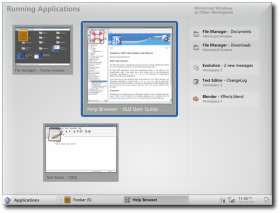
 widespread fallacy is that Linux remained command-line-based and customised to be used by geeks only. Those who have actually tried Linux throughout this century consider this presumption to be utter rubbish. Certain Linux distributions are as easy to use as Mac OS, let alone Windows, which requires security-related ‘skills’ and offers poor utilities at its base.
 ERELY everyone has come across corrective discrimination wherein gender/race quotas are specified, and in turn promote diversity. We should be taking similar principles to diversify computing. This would be an intersting experiment, from which all would benefit. The move has an increasingly-justified place in the avoidance of


 UMEROUS notes have accumulated on my Palm, so I decided to publish them in a logical (not necessarily chronological) order. The notes are all associated with questionable practices and controversial moves, which have been embraced by the Internet’s largest forces, putting Yahoo aside for the most past.