Disabilities and All That (It’s Getting Worse)
 Filed under:
 What evolution?
 isabilities come in many forms (or shapes) and as far as I’m aware I have nothing that counts as a disability or even allergy (like many other people, there are limits to how much lactose I can tolerate and this is apparently hereditary, it’s rather benign).
To Rianne and I it seems like more people born in recent years (if not decades) there are some mental and/or physical impairment. We don’t attribute that to pollution (air, water, food/diet); some blame late pregnancies (a century ago women chose to bear children at a much younger age). Apparently this is a common sentiment and people I speak to can’t help but notice the same. There are also studies about it.
If you look for a high-profile study on growth in that regard (children with impairment), then you will find many despite the political incorrectness. About the general trend: “In this study, we investigated the evolving epidemiology of six developmental disabilities (epilepsy, hearing loss, intellectual disability, vision loss, autism spectrum disorder [ASD], and attention-deficit/hyperactivity disorder [ADHD]) among children and adolescents aged 0–19?years from 1990 to 2021, focusing on prevalence and burden. The average annual percentage change (AAPC) was calculated, and trends were disaggregated by age, sex, and the socio-demographic Index (SDI).”
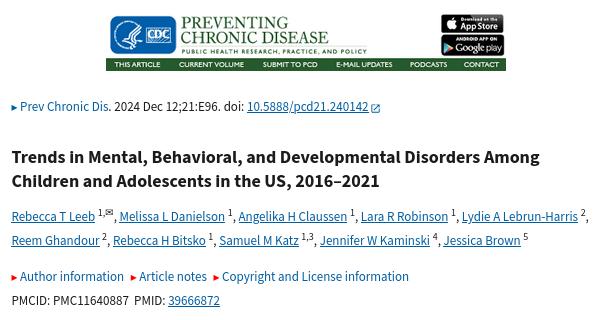
A more recent study looked at “Childhood mental, behavioral, and developmental disorders (MBDD)” and found: “From 2016 through 2021, MBDD prevalence among children aged 3 to 17 years increased from 25.3% to 27.7%; increases were specific to anxiety, depression, learning disability, developmental delay, and speech or language disorder. Unmet health care needs increased annually by an average of approximately 5% among children with MBDDs. Each year from 2016 to 2021, approximately 60% of children with MBDDs received mental or developmental services in the past 12 months. Each year, a higher percentage of parents of children with MBDDs compared with children without MBDDs reported poor mental health (14.7% MBDD, 5.7% no MBDD) and economic stress (21.6% MBDD, 11.5% no MBDD).”
The EPO treats children with special needs as a high priority as we assume many EPO workers have children that are “imperfect”.



 oday we had a lot of spare time, so we watched some movies, including
 rowing up with many dogs, I loved dogs. Don’t get more wrong, I’m a “dog(s) person”. Years ago we thought about getting a dog ourselves. We ended up delaying and we only bought things for a dog, except the dog. Delays delays…
 t various stages throughout my career (I am 29 now), myself and others pondered starting a blog about Open Access, Open Data or open research (opening one’s lab, including data, methods, etc.), but since I already spend more time than I can afford advocating GNU/Linux, I ended up spending a lot of my energy fighting against software patents. This is one aspect among several involving the sharing and transparency of the sciences. There is of course also a dimension associated with copyrights and despite its importance I no longer have time to pursue the issue; many people already do so anyway. To put the core argument succinctly, nowadays when we have the Internet and we have a presentation layer such as the World Wide Web (for exchange of inter-connected rich media), we no longer depend on many analogue technologies and the notion of scarcity must cope and catch up with what’s available. To expect people to publish their findings only in paper form with pagination is to pretend that we are locked into legacy, which we should not. Computer Vision is considerably limited by paper. There are much better and faster ways of getting messages across, especially in this age of information overload. Moreover, travelling for presentation to a crowd (conference) is less necessary now that many people’s Internet connections permit video streaming at a good resolution. Romanticising over the nostalgia which is 20th century-esque research is no longer beneficial as it leads to inheriting inherent limitations. I was reminded of this in an IRC conversation last night. It was agreed upon that the theory about publishers exploiting academics to write, review and even edit entire publications for the publishers to profit from at the expense of those academics is something that needs to be stopped. Many academics these days have their own homepages and sometimes their blogs too. They can publish a lot of material there and let the quality/accuracy be determined by citation, e.g. something like the PageRank system which merely inherits the ideas of algorithms before its time (take away Google’s/Stanford’s patent while at it). The issue of course is that people cannot reference papers by Internet addresses, at least not by conventional means. The idea that papers should be accessible through libraries though is outdated as libraries too are going somewhat extinct and the speed of working there is inferior. Other than self pride and honour from peers, what incentive is there really to being heavily involved in the publication industry which benefits publishers and offers writers not so much exposure anymore? Fewer people seem to be searching journals; they use external search engines or Wikipedia instead (it’s multi-lingual). The debate becomes ever more relevant now that Aaron Schwartz is being hounded for just doing his job.
 NE pet peeve of mine has a lot to do with stereotypes. To give an example, consider an old FUD phrase which says that open source programs are not user friendly. Well, open source is a development method (Free software has more to do with the licences and distribution as well). Buy why on earth does a development method affect user interfaces? It does not. Just because you close your code and take it away from users (who can otherwise bring valuable feedback in the form of patches) won’t necessarily (and magically) fix a broken GUI.
 uestion: You say that “you can bet your business on Free Software”; how do you back up that statement?