Introduction About Site Map

XML
RSS 2 Feed RSS 2 Feed
Navigation

Main Page | Blog Index

Archive for the ‘Op-Ed’ Category

Novell is SCO 2.0?

Technocrat, which is the Web site where Bruce Perens initially (and correctly) predicted Microsoft’s yet-to-come ‘FUD campaign’, is reporting, through Bruce himself, that the “strong feeling on this issue seems to be very widespread”. Over 2000 people have signed his Open Letter. Meanwhile, ComputerWorld has just published an article titled “Microsoft and Novell pull a SCO”. Below lies a snippet.

The shape of this agreement suggests that Microsoft and Novell have learned from the best, the corporate strategic masterminds at The SCO Group. The scheme there, which you may recall Microsoft championed early and loudly, was to declare that Linux incorporated source code protected by SCO Group copyrights. This declaration gave SCO the power to send out threatening letters to software vendors and customers. The letters said, in essence, that the lucky recipient could pay SCO a license fee now, or risk having its name added to the big list of defendants in its case and pay far more.

As mentioned previously, this type of comparison is intended to stir up strong feelings and reactions. This may be an overstatement that instills fear, if not a case of ‘trolling’ for traffic, so you are advised take it with a grain of salt.

The Trademark/Servicemark Debate

David Berlind of ZDNet argues that, while Novell denies responsibility for or admission of patent infringements, a door remains open on the trademarks front. This is a long write-up which concludes that Steve Ballmer could go for legal pickles rather than major baseless allegations over IP.

That could be in the case. Especially since Novell, in its watershed deal with Microsoft, has taken great care to reiterate that it still believes that it has not infringed on any Microsoft patents. Why then would Novell pay such a huge sum of money (with a promise of longer-term royalities) if it really believed this? Answer? Microsoft may have presented Novell with compelling evidence that Linux (or something that Novell was distributing) infringes on its copyright. Or maybe a trademark (or a servicemark).

Reducing Digital Complexity

Volume controller

The following story has caught my eye.

“For reasons such as this, Maeda is now a “repentant” technowhiz and a leading apostle of simplicity. In 2004 he founded the MIT Simplicity Consortium at the Media Lab, which works with major corporations to design technologies for simplicity-driven products.”

Alexa Ranks – Only Make Belief

Alexa ranks can be fun. But can they ever be trusted?

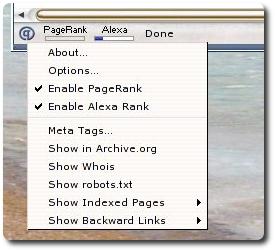
What does a high Alexa rating mean to a web master? It shouldn’t mean that much as it’s not accurate. Alexa is a website that tracks a website’s traffic history, and gives a ranking based upon the number of visitors. However the fact that it requires a tool bar to work flaws it in many ways.

[...]

Apparently the folks at Alexa have never heard of any other browser besides Internet Explorer and FireFox. This seems quite unprofessional coming from a company owned by Amazon.com.

My main site peaked at ~17,000th for Alexa (with Netscraft rank currently at 18,608th for schestowitz.com). In the latter case, however, the figures are grossly biased because I have the toolbar installed. Ranks very much depend on the audience the site attracts. System administrators , for example, fancy the Netscraft toolbar. Its primary service addresses a niche.

Alexa traffic ranks prove to be a real problem (as well as a perpetual pain) to Webmasters. This remains the only number which can conveniently be assigned to a Web site. It is a silly label that should be disregarded, but the average user does not know this. Luckily, not every average user will have such ranks displayed. Alexa as a comparator is a misleading assessor. Even top sites cannot be compared, unless one judges by orders of magnitude (and takes these with a grain of salt). In fact, PageRank and the likes of it weigh more factors other than traffic, so they ought to surpass Alexa in terms of validity.

As a timely rant, I was temporarily able to influence Alexa rank with a local installation of the A9 toolbar, but then Microsoft took over A9′s operations and forced them to shut down some competing services, the toolbar included. Yet another example of acquisitions or mergers that are practically death knells (and a penalty to Mac/Linux/BSD users in this case). That is just why I took it personally.

AlexRank
SearchStatus in action

Related item: Firefox Toolbars

The ‘New Netscape’? Anything Like the ‘New Digg’?

The Digg front page

DIGG is changing. It potentially transforms itself for the better, but there are residual side effects. There will no longer be a tiered set of users. Top Diggers, including myself as a former active Digger, largely resent the new move.

To those unaware of these recent sizzling developments I’m referring to, Digg’s algorithm is being modified to be less (or more) democratic, essentially by weighting user’s votes as though they are not necessarily equal. It could bring about improvements, but it also raises many questions, affects morale, and lowers aspirations among new and senior contributers alike.

More latterly, several Digg contributers have been trying to assassin the character of Netscape, suggesting that the idea of removing avatars in protest came from Netscape or some shills it had recruited. It didn’t (see quotes below).

There are some Digg contributers who seek to blame Netscape for all the in-house trouble. But the removal of avatars, whose progress I followed from early stages, appears to have begun from the top and gone downwards with folks like DigitalGopher, P9, and George W. I didn’t realise what it was all about the first time I spotted the pattern. I thought top users were being banned or stripped of their identity. There are intersting discussion about the impact of the change.

Here’s another thought I had: if top diggers lose power and are then perceived as ordinary, that will a considerable turn-off, which is sure to stop them from participating much, let alone ‘game the system’, as Kevin Ross called it (impulsive accusation perhaps).

So what should we now expect from top contributers? Just a submission here and there to keep up appearance and be part of the scene (presence), not ‘becoming the next Albert Pacino (top all-time contributer)’, who long ago decided to hang up the towel.

Lastly, here is are some bits from an interview with the top Digger, who quit abruptly.

The other users did not remove their avatars in support of me. It was in protest of Kevin’s message as well as the verbal filth that many Digg users were spewing at Digg’s top submitters.

The #33 Digg user, Curtiss Thompson, had many of the same things to say, in an email to Wired’s Michael Calore:

The blog post by Kevin Rose in response to the Digg community’s outcry about top diggers gaming the system has caused many top diggers to be singled out from the community and buried not on the merit of their content, but on their unfounded accusations that the top Diggers were manipulating or “gaming” Digg’s democratic system. Not only was the blog post misrepresented, but it was misinterpreted, by the Internet community to support one Digg user’s claim that The Digg System Is Being Gamed By Top Users.

Side notes:

  • A Digg friend was kind enough to have me mentioned and even credited. Thanks, buddy!
  • I had an interview about my recent move to Netscape/AOL. I will post a pointer to the text (or a copy thereof) in my blog as soon as it goes live.

Update: some comprehensive, link-rich coverage has just been posted on the topic.

Reality Check: Getting a ‘Real’ Job

Computer lab
Another day, another dollar.
But is your workplace a dreadful place to be?

I quite enjoy my life in an arena which involves research, publications, public appearances, sharing of code that I produce, and technical writings that I rapidly accumulate. All of that, in fact, is something that reaches culmination through the Internet and Web sites, which are — to me at least — a gateway to a wider world. For long I have pondered (and even lost sleep over) a scenario where I find myself in a cubicle, coding for somebody else day, by day, by day…

Dreadful forecasts aside, there are other ways to make a living. Fortunately, a happy life is one where making ends meet should suffice, vacations are unnecessary, and help for those that surround us gets elevated. I seem to be getting worried prematurely. Here is one such article that speaks of self-employment and affordable independence.

It’s funny that when people reach a certain age, such as after graduating college, they assume it’s time to go out and get a job. But like many things the masses do, just because everyone does it doesn’t mean it’s a good idea. In fact, if you’re reasonably intelligent, getting a job is one of the worst things you can do to support yourself. There are far better ways to make a living than selling yourself into indentured servitude.

This reminded me of an older blog item (a speech actually) which I once read and boomarked. It moved me enormously.

I was a diligent Oriental in high school and college. I took college-level classes and earned college-level credits. I rushed through college in 3 1/2 years. I never traveled or took time off because I thought it wouldn’t prepare me for work and it would delay my graduation.

Frankly, I blew it.

You are going to work the rest of your lives, so don’t be in a rush to start. Stretch out your college education. Now is the time to suck life into your lungs-before you have a mortgage, kids, and car payments.

Another nice item from the first author (one which I commented on before) speaks of 10 ways to relaxify your workspace. Recommended reading!

Battle of Two Linux Titans

SuSE Linux beta, KDE

The older KDE-based version of SuSE Linux

ANOTHER short Linux comparison has taken my attention. It is by no means a professional or comprehensive review, but is does provide a ‘taste’ of two ends — Ubuntu and Novell’s SLED — both of which are GNOME-based GNU/Linux distributions. Below is just a fragment.

In conclusion, SLED 10 brings everything that Ubuntu does and feels slightly faster. But Ubuntu has bigger and nicer community and .deb is simply better than .rpm. Out of 10, I give both of them 10. Linux desktop has never been so good.

I quite like the author’s illustration of the increasingly-popularised Mac OS X look in Ubuntu. There have always been significant visual improvement in SLED, particularly since SUSE 10.1 was released with grey shades in GNOME.

Retrieval statistics: 21 queries taking a total of 0.101 seconds • Please report low bandwidth using the feedback form
Original styles created by Ian Main (all acknowledgements) • PHP scripts and styles later modified by Roy Schestowitz • Help yourself to a GPL'd copy
|— Proudly powered by W o r d P r e s s — based on a heavily-hacked version 1.2.1 (Mingus) installation —|