Introduction About Site Map

XML
RSS 2 Feed RSS 2 Feed
Navigation

Main Page | Blog Index

Archive for the ‘Environment’ Category

Slow Down, Squirrel Ahead

They coexist with birds

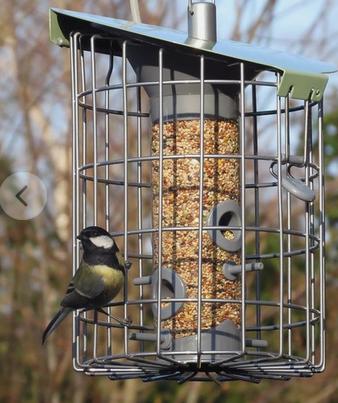
Squirrel Proof Bird Seed Feeder – Heavy Duty Coated Steel, Easy Clean

A bit of sad news.

Last night he was gone! Squirrel on the road. Dead. Hours earlier (less than a day ago) we saw the horrifying sight – “John” was dead flat (or flat dead) on the road. His tongue was sticking out.

Why didn’t the drivers learn to slow down? Why did the speed bumps not encourage more careful driving?

Had we put up signs saying “Squirrels ahead” (not “Children ahead”), it would not discourage impatient, reckless drivers.

As a bit of background, lately we’ve had a lot more animals near us. They are reproducing fast. But they also face dangers.

Squirrel visit a lot this year, both at the front and the back of the house. Squirrels are harmless to the birds (unlike cats).

Squirrels are gentle animals.

Red-rimmed Melania in Wintertime

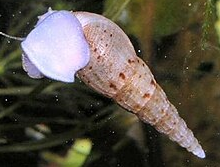
Red-rimmed melania considered robust

infested; snail; Red-rimmed melania

A cold winter night is coming soon. Temperatures will go below zero tonight or tomorrow night. Indoors it’ll be cold too (unless heated up overnight; energy is not cheap anymore). The water in the unheated tank is at about 17 degrees (°C) at the moment (early in daytime, it can warm up later). The topical one is somewhere around 25-26°C.

Our red-rimmed melania can tolerate a wide range of temperatures. Wikipedia says, “[a]lthough normally a freshwater snail, this species is very tolerant of brackish water, and has been recorded in waters with a salinity of 32.5 ppt (1,024 specific gravity salinity).”

“It is, though, a warm-climate species. It appears to prefer a temperature range of 18 to 25 °C (64 to 77 °F)[6] or 18 to 32 °C (64 to 90 °F).[7] Research has been conducted to determine the snail’s lethal high water temperature, which is about 50 °C (122 °F).[7] This information is helpful in the disinfection of fishing gear and research equipment, which otherwise may inadvertently spread the snails to uninfested waters.[7][28]”

“This species is resistant to low oxygen levels.[29] Its pollution tolerance value is 3 (on scale 0–10; 0 is the best water quality, 10 is the worst water quality).[30]”

The word “uninfested” is used; Rianne started with only one in her tank, now there must be 30-50 of them. They spread so fast.

A Warm November

Sometimes 15+ in daytime

Warm November daytime

Some year before COVID-19 (maybe 2018) I remember the winter being so warm that I kept wearing t-shirts – sometimes even outdoors – until and throughout December.

This year it’s a bit of a deja vu, but we’re still in early November. It’s nice and warm today and as recently as days ago I could still sunbathe outside.

Mr. Green Sick Again

aka “green-eyed bird”

Green Eyes of Woman by Karen Arnold

It has gotten cold again (overnight) and Mr. Green came here with a sneeze. He was always a bit sick, but the eyes have mostly recovered (he was in an awful condition when he first came here; the kitchen became like a hospital or E.R. to him).

Now it seems like he’s sick with some cold, so I spent minutes bottle-feeding him while protecting him (with my palms) from other birds.

I think he can survive winter, but we need to monitor him closely. Based on his beak being a bit open sometimes, maybe he has some disability or something that causes him problems all the time. But that doesn’t mean he can’t or should not survive.

A Rather Mild Halloween

This isn’t right

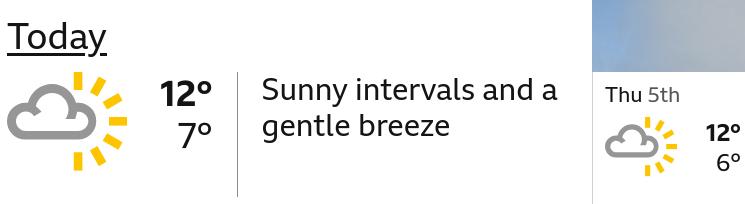
The high range of temperatures for this coming week is projected to be around 13 degrees (almost every day). That’s quite mild. Heck, I managed to sunbathe for almost an hour yesterday. And this is Halloween!
Global warming is something one can feel based on memory or “gut feeling”.

Halloween should be cold, very cold. Not anymore.

Malaysian Trumpet Snails (MTS) in Winter

“The males are rare, making up for 10 to 33% of population.”

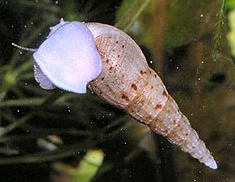
Malaysian Trumpet Snails (MTS)

IT is notoriously difficult to curb the expansion of Malaysian Trumpet Snail (MTS) populations and they can adapt to a wide range of conditions with water as hot as about 50 °C (122 °F).

Rianne’s fishtank received only one such MTS and now there are dozens, only months later.

Seeing how fast life can spread is fulfilling, but it also fills up tanks. Short of culling, there can be diseases or parasites impacting large populations (overcrowding).

Fish Transition Period

Planting season is done, now we just water the plants and look after our animals

Then a strange creature appeared with a head of man and a body of a fish

Today it was time to clean the filter in my tank and belatedly refresh things. I found some dead shells, I think it might be related to parasites/germs rather than temperature (the temperature of the water isn’t low, it’s about 20 degrees) and the fish seem happy.

3 days ago it was 5 months since I set up a tank near me, splitting off or separating the shells from Rianne’s tank, which is for the tropical species.

Rianne’s tank has since then (again) begun to become a ‘breeding ground’ for more shells.

MOAR SHELLS, OMG!

That’s fine, as I can pass them all over to mine when winter is over.

Last week I brought the tank closer to my keyboard and installed better lighting/bulb for it (the ultraviolet one had died after years of persistent use).

I’m taking it “easy” this month as we transition into “proper” autumn and weather has worsened. I still managed to sunbathe almost 10 times so far this month. Sunlight in moderation is healthy.

Colder, darker days ahead until 2 months from now (December 20/21).

Retrieval statistics: 21 queries taking a total of 0.092 seconds • Please report low bandwidth using the feedback form
Original styles created by Ian Main (all acknowledgements) • PHP scripts and styles later modified by Roy Schestowitz • Help yourself to a GPL'd copy
|— Proudly powered by W o r d P r e s s — based on a heavily-hacked version 1.2.1 (Mingus) installation —|