The Culture of Renting
 Filed under:
 HE more we move forward, the more we stay the same and sometimes step back. The Internet was created to facilitate the use of one’s space and one’s own material, but in this age of mashups and ‘free’ hosting by so many companies, a lot of people simply subscribe to be a guest at someone else’s platform, thus conceding of the main features of the World Wide Web.
It is saddening to see the number of people who willingly (or due to peer pressure) choose to upload ‘public’ photos that will only be visible to those who give away their personal details to creepy Mark Zuckerberg. It is scary to see how many people still manage their E-mail (professional and personal) on servers in other countries — servers that can be snooped without even informing those affected. Those two problems are not the same, but they illustrate how much different today’s Web is. Once we go there, there’s no going back.
This whole thing boils down to a culture of renting. People purchase machines that are only rented in the sense that they are not general-purpose machines; they are controlled and thus owned by just one company. People also subscribe to other sites where they rent space and sometimes a mail box. People rent a ticket to some database which determines who their “friends” are. When life is “rented” from big corporations rather than bought to be owned, self-determination is assured a destruction. The whole “cloud” media hype makes this worse.


 UR current mechanism for measuring time is a combination of Babylonian and other cycling conventions, making up one of the most messed up timing systems to ever be conceived, with months of nearly arbitrary length (and unknown astronomical meaning) and a base unit ranging from 12 to 60. If our distance and weighting standards were the same, even the imperial system would be an improvement over them. The beautiful thing about decimal systems with base 10 is that once we choose some immutable base unit like the Earth’s diameter we can expand in a way which is easily divisible and makes physics a lot simpler. Currently, in the science of physics, it is common to just measure everything in seconds and then subdivide those by shifting decimal points (millisecond for example). What happened to macro seconds and giga seconds? They do not seem to exist because for large time units we have a sordid mess that extends to our mind (perceptual gap).

 CIENTISTS are trained to honestly report on findings. Lawyers, on the other hand, are trained to defend a side — any side for that matter — regardless of what’s just and what’s unjust. They are paid to have subjective arguments.
 EGACY of one’s life may typically matter to a person when death is near. That’s partly because last/recent memories persist better than old ones. Legacy is also what remains in visibility after a person departs from this world, having first emerged in it through conception. But legacy need not be associated with depressing things such as being deceased. Legacy throughout one’s life can be seen as the work that’s left to have impact when one moves from one area to another, from one field of work to another.
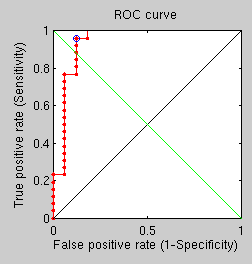
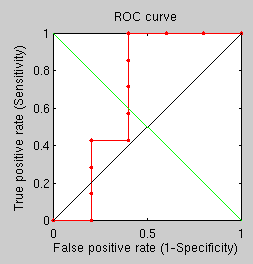
 S natural succession to the previous experiments, I compromise speed and increase the number of points in GMDS from 10 to 50, hoping to see performance improved noticeably. So far, based on results that are coming out, no classification mistakes are being made, but more pairs need to be tested overnight before meaningful conclusions can be drawn.