Introduction About Site Map

XML
RSS 2 Feed RSS 2 Feed
Navigation

Main Page | Blog Index

Archive for the ‘General’ Category

Autoresponder Trick

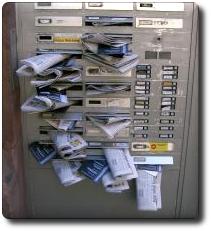
Letter box

Auto-responders, also referred to as “vacation messages”, are a valuable feature of E-mail accounts. These are not only helpful when an account gets checked irregularly, but also when it becomes deprecated.

Auto-responders can be invoked by the E-mail client (e.g. recent versions of Outlook), but they require the computer to remain switched on. This, in fact, is the big con: the method unnecessarily consumes electricity in cases of an actual vacation. The computer needs to stay on for days or weeks at a time. Messages can be checked upon return, assuming the computer has not crash beforehand.

Alternatively, autoresponders can be handled at server level. It is worth noting that this will not always be a supported feature, especially when you do not have ownership of your E-mail address’ domain. The exception are Web-based mailing systems that support the feature fully, e.g. Yahoo Mail and CommuniGate Pro.

There is an ad-hoc alternative to autoresponders, which I adopted since I was able to set up a mail forwarder, but not an autoresponder.

  • Set up a forwarder to a meaningful but non-existent E-mail address, e.g. I_am_away_at_the_moment@no.domain or This_account_has_been_intentionally_terminated@no.domain.
  • Since the account you forward mail to resides on an address that does not exist, the message will bounce, though often not immediately.
  • Subsequently, a delivery error will reach the original sender. Budging by the odd E-mail address that triggered an error, the message sender will receive information regarding the situation rather than assume that the recipient stayed silent.

To sum things up, forwarders to made-up addresses can guarantee that in the absence of auto-responders, all correspondents will receive meaningful feedback.

Fake Laughter

Roy as a baby smilingCertain ever-lasting trends in society worry me. While there is less smiling and degradation in terms of affectionate social patterns, anywhere you turn you see excessive compulsive laughter (often in public places over the telephone) as well as fake, polite laughs. [that's my genuine laugh on the right, circa 1984] Fake laughter has become a fundamental asset to girls who flirt. A man might say the darnest thing and some girls would still voluntarily giggle. Guys likewise, but as a straight man, I have no evidence. Either way, this fabricated temperament is becoming a norm.

It is also possible to see this wave of fake laughter in today’s sit-coms with a live studio audience. I don’t know about the old TV series , but the new batch of Hollywood Squares (with Whoopie), for example, bothered me quite a bit. Involved are 9 celebrities who memorise one-liners off paper, 2 contestants saying “true” or “false”, and an audience that hysterically laughs at jokes written by comedians prior to the show. In America, you would sometimes spot a guy with a large banner facing the audience and encouraging them to laugh or applaud. I used to watch such shows when there was nothing else on TV. Maturity has taught me the low educational value contained within them. We have to realise that if a joke is not forcibly laughed at, it does not imply that we have failed to understand it. One who does not laugh is not necessarily a boor.

To sum up, my bottom line would be that staged behaviour on TV hit our lives too. Most of us are living behind masks, hiding our real feelings and manipulating natural emotion to achieve our goals or adhere to norms. I am hoping for greater openness in society one day. Fake laughter is relatively benign, if not beneficial, commonplace behaviour. The new wave of utter disrespect, distance and cold, emotionless attitude is a far greater danger as manners and flattery are still the glue of society.

Elevator Express Mode

Elevator panel

A friend sent me this mischievous E-mail which explains how to avoid stopping at any intermediate floors when using an elevator.

Many elevators include a hidden feature that puts them into “Express” mode, which will take the car to the floor of your choice without stopping at any other floors. When you enter the elevator, press the “door close” button and your floor button at the exact same time. For most elevators, this will automatically activate the “Express” mode. Some elevators require a key to activate the mode, and in some the option has been turned off by the elevator’s owners. But elevators the trick usually works on include:

  • Otis Elevators (Except those made in 1992)
  • Some Dover Elevators
  • Most Desert Elevators

Don’t tell too many people about this, as it will stop working for all of us.

I sure hope it does not trigger red lights somewhere as I have never tried it before. Spreading the word is something I could not resist doing. Just remember not to give me (or my friend) any credit for this; it is not something to take pride in. As a final clarification, I have never tried it, neither will I ever be tempted to. It is a nice trick to be aware of nonetheless.

Wikipedia Statistics

Wikipedia statistics

Maybe purely by mistake, or maybe intentionally so, Wikipedia Stats pages are available for public viewing.

Interesting figures to notice:

  • Internet Explorer’s share among Wikipedia users/visitors is 70% (it gets around 52% on schestowitz.com)
  • Referrals by search engines:
    • Google: 3082040
    • Yahoo: 1156329
    • MSN: 263755

This implies that certain search engines favour Wikipedia more than others (judge for yourself). It also suggests that Firefox users tend to like Wikipedia more than Internet Explorer users.

Zoom Loop

Google maps hybrid mode

BEGIN LOOP

Google maps hybrid mode

Google maps hybrid mode

Google maps hybrid mode - World

Google maps hybrid mode - Europe

Google maps hybrid mode - United Kingdom

Google maps hybrid mode - England

Google maps hybrid mode

Google maps hybrid mode

Google maps hybrid mode

Google maps hybrid mode

Google maps hybrid mode

Google maps hybrid mode - North-west

Google maps hybrid mode

Google maps hybrid mode

Google maps hybrid mode - Manchester

Google maps hybrid mode - Oxford Road

Google maps hybrid mode - Compus

Google maps hybrid mode - Sir Charles Groves Hall

Google maps hybrid mode - room

Google maps hybrid mode - computer on map

Google maps hybrid mode

END

Back to beginning of loop

Inspired by the children’s book “Zoom”

Blog Depression

Scare

I definitely enjoy running my Web log, but Dvorak points out a very intersting mock-up pamphlet that most bloggers would strongly relate to. That pamphlet talks, in a more or less sarcastic fashion, about notions like content anxiety (subconsciously wishing to post any piece of information read) and pressure (to add new content to the blog/s). If you ever feel like blogging has a negative effect on your life, be sure to follow the link.

Also see: Internet Anxiety Disorder Anyone?

Music Obscurity

I enjoy listening to music, but yet again who doesn’t? There is always catch though — a pitfall if you like: records and files get ‘used up’ after a period of time. Obtaining new music is a time-consuming process whether it involves walking, browsing or loading CD‘s.

Since peer-to-peer (P2P)) downloads are illegal, I have been downloading a lot music from small bands’ Web pages en masse. What I do not like, I can immediately dispose of. Using the command line, I am able to download music in the background without any manual intervention, simply by spidering the Internet.

SaxophoneI have come to realise that I do not know the names of songs that I listen to. I rarely bother to look at the filenames or tags because it is the same time-consuming ‘luxury’ mentioned above. In most cases, I fail to remember the names of bands too. To use an extreme example, a song which I must have listened to 50+ times in past few days has been completely obscure to me up until now. To repeatedly play it, I would typically use the “jump” function followed by the string “be” (for the word “belief” contained in the song’s title). This plays the song merely at the power of will, taking no more than a second to find and play it. It all leaves song titles and artists’ names in the dark unfortunately.

While on this issue of ‘music productivity’, XMMS accelerators, for instance, are used to control the music player without changing application focus. In other words, key combinations involving SHIFT, CTRL and/or ALT work universally and affect the player’s state at any time. You can change tracks, adjust volume etc. while in the midst of writing a sentence. The mechanism which enables this is described (also visually) towards the end of an old item about Music Log Files.

I have reached what I consider to be a Utopian situation. This is analogous to have a radio station with infinite supply of music. I have the ability to skip tracks, repeat tracks and organise the music supply at great ease. Moreover, the music supply can be handled purely by robots (cron jobs), as described in an old item on music mass-downloading.

Retrieval statistics: 21 queries taking a total of 0.096 seconds • Please report low bandwidth using the feedback form
Original styles created by Ian Main (all acknowledgements) • PHP scripts and styles later modified by Roy Schestowitz • Help yourself to a GPL'd copy
|— Proudly powered by W o r d P r e s s — based on a heavily-hacked version 1.2.1 (Mingus) installation —|