Introduction About Site Map

XML
RSS 2 Feed RSS 2 Feed
Navigation

Main Page | Blog Index

Archive for the ‘Open Source’ Category

Accelerated X Draws Competition

Spherical desktop

Wallpaper from Houghi (click image above
to enlarge; non-lossy PNG version)

With Novell’s release of XGL and Red Hat’s answer to all that eye candy, one begins to wonder if flame wars could awake over X — an Open Source graphics and interaction component.

An advantage to free software is that it is an environment where competition can thrive, choice is always available and different solutions exist for the same problem. However, it’s also fair to say that free software is disadvantaged where competition breeds, choices are forced on unsuspecting users and diverse technologies fight each other.

Related item: Next Generation of X

Aggregating Feeds

RSSOwl screenshot

YESTERDAY I received an E-mail from a stranger. The message contained a much-sought-for answer to a question which I had asked several weeks ago. This came to show the advantages of asking questions in public forums (news:alt.www.webmaster). What was my question then? Well, my intent was to merge multiple feeds and deliver them as just one aggregated feed. There were issues with implementation of such tools:

  • Formats and versioning, e.g. Atom, RSS v. 1, RSS v. 2
  • Tolerance for invalidity of feeds
  • Sorting in merger based on category/time

I wound up finding RSS Merge, which enabled me to compose the following page. It combines various feeds from my main domain. Another Open Source package that is worth mentioning would be Planet. My only complaint (wishlist item rather) is that the tools do not deliver aggregated output in feed form. They are merely echoed as Web pages.

SuSE Linux and Related Thoughts

SuSE Linux beta, KDE

TO those interested in joining the ‘experiment’, SUSE Linux 10.1 Beta4 is finally available to “adventurous experts”.

Novell’s SuSE appears to be a strong leader among Linux distributions nowadays. As merely a personal opinion, other formidable players remain: (Cannonical) Ubuntu, Red Hat, and Mandriva. Those excluded are either scarcely-found ‘in the wild’ or are difficult to install, which makes them more suitable to experts, special-purpose systems such as those dedicated to media, or those running on legacy hardware.

‘Get the Linux Facts’ Campaign

Servers

IF your business awaits in the crossroad, having to make a choice between Linux and Windows, look no further. There has been a great deal of fuss over biased figures, which falsely showed Linux servers to be weaker than Windows counterparts. Help yourself to the true facts and do not be misled by heavily-funded propaganda.
Open Source Development Labs (OSDL) and member company Levanta have announced the free availability of an Enterprise Management Associates (EMA) study titled “Get the Truth on Linux Management.”The study re-examines previously reported, anti-Linux management claims — deriving updated analysis from in-depth research with more than 200 end users. The “Get the Truth on Linux Management” report is available in its entirety, for free download, at the Levanta website.

Related item: Microsoft-funded Benchmarks

The Goobunto Myth

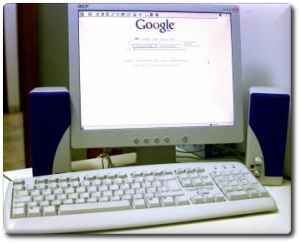
Google on a computer screen

After previous denial by Google as regards the release Ubuntu Linux variants, comes yet another clarification.

Google very likely is using the Ubuntu version of Linux internally, but Ubuntu project founder Mark Shuttleworth said this week he doubts the Internet search giant plans to turn it into a product.

“As far as I’m aware there is absolutely no truth to the rumor that Google plans to distribute a derivative of Ubuntu as a Google OS,” Shuttlworth said on his blog. “As exciting as that may be for Linux, it wouldn’t make sense for Google, and so far they’ve been pretty sensible about their projects.”

“The ‘goobuntu’ you may have heard of is just a modified version of Ubuntu,” he said. “Technically, there’s likely to be a ‘goobian’ and a ‘goohat,’ too,” referring to Linux versions from Debian and Red Hat.

Perhaps it is a shame, given Google’s personnel, skills, and budgets. Then again, no further commercialisation and privatisation of Linux is probably a positive thing.

Items on Goobuntu: Google Controversies, Google: Primary Rumours Victim

Ever-Lasting Open Source Projects

Iron links
When one projects builds directly upon another

OPEN-SOURCE software development models are said to be poor. Some would argue that they suffer from sudden discontinuation of projects which people truly rely on. There is a fallacy which suggests that non-profit project ‘die’ more often. The GPL , however, makes the contrary a truth.
Take WordPress for example. It is a predecessor of b2, which became dormant in the past. Netscape and its evolution towards Mozilla and Firefox resulted in what is arguably the best Web browser, among many browsers in existence. AbiWord, KOffice, OpenOffice and StarOffice share some common fundamental codebase and they all (if not most) are here to stay. This comes to show the power of looking upon the shoulders of others, constantly extending in this code-driven community.

My favourite Open Source initiative is probably KDE. K in KDE stands for “Kernel hackers” (arguably so) and I believe it holds much promise. One day, it might even serve as the front-end in most workstations worldwide, possibly under a different name (a successor project). On the contrary, commerical
software out of use is disposable POS on the shelf. It is plenty of work that is simply wasted.

As tribute to KDE, I recently posted a KDE translucency illustration (local copy of screenshot) to the KDE Web site.

Linux is Easier than Windows

GNOME mockup

Few desktop environments can brag being as
user-friendly and simple-to-use as GNOME

A widespread fallacy is that Linux remained command-line-based and customised to be used by geeks only. Those who have actually tried Linux throughout this century consider this presumption to be utter rubbish. Certain Linux distributions are as easy to use as Mac OS, let alone Windows, which requires security-related ‘skills’ and offers poor utilities at its base.

A larger-scale, market-driven survey concludes that Linux is not tougher to manage than Windows.

The proof is in a survey of 200 managers by Enterprise Management
Associates, a market research firm. It was sponsored by Levanta, which
makes a Linux-based change management product.

Here’s the bottom line. According to EMA, “Sophisticated management tools now allow Linux management to be fast, effective, and inexpensive. With far lower acquisition costs, Linux is now a cost-effective alternative to Windows.”

Another timely article points out the value of Open Source in the corporate world.

A few years ago, releasing once-secret source code to the public would have been a highly unusual first move for a company with a newly acquired software product line.

Related item: Free Software – What Does it Truly Mean?

Retrieval statistics: 21 queries taking a total of 0.093 seconds • Please report low bandwidth using the feedback form
Original styles created by Ian Main (all acknowledgements) • PHP scripts and styles later modified by Roy Schestowitz • Help yourself to a GPL'd copy
|— Proudly powered by W o r d P r e s s — based on a heavily-hacked version 1.2.1 (Mingus) installation —|