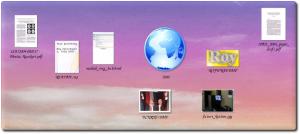
PDF‘s, text files, HTML‘s and
directories in the KDE Desktop with previews (click to enlarge)
 ver had the experience of staring at a collection of files, wondering which one is which and puzzled by the best way of finding the text or images you are after? This was a wide-spread operating system deficiency in the nineties (there was a brute-force barrier). Nowadays, directories reflect on their content and file previews are generated on-the-fly, even over FTP, i.e. remote data.
With a large enough icon size as shown above (an example from KDE), even entire documents reflect on their content. Similar types of previews exist for animations and — oddly enough — sound.
By obtaining this reflection on content, there is no longer a need to open files in vain. Location of content becomes an easier task as it can be done visually rather than relying on filenames. Files are simply more recognisable since they express their purpose in the most natural way. If a pictures is worth a thousands words, the user is able to scan more data, more quickly.
Preview are not the only way of improving productivity. Work is being done on extending the “drag-and-drop” functionality for items, e.g. animated folding and dropping (videos included) and richer desktop interactions. As a matter of preference, I like keeping my Desktop clean, making it a ‘yet-to-complete’ list. Previews on files cannot resolve the issue of clutter and scale; they can, however, compensate for the expressiveness of filenames.
For those who do not know yet, Windows Longhorn was intended to introduce WinFS. This new filesystem, rather than using filetables (notably FAT32), was aimed at getting rid of traditional file management and filenames altogether. Nevetheless, Longhorn ended up incorporating none of the promised innovative features though.


 Filed under:
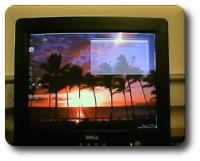
  emonstration below is no screenshot. It is a fake composition which I pulled together under the GIMP, yet where are the spherical desktops? Where has this initiative disappeared? Microsoft are finally incorporating some transparency in Windows Vista, but why concede an attractive spherical environment? Surely in pragmatic terms, the gain from this graphical developments is nill; it is probably a loss. The heavy computational load, however, can be handled using graphical acceleration hardware.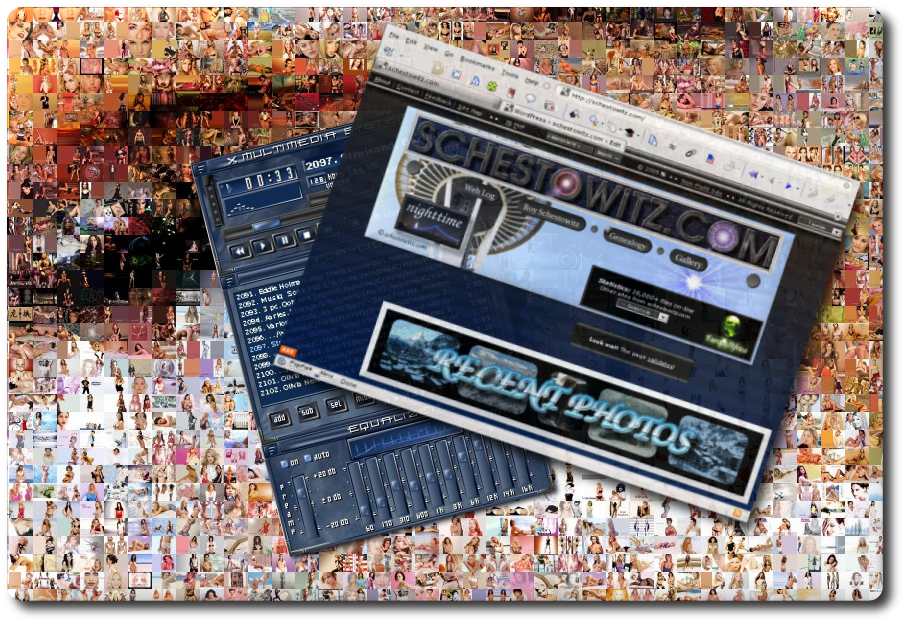


 here are healthy competitions and morbid competitions. A competition which involves handicapping the opponents is always a destructive and dangerous one. Nevertheless, there are examples in industry where Xerox, Microsoft, Amazon and other leaders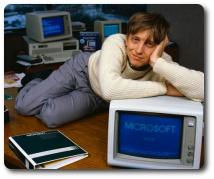


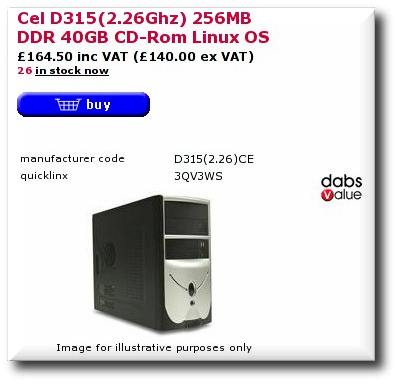
 ithin this post lies my main argument as to why Linux (or complimentary Open Source streams or movements) will rise hugely in less than a decade. The cost of production continues to slide while human intellect (development) is among the more expensive commodities. The

 buntu is a Linux distribution that is based on Debian and resembles it too. This Gnome-based (also see
 lasma is an exciting project in progress, which will enrich the Linux desktop environment even further. Mac OS X is still ahead of Linux in terms of eye candy, yet KDE is close to catching up with the foreseeable release of KDE 3.5.