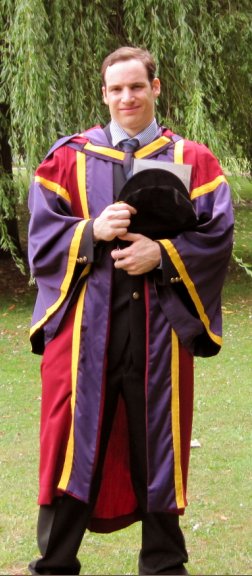
Back to nature… sort of…

London (2010)
 arlier today I watched with great patience this wonderful new interview with PZ Myers (thanks, Thunderf00t!), who spoke about his hugely popular science blog. I very much enjoy his site in which he started writing only 7 years ago. It was about 6 years ago that I started my own science blog (on computer vision) and later started another one about my particular area of focus (that was in 2005). They grew nicely and reached the niche whose narrow topic of interest they covered.
I have been thinking recently of the potential to inform people who are my peers through scientific blogs and decided that I will probably restore activity in those older two, as well as this one neglected personal blog where I hardly wrote anything for the past 3 years (it totals 1416 posts though, mostly from the olden days).
I found it gratifying back in the days around 2006 when people in my scientific field knew me in conferences because of my blogs and wanted to hang out with me because of these. The readership grew steadily as long as I kept writing. PZ Myers sees the same type of trend and Techrights, where I wrote over 11,000 posts, is the same. Perhaps I will resume posting in blog form about science later this month or next month. As always, I will separate my professional life, my personal life, and my hobbies (the 4 blogs I run will provide this separation).
On several occasions I was offered an opportunity to write a book, but frankly, I believe that books are seeing their end of days (when older generations are no longer with us, then pen and paper too may vanish). I was fortunate to get into blogging early on, thanks to Free software. It’s a rewarding experience even through there is no pay.


 Filed under: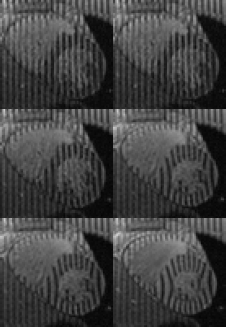
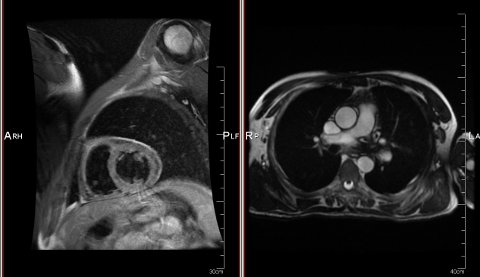
 intend to publish a long overview of Web resources for tagged data. In the mean time, based on the excellent Web page of Zhen Qian I have managed to piece together something for people to play with. From his thesis

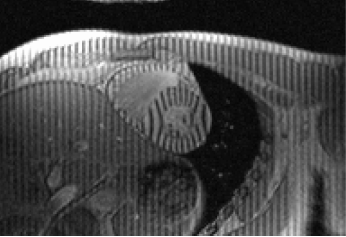
 udden change in plans and improvement of research direction leads me to the exploration of MRI tagging, which proves to be difficult when one tries to actually find raw data to work with, not information about it. In the coming days I plan to prepare a post explaining to people where they can obtain tagged data of the brain and the heart (trying to help others solve the problem which occupies many hours of my time). The Internet is extremely mature when it comes to sharing of text and sometimes even audio and film, copyright being an obvious barrier. When it comes to medical data, however, it is another story altogether, even if it’s totally anonymised. Personally, I’ve put 3-D scans of my brain on this Web site, hoping to provide people with the sort of data I sometimes struggle to get a hold of.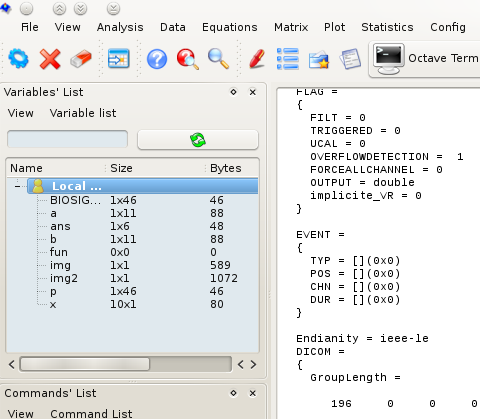
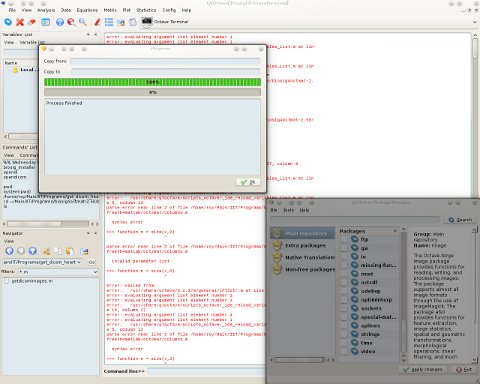

 HIS POST is part of a series that I do about my incursions moving from MATLAB to Octave, which has so far been a pleasant experience. QtOctave looks better and is easier to install than MATLAB (on GNU/Linux with KDE at least). For those who experienced being a customer/user of MATLAB, it can really be a pain in the butt, licence-wise. The parent company, MathWorks, can be very aggressive when it comes to licensing (it pays the BSA after all), so people are kept tied to particular IP addresses and must renew something to remove artificial limitations. Moreover, the toolboxes that MATLAB sells separately are a case of artificial scarcity and they can be expensive. Octave resolves much of this by centralising a lot of software as shown in the screenshots above (also separating free/libre from proprietary). Rather than waste time with paperwork and bank transactions, any QtOctave user can simply and quickly click away to receive anything s/he desires. It’s truly like a candy store.
 N A KDE (Qt) desktop like mine, despite MATLAB putting a lot of effort into improving the GUI on the GNU/Linux side* (even adding a Microsoft Windows-esque “Start” button at the bottom left), QtOctave integrates more nicely with the desktop. Thanks to all those who suggested some other tools including R,
  ack in early 2008 I wrote about