Introduction About Site Map

XML
RSS 2 Feed RSS 2 Feed
Navigation

Main Page | Blog Index

Archive for the ‘Technology’ Category

Headphones ‘Families’

Headphones - arcLet us consider 3 types (‘families’ or ‘classes’ if you like) of headphones:

Standard arc headphones are not very popular these days. They are relatively gigantic, at least when compared with today’s gadgets. Pros: Often come with a thick single wire that connects to one side only (this minimises wear). Cons: Large and unfashionable, susceptibility to outside noise.

Headphones - in-earIn-ear: Often cheaply made. My last set lasted only 4 days, but it had a nice mechanism for isolating noise. Many headphones these days penetrate the ears, yet research has shown that this is damaging to the ear. When I searched for a headphones replacement 5 days ago I saw an odd in-ear set which would penetrate nearly 1 inch inside the ears. My knees could bend seeing the scary otoscope-like design.

Headphones - largeLarge headphones: my favourite type, but only suitable indoors for obvious reasons.

The bottom line: unless you foresee yourself an old person who is unable to listen to people at the table, care less about noise reduction. We are yet to discover the damaging effects on a generation of Walkmans, Discmans, Minidisks, MP3 players, etc.

Adobe Buy Macromedia

Scare

News that are just in speak of a takeover of Macromedia (best known for Flash) by Adobe (makers of Acrobat Reader, Photoshop, Illustrator and so forth).

The two companies had settlements in court in the past. So, what are the implications of this acquisition? Domination of rich media delivery? This 3.4 billion dollar deal is definitely going to shape our future.

Combining Newsgroups Readers and Aggregators

I have spotted potential in unifying newgroups and feeds. Much of my reading involves newsgroups and aggregators as I do not require much beyond plain-text and a few references (links) to richer pages.

RSSOwl screenshot KNode screenshot

Feeds on the left and newsgroups on the right; click images to view in full size

The two applications are separate, yet they are similar in nature (see the screen-shots above to convince yourself). Will someone consider combining them? Web sites viewed as newsgroup threads? Perhaps newsgroups aggregated with abilities to participate?

Hard-Drives of the Future

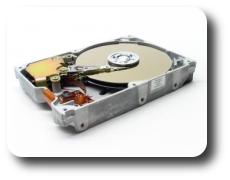
Hard-drive

With larger hard-drives hitting the market every year and growth that obeys Moore’s Law, people begin to collect rich media on their workstation. Sooner or later, since greed for storage ups, space will run out.

Hitachi are presenting new technology that relates to storage in volume. This can break Moore’s Law in (potentially) the same way as optical and quantum computing. Terabyte hard-drives are near.

Satellite Maps

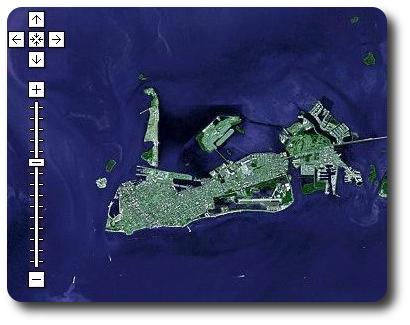
The Google Blog has just announced inclusion of satellite images in Google Maps (see “satellite” at the top-right corner). Americans can now identify their house and scroll around their neighbourhood to view everything from high above. The tool has an amazingly responsive interface.

Google maps - satellite

I decided to look at Key West; I could zoom in much further

Master Password

LockNearly every aspect of life has evolved to revolve around computers. Take banking, communication and licensing, for example. With more information drifting on-line, the number of usernames and passwords one has to remember becomes unmanageable for the mind.
Following the concept of the master key, it is vital to retain one master password — a cryptic password that unveils all others. How to turn this idea into practice depends on your operating system and available tools. Consider locking of a file, hiding of records in your PDA or secure on-line memos.

Programming by Natural Language

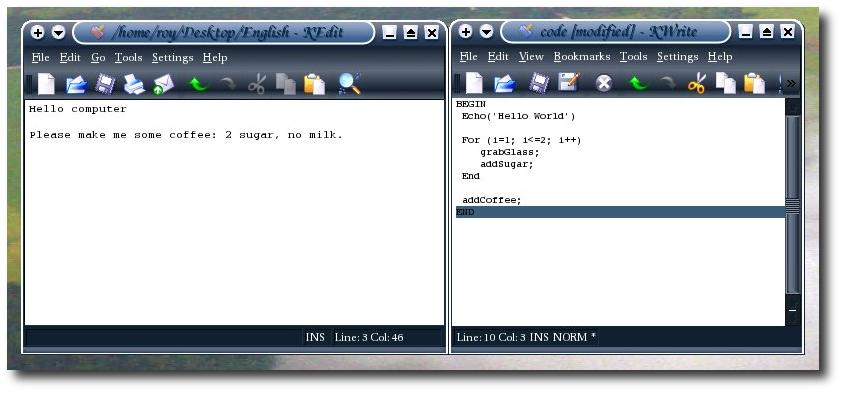
In relation to the previous item, research in MIT has produced a small application which turns English into computer code.

This small milestone can have an effect on the entry bar for programmers. However, one would argue that this the strand of work is pointless. Ambiguous languages can now (supposedly) turn into (ambiguous) code, which cannot be trusted. Will one be able to rely on translated ‘code’ of this kind? It’s the equivalent of sending E-mail from speech-to-text recognition without prior proof-reading.

English to code

A little sarcasm of mine; click image to view

Retrieval statistics: 21 queries taking a total of 0.090 seconds • Please report low bandwidth using the feedback form
Original styles created by Ian Main (all acknowledgements) • PHP scripts and styles later modified by Roy Schestowitz • Help yourself to a GPL'd copy
|— Proudly powered by W o r d P r e s s — based on a heavily-hacked version 1.2.1 (Mingus) installation —|