Introduction About Site Map

XML
RSS 2 Feed RSS 2 Feed
Navigation

Main Page | Blog Index

Archive for the ‘General’ Category

Submission Success

MIAS-IRC presentation
An older Web-based presentation (April 2005, London)

I received some encouraging news last night. My submission to the MIAS-IRC annual symposium has been accepted for an oral presentation. To make matters even better, a paper of my colleague, in which I am among the authors, has been accepted as well.

This maintains a good record of consecutive oral presetations (rather than posters). At the moment I continue working towards two looming deadlines for international conferences. I have also begun to prepare the upcoming presentation, the Ph.D. thesis and I foresee the possibility of supercomputing in the near future.

Longer Posts, Shorter Posts

Book scanning

LAST year I praised a habit of posting short blog items which address the main point and then end it. I have come to realise that my blog items are becoming quite long. I get carried away and feel guilty to have pages with little content that makes them unhelpful.

I promise to change that bad habit of mine whenever the story permits it. From now on I will attempt to ensure all posts are fairly short. Pictures are worth a thousand words and I hope they can complement brief sequences of text.

Favourite Firefox Extensions

The Web Developer extension in action

Firefox Web Developer extension (click to enlarge)

SOME time in the past I mentioned my ‘Firefox essentials’ and a variety of Firefox toolbars. As it has been many months since then, I would like to list extensions and hacks which I am still pleased with.

  • CSS-based ads blocker – get rid of nasty advertisements (even the ones that sometimes appear in my site)
  • Mouse Gestures (particularly from Optimoz) – browse using your hand motion
  • Flashblock – block Flash and permit its invocation using mouseclicks
  • Googlebar – better in many respects than the Google Toolbar
  • SearchStatus – highlight rel="nofollow" links in red; display PageRank and Alexa rank in the status bar; check for inclusion in the Google Directory and DMOZ
  • Web Developer – the ultimate designer/debugger extension (see picture at top)
  • Netcraft Toolbar – detailed and rather technical site information
  • AdSense Notifier – little notifier for accumulated earnings – updated merely at real-time in the status bar

Redundant extensions that I no longer use or have disabled over time:

  • FlashGot – mass downloads (can use wget instead)
  • SpellBound – spellchecker in textareas (does not work consistently)
  • PRGoogleBar – Googlebar with PageRank (Googlebar has evolved more though)
  • Live HTTP Headers – if you are curious or develop for the Web and delve into headers-level
  • A9 Toolbar – good for boosting your Alexa rank (via history log)

Windows Fragmented

Longhorn beta
Longhorn beta – old screenshot

MICROSOFT are said to offering too much choice in their upcoming Windows Vista. Some would even say that they are bound to failure due to this strategy. 7 editions of Vista are simply too much and customer confusion is foreseen.

As if a dozen editions/versions of Windows1 was not excessive, Singularity — a research O/S — has recently been introduced by Microsoft. It is probably intended to address the many inherent deficiencies in Windows, primarily security and customisability. Singularity will in fact be built from scratch, which is reminiscent of what was previously said about Vista as words leaked out from Redmond.

If Microsoft pursue a research O/S, then so be it, but researchers are largely not fond of Windows, especially in scientific research domains. Windows is simply too restrictive and insufficiently flexible (unless one pays). The move to Singularity is absurd, in my opinion, as people do not want to completely separate research environments from other activities.

Research involves writing documents and surfing the Web, for example. Having one operating system at home a yet another O/S, which is dedicated to research at work, is utterly confusing and unnecessary. It also support the point regarding confusion in Vista, which will be distributed in 7 editions. To use analogies, it is like having a truck and a motorcycle both for the puspose of transporting one passenger. More so, it is like having completely separate sets of dishes for chicken and ham.

1 Windows ME, 2000, NT, XP Home+Professional are still supported, but only partially and not for long either.

Proofreading Habits

Book scanning

ONE fact which I am fully aware of is that I have typos in my blog. That is much as I expect. I regularly spot these when it is already too late to be worthwhile correcting.

I would like to write a few words on the way I check for the correctness of text. Before publishing an item in the blog, I read the whole message entirely (single proofreading pass), which includes a slack glance at the markup. Having done so, I quickly spellcheck the text and then validate the markup in order to spot structural inconsistencies or typos in the markup. Lastly, I have another quick and sloppy read, which assumes the first read was sufficient for eradication of typos.

¨Life is too short to proofread¨ is a quote/motto that I go by. ‘Typo paranoia’ can be time-consuming and is by no means enjoyable either. I am more lenient and sloppy when it comes to E-mail, mailing lists and newsgroups, with an exception where my bosses are involved. I rely mainly on the spellchecker and sometimes I re-read the text once, at the very end. By worrying less, I increase my capacity for writing, at the expense of quality.

Microsoft Gain Full Control of Platform?

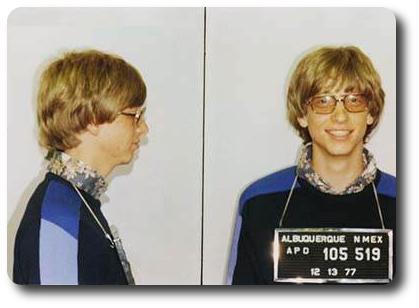
Bill Gates
All your bases to belong to Gates

I recently wrote about Microsoft Singularity O/S and the implication it may have on the slightly shattered Longhorn/Vista. As a new initiative is launched off the ground, I immediately get unnerving reflexes. What is most disturbing is Microsoft’s history of pushing companies away from their platform in what can be described as the “embrace, extend and extinguish” tactic. Will Singularity make the transition in strategy, namely being more ‘kind’ to third-party software, or will it only re-enforce the ‘iron fist’ regime and render third-parties obsolete?

Microsoft’s history and current practices have led to friction with the European Commission. With anti-trust ignited in Korea lately, some speculate that it could lead to a quicker spread of Linux in far east Asia. Korea have requested the removal of some bundled, pre-installed software. Microsoft, in turn, threatened to take their toys and go back home.

More recently we heard that Microsoft will push towards their own implementation of anti-virus software for their own platform. By doing so, they are pushing aside companies and vendors that have taken care of that market so far, essentially making up for Microsoft’s mistakes and flaws. Ironically, Microsoft will have incentive for bug creation. After all, it will be them who can charge to have that fixed, by selling anti-virus software. In recent hours we have heard about Microsoft’s entry into VoIP — the means being a takeover of another small company.

Microsoft Office 12 is said to support PDF creation in the trunk, which has so far been possible only using Adobe’s professional and premium software. Thus, Microsoft merely take food from the mouths of Adobe developers, much like they did to Netscape. They seem determinded to intercept or steal the popular PDF format. Office which exports PDF’s is merely an unneeded bloat, as well as an imitation (see screenshot alongside more examples). For imitation and theft, Microsoft have recently lost some cases in court too. Office is no more functional than Open Office, which many still wrongly perceive as Office in a brown paperbag. Office itself evolved from existing applications that emerged in the 70′s and 80′s and it continues to be the primary money-making cow.

Any innovative software on the Windows platform is pushed outside by imitation, bundling, extension and introduction of mysterious proprietary formats. Adobe, a giant that has merged with Macromedia, are facing yet another threat from Microsoft — a Flash alternative.

Some would say that Microsoft also snub OpenGL in their next version of Windows, possibly to be dropped in favour of Microsoft´s DirectX. Some time ago I read that no support for Palm handhelds will be included in Vista either. As for the ‘Internet front’, there seems to be a push towards ASP and .Net, not to mention opaque sites that are made strictly MSIE-compatible.

What will Microsoft do about Google Desktop 2, which has just come out? Google appear to invade Microsoft’s territory and I can’t imagine that Microsoft are too happy about it. In fact, Google are their worst fear (confer Winner Takes All). The year to come will be an intersting one to observe. With Linux, Firefox and Google (among many more) spreading and reaching Average Joe’s desktop, we are yet to see changes that are difficult to ignore.

Related items:

Recommended (contextually-related) reading:

Microsoft Back to Day One?

Longhorn

Longhorn spherical desktop screen-shot
Taken from a Microsoft meeting/demo in Chicago (click to enlarge)
Apparently, over-complexity did not permit this to become a reality

PERHAPS struggling to cope with existing Windows code, an operating system like Longhorn/Vista had to be re-built from scratch. To weed out competition, Microsoft face some serious dilemmas and have just taken some action.

Windows code, which was admittedly insufficiently modular, could no longer be run properly. Troubled and over-occupied with bug fixes and time-critical security patches, the O/S ended up ‘plastered’ all around. Consequently, Longhorn (Vista) lacked several long-promised features. This disappointed many customers and gave no compelling reason to ever upgrade. At present, Windows is conspicuously lagging behind some innovation and development over at Apple, not to mention Linux.

Major news are flowing in as I speak. Microsoft now turn their attention to a new operating system that will be built from the ground up and be named Singularity. Is it possible that Windows is so flawed (beyond our comprehension) that even Microsoft recognise a need to restart? Is the market unaware of the mess Windows closed-source actually is? With so many necessary patches and bloat, it seems to have gone out of the programmers’ control. With managers and staff leaving Microsoft (notably Lee), experience, competence and leadership are lost as well.

Apple was once in a similar situation. Mac OS 9 was rather weak. It seemed to have reached a dead-end and was often complemented by Windows software such as Internet Explorer and Outlook Express. Then, Apple took Darwin as codebase while merely discarding OS 9. Nowadays, we can only behold what a good product they ended up with. Marketing, however, has a limited budget at Apple.

From Microsoft’s Web site:

Singularity is a research project focused on the construction of dependable systems through innovation in the areas of systems, languages, and tools. We are building a research operating system prototype (called Singularity), extending programming languages, and developing new techniques and tools for specifying and verifying program behavior.

It sounds as if Microsoft primarily target the research niche, which is dominated by platforms other than Windows (predominantly Linux).

Retrieval statistics: 21 queries taking a total of 0.246 seconds • Please report low bandwidth using the feedback form
Original styles created by Ian Main (all acknowledgements) • PHP scripts and styles later modified by Roy Schestowitz • Help yourself to a GPL'd copy
|— Proudly powered by W o r d P r e s s — based on a heavily-hacked version 1.2.1 (Mingus) installation —|