Introduction About Site Map

XML
RSS 2 Feed RSS 2 Feed
Navigation

Main Page | Blog Index

Archive for the ‘General’ Category

The Enemy is Inside

Bill Gates
Bill Gates arrested in his younger days (photo in public domain)

ROBERT Scoble is a well-known Microsoft evangelist and blogger. He has recently set up a free blog in wordpress.com, which is of course based on Open Source software. I decided to ask him what he was up to. I was highly skeptic as he made this questionable migration of his popular blog and heavily-requested feeds. Earlier this week I sent Scoble an E-mail and got a disappointing reply; both of which I post verbatim below:

Me:

You are of course aware that you run your blog on Linux while evangelizing Windows. Hypocrisy?

Robert:

No.

An evangelist must be credible if he wants to be listened to.

The only way to be credible is to actually use other methodologies and products.

You must have evangelism confused with marketing. The two are not the same.

Rather than being critical of Open Source or PHP/MySQL, he implicitly revealed devious intentions; at least that’s the way I interpreted it. Only a couple of days later Scoble posted an item titled “WordPress Sucks”. He gets paid to say that stuff. He came in to give a critique and when the WordPress community posted follow-ups in defense of WordPress, they simply echoed his unjustifiable rants.

To make matters worse, Scoble opted for a free software package and complained about an extremely powerful feature in WordPress: RSS feeds. Is he complained about WordPress feeds, he could bash his wrath anything (or envy anything for that matter). Owing to that, he loses credibility rather than gain any.

Scoble on WordPress was a ticking bomb from day 1 and it exploded prematurely for all the wrong reasons. Like Matt said, WordPress is the Burger King of feeds. WordPress.com must become more selective when it comes to people it permits access and subscription to. I once mentioned the importance of WordPress invites. They are perhaps insufficient as they only deter splogs and mirrors, not enemies.

Google Print and AI

Iuron

I have already introduced my latest Open Source project (namely Iuron, the Semantic Knowledge Engine) a few times in the past. This afternoon I will be meeting who is questionably the father of the Semantic Web to discuss this project. However, I begin to suspect that Google have picked up on similar ideas by now. From the article which can be found in the Edge (among other places):

“We are not scanning all those books to be read by people,” explained one of my hosts after my talk (at Google). “We are scanning them to be read by an AI.”

There is a certain hint in that Web site as to long-term intentions and goals at Google. Overall, I don’t know if Google have beat me to it, but I suspect it was not something too crypic or far-fetched. Anyone in the field of machine learning must have thought about it at one stage or another. I hope that my speculation is mistaken and that Google will stick with naive indexing of unreliable Web content.

Speaking of threat from the giants, Google Reader, being an AJAX-rich Web application for reading feeds, has had direct impact on Feedlounge, which is an application I help test. Ever since the launch of Google Reader, Feedlounge development has been in a rather idle and fragile state. I hope Iuron will tread strongly despite the known perils. It is a non-profit, Open Source initiative after all.

UPDATE: I have been told that knowledge representation might be a greater barrier than I had imagined. My preconceptions regarding its maturity were slightly optimistic.

Cross-Platform Remote Access

Multiple SSH sessions
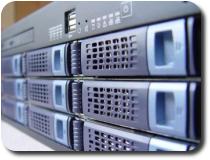
Dozens of remote sessions occupying a cluster. Terminals shaded on the left monitor (click to enlarge)

WHATEVER operating system we use, the idea of using remote terminals should not be foreign to us. These days, it is rather common to log on to a computer remotely and manage it from afar as if we were actually there.

Inter-Platform Connections

Windows users frequently stick to VNC, which requires a high-bandwidth connection and grabs the entire desktop/workspace metaphorically ‘across the wire’. Nonetheless, there are some smart algorithms (c/f Citrix clients), which only re-draw elements once they change, so speed/bandwidth might not be the utmost concerns.

Linux users, on the other hand, are capable of establishing transparent connections with Windows machines via VNC, for which there are many applications in existence (Remote Desktop or rdesktop among several more variants). Linux also takes a different approach in its most natural method for remote access. Take, for example, SSH connections wherein individual windows get ‘grabbed’ and communicated over the network, only upon demand. Everything else should be managed from the command-line interface (CLI), e.g. bash and xterm. This might be less natural to the majority of users nowadays, especially to those unfamiliar with CLI’s.

Windows connectivity to *nix protocols can be established using the renowned PuTTY. In the case of Telnet or RLogin, applicability might be slightly different, but merely all protocols seem to have been covered. In fact, Windows typically supports telnet at its core (Start » Run... » telnet » ENTER). This establishes a somewhat mutual relationship. Windows users can remotely log in to Linux machine (might need a commercial X-session if not CygWin) and Linux users can connect to Windows hosts. In modern Linux distribution, all necessary toolsets are already pre-installed from what I can gather.

Extreme Use of Remote Access

When carrying out some computer vision experiments, I was at times using over 30 Pentium 4′s. These were used for quite a considerable overnight resource hogs. The communication barrier was merely inexistent; I an fortunate enough to work upon a 100Mbit Ethernet backbone. To give some indication of how fast the connection actually is, I can transfer an entire CD (~650 MB) across campus in less than a minute. That unbelievable speed is at times truly needed. I estimate that I use up bandwidth of over 100 GB per month, mainly due to backup necessities.

As regards extreme use of remote login, this is one of the most exciting experiences, to me at least. Rather than conducting large-scale experiments over the period of one month on a single CPU, they can be distributed, thus completed within a day. Nothing can beat that in terms of productivity. AI is known to be resources-greedy. Our computer vision methodology falls under that branch too. I will soon write about the use of supercomputers to run my experiments, albeit this is still under negotiation.

Traffic Chain

I could no longer resist my geek spirit so I decided to experiment with the idea of SSH chaining. The dependency of one machine upon another is something that intrigues me, so often I log in remotely to one machine, which in turn connects to another.

I decided to set up a larger SSH chain wherein I connect to my own computer via an entire ‘ring’ of machines, using SSH. I wanted to see how this affects speed and responsiveness in applications that ‘travel’. Needless to mention, this also cripples all computers in that ring. This observation has some interesting implications on its own. These intermediatory machines can be perceived as purposeless routers. If one computer in the chain is reset, the whole chain collapses and the connection is lost. It may also take a while to re-build, which to me at least, is amusing.

Cluster Control

On to some more extreme uses of SSH, some time ago I read about use of SSH to control entire computer clusters in parallel. In essence, the user will be sending any given command to an ‘army’ of computers (clients or computational hosts). The tool is not very flexible, but can be valuable under particular circumstances.

TV First, Then Science

I quite liked the critical spin that a Slashdot contributer put to an article on the move to digital TV.

After budgets cuts led to the layoff of engineers and scientists at NASA Jet Propulsion Laboratory, a US Senate committee has approved a $3 billion dollar subsidy to assist Americans in their difficult transition to digital television in 2009.

TV X-FilesWhile we should all know that it is science that drives innovation, money gets spent where the long-term future is uncertain. Television and advertisements that accompany its existence shape up a tremendous industry. However, it is a well-established fact that economy cannot safely propagate to the future (Wall street and the ‘bubble effect’) whereas exploration and new discoveries are capable of putting the States at the forefront. This all comes at a very sensitive time when the whitehouse issues budgetary cuts on science and research while creationism and defence (or contrariwise armament) are better catered for. I am truly concerned.

Workout Reduction

Workout session
The local gym – photo captured in July

TODAY I decided to re-prioritise a few hobbies and activities in my life. Thus far things have gone rather well, but I was at times susceptible to pressure and found it hard to cope with the amount of work that came my way.

I have maintained a stringent habit of working out consistently for nearly 10 years. At the start, when I was only 14, I stuck to short sessions that verged the high frequency of 7 times a week (i.e. a brief daily routine). This soon was reduced to just 6 and around 2001 was altered again and became just 5. A few years ago this was already downed to 4 and a half and this week I have finally settled at 4. This trend is somewhat worrying, at least to me. I am certainly not at the point in my life where I ought to head ‘downhill’ although I admittedly reached a plateau. I still work out approximately 8 hours a week, but I find myself more bound to the Palm handheld throughout. I simply must record my thoughts. I soon realise that I must stay connected more often. That is truly what I enjoy, inevitably.

Earlier today there was an unusually nice atmosphere at the gym so I even fell asleep there. It is not the very rare exception, I might point out. The nice music that is played on the TV set and perhaps the lack of pressure led to this, not to mention the erratic sleep patterns which I have recently adopted. The workouts themselves appear to be getting easier, psychologically in particular, over the years. This may have plenty to do with the fact that I prevent self-imposed pressure and time-constraints. I learned from past mistakes, I presume, as pressure becomes a deterrent strong enough to discourage exercise altogether.

Linux to Penetrate Tablets, PDA, Mobile Market

Nokia 770

Some of you have possibly heard about the Nokia 770. For those who haven’t, have a look at this snippet from a recent review in the Washington Post.

The Finnish mobile firm had originally expected the Tablet, which runs on Linux-based software, to enter the market before the end of September.

I personally use a Palm handheld and I consider myself an avid Palm enthusiast. Yet, I was deeply disappointed by the move which had a Treo run Pocket PC. To me, this was beyond a simple “deal with the devil” as I also use Linux and I can imagine the implications of such a dangerous pact. Palm were committed to Linux for quite some time, but were recently taken over by a Japanese giant, so the future is uncertain and past promises or planned strategies should now be taken with a grain of salt.

I started to explore alternative paths and the Nokia 770 is one of these. I have just been reminded that it would not be surprising if Nokia dumped that rusty Symbian altogether and implemented a port of the existing GUI to run on top of the Linux kernel.

From recent articles about the Nokia 770, it sure seems as if the codebase will be made available for other devices as well. I believe the device will be ready by Christmas, so expect a homebred Linux distribution for mobile devices soon. It can then be sold to other vendors which will mark yet another revolution — the entry of Linux into the mobile phones, handheld PDA‘s, tablets, etc. First the servers, then the desktop and soon a penguin in everyone’s pocket, Palm included perhaps.

More on Linux-powered PDA’s:

The remainder of this item slides off the theme of Linux and discusses Web 2.0-like transitions.

How come nobody has implemented a portable PDA synchronisation method? Many PDA’s these days can establish an Internet connection and very many computers reside in a connected environment with always-on connection. Would it not be rational to implement a Web-based Palm Desktop, for example? One which centalises data in on-line accounts? I still wait for a handheld that integrates with and synchronises with all platforms more seamlessly. The Internet, being open, can easily bridge that gap and assist users from the fuller spectrum of operating systems. Sooner or later, this all will happen.

Cited by: PalmAddict

Open Office 2 is Out!

Open officeOnly weeks after Massachusetts decided to ditch Microsoft Office, Open Office 2 is officially announced and released to the public. This version of Open Office has been claimed by some to be faster and superior to Microsoft Office. Most importantly, it adheres to OASIS, it is inter-operable, and free.

As Computerworld puts it:

The OpenOffice.org Project on Thursday released OpenOffice.org 2.0, adding new features that the group claim will resonate with users from business and governments right down to the home desktop. The product will be simultaneously released for a range of operating systems including Linux and Microsoft Windows.

An interesting nugget of information is this: the main ‘sponsors’ of Open Office, namely Sun Microsystems, have recently formed a pact with Google. This fact on its own right can lead to endless speculations, yet Google’s co-founder, Sergey Brin, recently denied some baseless rumour that Google aim to implement a Web-based Office suite.

Would Google possibly opt to improve and fund Open Office? Any prospects for ownership and integration with the Web? It is no secret that Linux-loving Google are involved in a heavy battle with Microsoft these days. Simply put, it is a “winner takes all” situation.

Retrieval statistics: 21 queries taking a total of 0.208 seconds • Please report low bandwidth using the feedback form
Original styles created by Ian Main (all acknowledgements) • PHP scripts and styles later modified by Roy Schestowitz • Help yourself to a GPL'd copy
|— Proudly powered by W o r d P r e s s — based on a heavily-hacked version 1.2.1 (Mingus) installation —|