Summary: Staff of Sirius ‘Open Source’ still remembers how badly managers have treated workers in the past 4 years while keeping them isolated, sometimes even gagged
IN yesterday’s video (“Sirius Open Source Uses ‘Privacy’ as a Weapon Against Truth-tellers (Can’t Speak Outside Work)”) we sought to highlight endless hypocrisy and disproportionate powers managers gave themselves. It was not about leadership but about control. Those aren’t the same thing. Leaders motivate people, but the managers Sirius attracted in recent years are power-hungry and don’t know how to manage power; they get drunk on power. Some lack actual experience in management; no, babysitting toddlers or being an assistant of an assistant doesn’t substitute training and experience at leadership. Companies would struggle to compel adults to be managed by babysitters. Programmers and sysadmins are grownups, not toddlers.
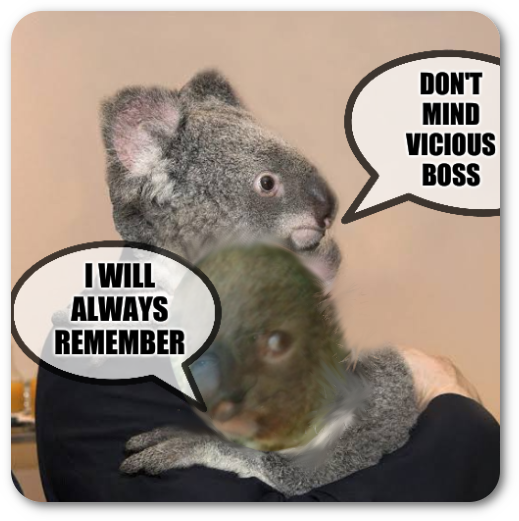
The managers at Sirius gradually become insecure, knowing they’re not just unqualified for the job but are in fact failing at their job. Then they try to stop staff from talking about the issues (failures that repeat themselves, e.g. pension contributions not being paid). Then start bullying, intimidation etc. It begets spying and dirt-digging, even habitual insults (like aimlessly accusing staff of “cooking” without any evidence whatsoever; as noted in the last part’s meme, based on a real quote). If managers start falsely accusing staff, then the principal objective is humiliation, hoping to cause guilt and render people more submissive. That never works!
Then come impediments against dialogue. Staff is divided so as to make people feel isolated. Let’s use an example. In a grievance letter posted (reproduced) here last month, a colleague explained that people who work overnight are already isolated and feeling alone. Why add insult to injury?
Then comes suppression of speech in general, like claiming the clients and colleagues deserve total privacy (in practice, it is about censorship), even outside work where they’re mentioned not by name, yet the same people who claim this are engaging in overt acts of surveillance against staff, even outside work.
This hypocritical behaviour is also used by the EPO to basically say that staff cannot speak to one another because of “privacy”, even if the conversations are about managers’ corruption. They misuse “privacy” for cover-up. Privacy is no excuse for those who are committing crimes or engaging in all sorts of wrongdoing.
The icing on the cake is, such rogue management engages in chronic lying while bullying staff and innocent people are warned not to speak to colleagues (“divide and rule”) while managers are spying on everybody. This is all about double-standards. To put it in simple terms, a boss may allege that staff is violating privacy of people and the boss builds this allegation by violating the privacy of the accused.
Sirius has quite a tradition like this. It effectively banned staff conversations in Freenode (outside work), way back in its glory days, not in 2022. It’s as if colleagues cannot have a personal life and cannot socialise outside the workplace.
As a reminder, a decade ago the company resorted to shutting down the company’s own Jabber server, very likely to prevent workers’ solidarity/empathy towards a colleague… or even the ability to find out what had happened.
Sirius created a self-defeating culture wherein people are talking to one another inside the train to avoid detection for fear of committing the “crime” of speaking to co-workers about facts (like bosses doing unethical things, including lying, cheating, engaging in extreme nepotism… like bringing 3 sexual partners to the company in spite of a lack of relevant qualifications).
Sirius is no longer unique in the sense that after COVID-19 lock-downs many people still don’t commute to work and still don’t meet colleagues in person (or seldom do). Generally speaking, when people work from home, and they’re each based in a distant town, they can’t easily meet “down the pub” and have in-person chat, so if conversations outside the spying network of the company are frowned upon, and if spyware becomes the norm, how is staff supposed to be properly informed? Trusting liars? How can a union ever be formed? As we shall show later, the company pretends to be open to the concept of a staff union, but that’s just a convenient lie.
The company goes out of its way to prevent and impede communication between workers, usually by means of blackmail/threats. How unhealthy a work atmosphere! For instance, staff is not permitted to know if someone is investigated or disciplined and similarly staff being bullies is explicitly forbidden from talking about this to anybody. This poses a threat to people’s health and safety. The company knows that, but it does not care. People are isolated and asked not to cooperate with their colleagues. It’s not limited to “bollocking” inside the company as the same goes for salaries, work status etc. Sirius is just a very secretive company that misuses the name “Open Source” and conceals the operational aspects. It’s proprietary, intransparent, and truly dishonest. It lies about its very own people when it suits the managers. As a result, colleagues are just vanishing without anyone bothering to explain why (skeletons in the closet), we have had colleagues that say they’re under de facto gag order and cannot talk about what they know, and it starts to resemble Life Is Beautiful where nobody can speak about the gas in the showers. People just vanish, no more questions…
The workplace inevitably becomes very mentally unhealthy; as we’ll show later this month, it becomes physically unhealthy too (some colleagues got diarrhoea from the stress). These tactics of isolation are being resisted, as colleagues occasionally reach out to one another, even people who are working from home. Their safety net does not come from “leaders” but from peers. The leaders are correctly perceived as dictators, who aren’t to be trusted with anything. There’s no comforting shoulder. This should not be considered standard business practice, but this is where Sirius was heading just to ensure workers were always disadvantaged, underpaid, mistreated, falsely accused. They cannot unite, they can barely even form a coalition through which to negotiate with management. Things were so out of hand in Sirius that even to have a colleague as a witness would require prior permission from management so that the management can ‘tamper’ with the person a priori (like issuing warnings or curtail freedom of expression).
The tactics employed in 2022 began to resemble authoritarian regimes and aggressive cops, more so towards the end of the year; relatives were being kept as pawns and false accusations thrown while distorting facts. Managers very well understand that scaring workers won’t make them productive; au contraire — it leads to misery.
We’ve seen these things before. At the EPO, for instance, the union (SUEPO) explained how a spouse needed to come to the Office to pick up her husband after he had suffered a mental breakdown (due to ruthless ‘investigation’). We’ll soon show that Sirius too employed a kind of Reid method/technique, which is controversial and likely illegal. This was done to Aaron Swartz.
One colleague used to joke that the company’s slogan, “stress-free technology”, took no account of how workers felt. Workers had no real voice in the company. They were barely consulted about important things.
Unfortunately, SUEPO uses the same Microsoft spyware that EPO management uses, probably because of the “installed based” (number of workers who already have that set up). But since [cref 141348 Microsoft colludes with the EPO] they can undermine communications, spy, and worse. We’ve repeatedly said that a union using the “bossware” of the boss, controlled by a truly hostile corporation, isn’t a good idea.
The reason we are writing these detailed reports is clear to those who have had similar experiences in their career. It’s important because workers would be empowered if they could identify emergent patterns of technological oppression and then respond them them, equipped with knowledge of the law in their country. Don’t let people be subjected to that; don’t be subjected to that yourself. Workers aren’t supposed to be pointed at for doing perfectly lawful things, even if their bosses aren’t happy about those things. That can lead to conflicts in one’s mind, with questions arising like, “are they telling the truth? Am I overrating or overthinking?”
Remember that sociopaths and pathological liars do this as a matter of routine; they’ve mastered all these tricks and they keep using them again and again.
The staff, they hope, may remains defenseless after all the gaslighting; when you stop receiving actual information and get fed disinformation from management, repeatedly even (and you might even start to believe it!) you may eventually lose a sense of reality.
In my personal case, working backwards to figure out where and why it started, it seems like management truly hated how I scrutinised a contract they had wanted us to sign without any legal advice, challenging the legality of it and even considering a lawyers’ consultation (advice can take weeks unless it is treated urgently).
One can assume that managers were maybe worried other people (like colleagues) would realise what’s going on and follow suit.
That’s when one manager was starting a malicious, vicious, baseless witch-hunt that backfired so badly. We’ll give more details about this later.
The portion of the report below talks about the awful, centralised, outsourced telephony system, the “timetracker” which everyone hated (except bosses who exempted themselves), and the aftermath of these misguided moves, which not only harmed the company but lowered morale. The timetracker was so counterproductive that it was quietly dropped, for the second time, a few years ago. It was more about surveillance than productivity or timekeeping.
The company ought to remove the term “Open Source” from its name; the company has presence only in proprietary platforms but none in “Open Source” ones, except maybe “legacy” systems from the “old” Sirius era. Over time it’s gravitating towards 100% proprietary, but people who run the company cannot even distinguish, so explaining the issue can be an exercise in futility. To give just recent examples, Sirius moved to a system of telephony that did not work and did so even faster as a result of it not working (example of extreme incompetence), resulting in poor service to clients that could previously make contact effortlessly. This document won’t name the systems, but it’s clear that improving the ability to answer calls or communicate was not a priority. ‘Freebies’ from Google aren’t free; they’re only temporarily available ‘free samples’.
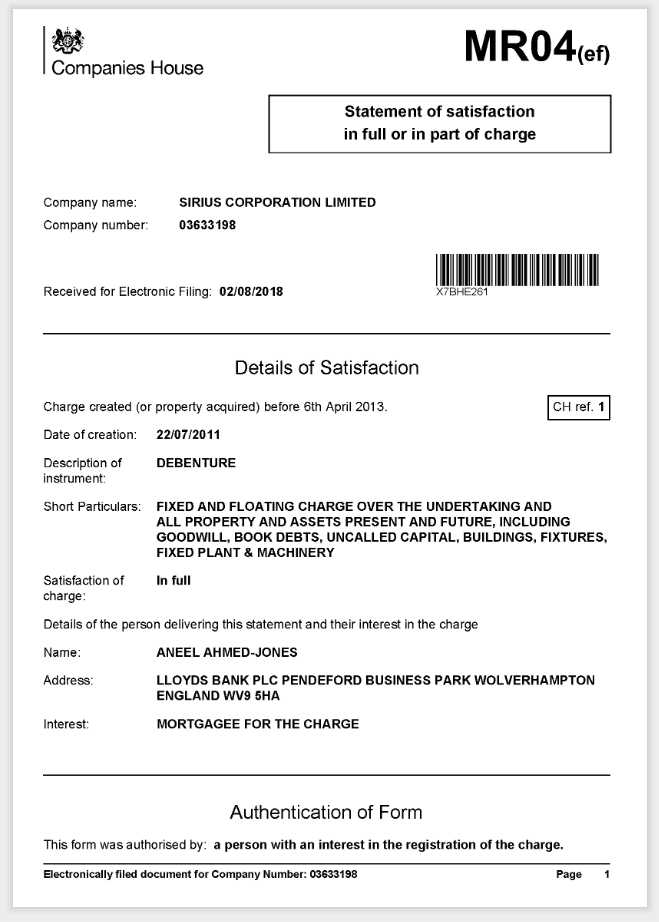
To cite an older example, all the staff hated the timetracker and hilariously enough those who imposed it on staff refused to do the timetracker routines themselves. When challenged on this (highly hypocritical behaviour that harms morale), one of them sobbed and went away, unable to actually justify this arrogant ego trip (imposing unwanted things on people vastly more qualified). The person who sobbed later messed up the salaries (many times), then did not respond for months when question on the matter. This resulted in financial harm. The person responsible for this error was never reprimanded or punished, neither for these mistakes nor for failing to respond, which is very typical in today’s Sirius management, even the CEO lying about not receiving E-mails.
No wonder lots of workers left. Those who did not leave constantly face abuse and are being silenced. Dissent in Sirius isn’t being dealt with by grown-ups. No wonder associates were openly mocking the CEO for being non-technical and for writing face-saving cruft to clients. In fact, it seems like a lot of people either left or became cynical about the company. Those who stayed (and remains cynical) are now being maliciously targeted and it is truly sad to say that the company became a bit of a hoax, as it is neither about Open Source nor caring about the devoted staff that made many personal compromises, only pretending to care in very shallow ways like annual vouchers (worth less than one shift).


 Filed under: