“Art for art’s sake”
 Filed under:
 Collecting “money” like it’s a form of competition where they track “score”
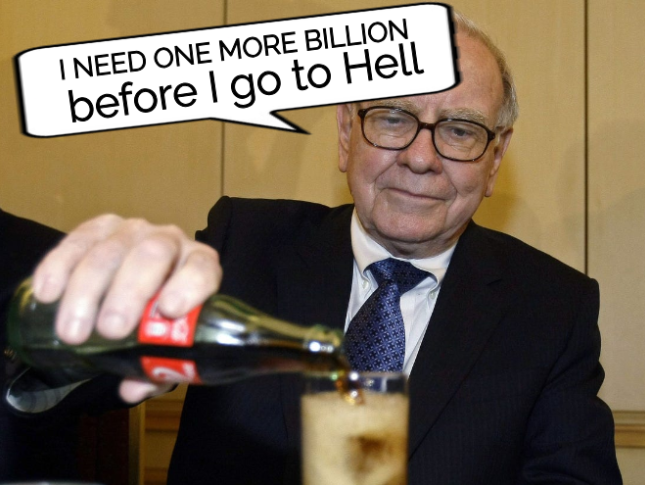
 reed is bad. Greed is a form of mental illness, more so when it exceeds some rational, logical levels (e.g. people trying to hoard more capital than they conceivably and meaningfully spend in their remaining lifetime).
Stuff has gotten more expensive and companies try to make us believe or compel us to accept that we need “apps” or fake “modernity” that does not enrich life in any meaningful way.
“When I buy something,” as ploum.net put it the other day, “from a small kitchen appliance to a car, I’m now forced to get formal confirmation by the seller that I will be able to use it without installing one, two or three different apps. I kept the count: in the last year alone, I had to argue against the installation of 18 smartphone apps. Just in my toilet, I’m supposed to have an app for the seat, an app for the flush and one for the ventilation.”
We already reached “peak s–t” decades ago, there’s not much left to enhance in a toilet seat. We don’t need “apps” there.
Then again, never underestimate the power of aggressive marketing. Or an employer or hotel manager or “landlord” (landlady also) who puts “smart” things everywhere.
I was recently reminded of the Mancunian band protesting for freedom and also against greed and hoarding (back in the 1970s and 80s). They’re all still alive, doing well, and well into their 80s.
They did “art for art’s sake” and enjoyed the art. “Money for God’s sake…”
Does “God” take your bank balance when your life ends?


 he thing you want to do to women is
 T is not the first time I stay in Town during summer. We’ll travel around for a bit, but not go far as there’s no point. Staycations are good for people who like being where they are, vacations away (or abroad) tend to be for people who escape the job, the home, the routine, the culture, and maybe the local weather.