Coarse GMDS Masks Experiments
 Filed under:
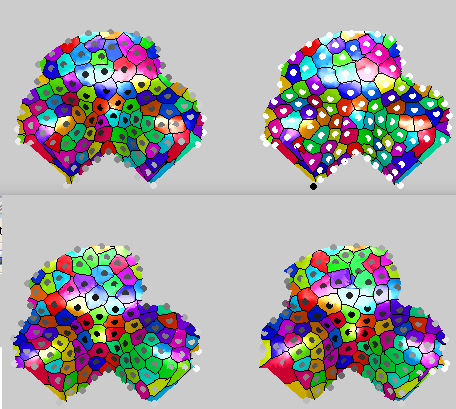
  fter persistence and a new type of mask put in place (with a little trick to penalise for miscorrespondence around the top) I have been getting good validation results again, with over 98% for the first 50 pairs I have tested (just one mistake some far). Some of the harder surface pairs have not been reached yet.
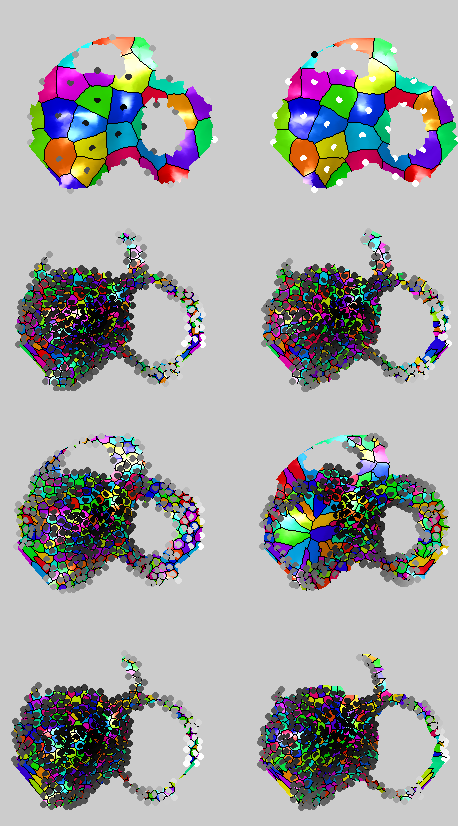
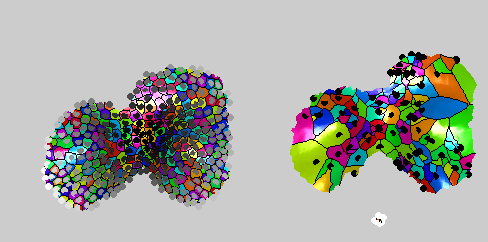
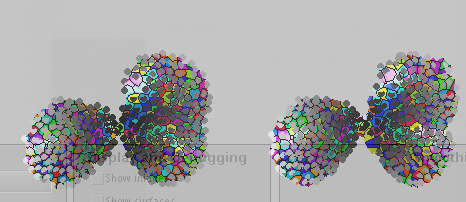
In an attempt to master GMDS as cross-identity discriminator I have further cut down the process, which now operates through a pipeline of reverse dilation, as shown in the first image beneath. The second shows a broader mask working upon false pairs and mostly failing, which is probably what we want. In terms of performance, as long as the true pairs are similar enough (some are far harder than others, e.g. expression variation), we are able to get decent results. Running this on the whole database again would not help beat results that we got around December, though. Several experimental modifications are hard to identify as means of reverting back to old versions. A lot of those were made to facilitate diffusion as a supported (surrogate) option.
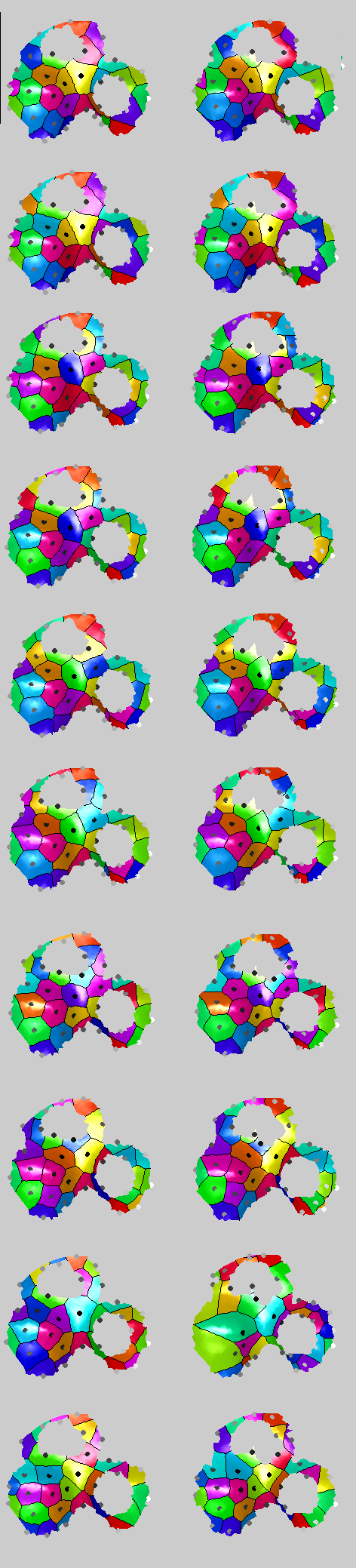
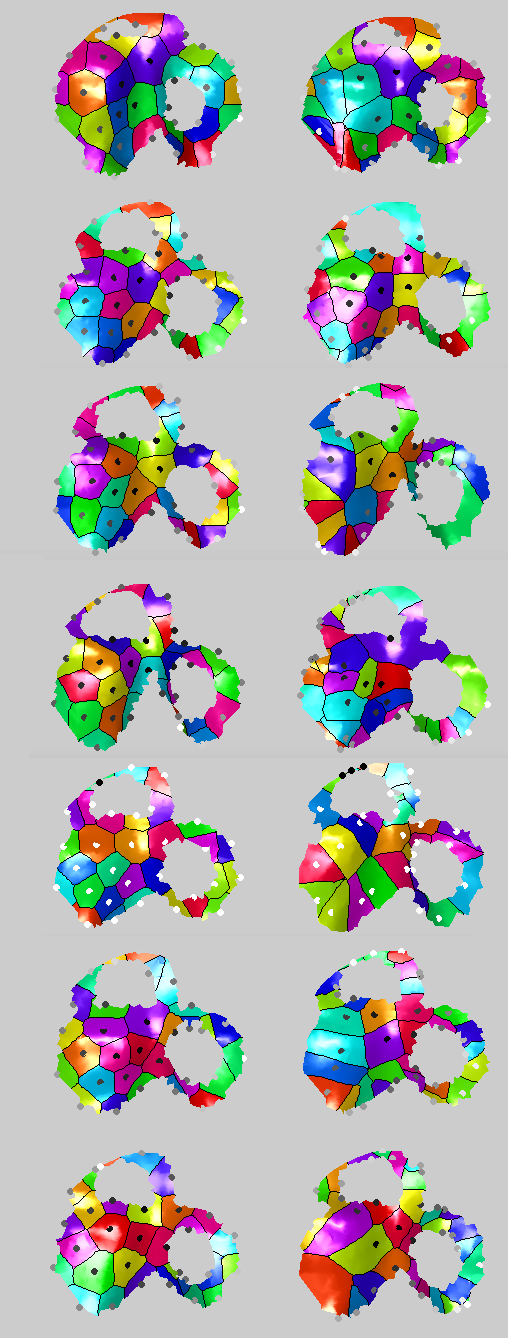
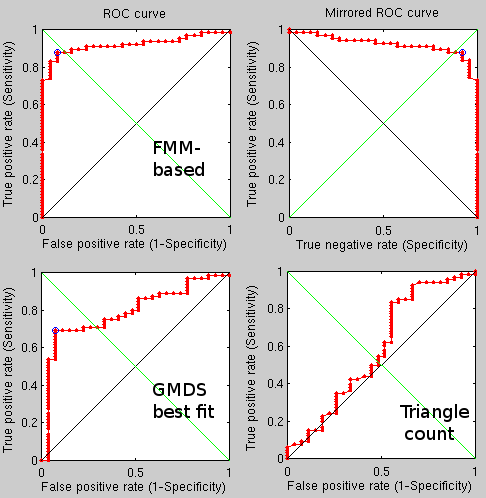
I have reduced the number of points in GMDS to just 10 because it seemed as though it would significantly speed up the process without compromising too much in terms of performance. The experiments were then run on “hard” pairs, giving verification performance of almost 90%, depending on the method used.
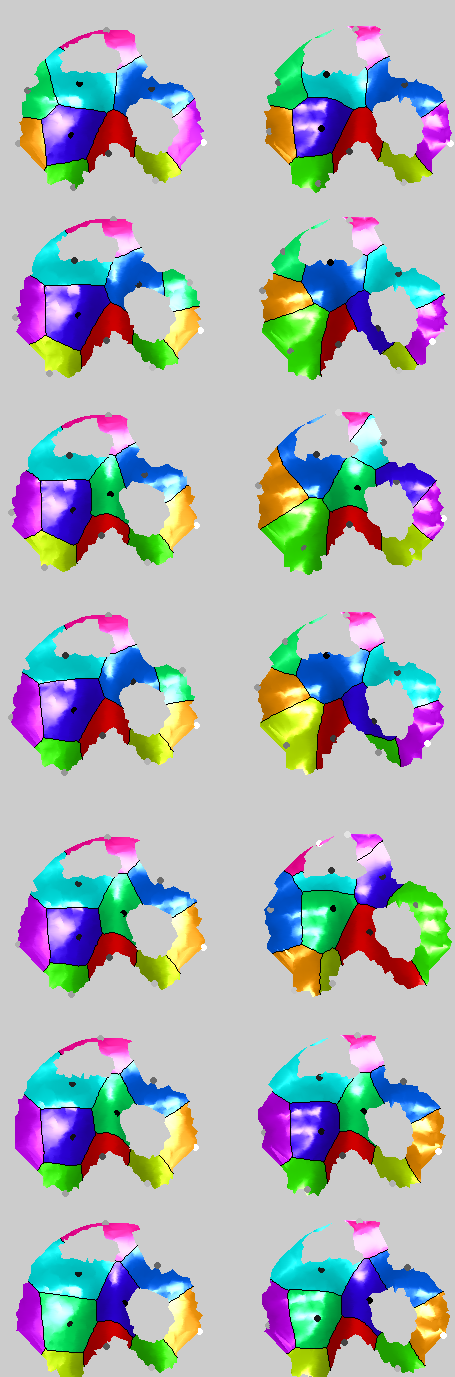
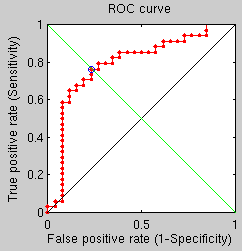
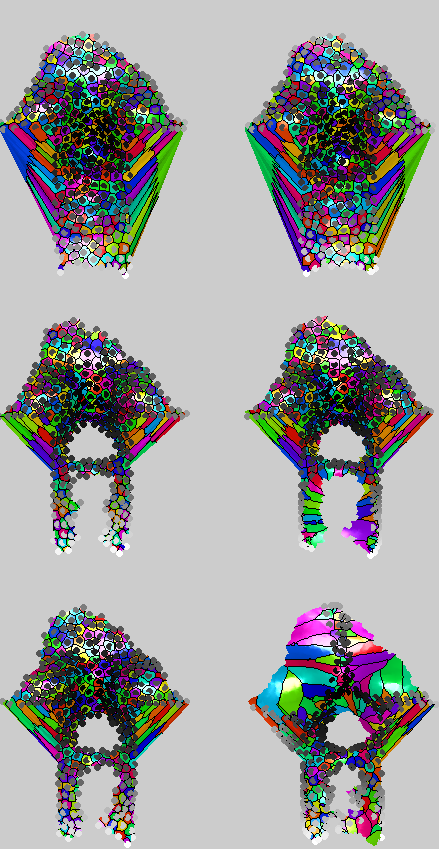
In an attempt to understand how well one can do with just 10 samples in GMDS (because it is faster and insensitive to small changes) I took some of the hardest classification cases and ran repeated coarse GMDS on them, reaching a success rate of only 75% or thereabouts. This falls short because we are assuming that only for false pairs will we have improper correspondence, whereas for true pairs everything will be perfect. As shown in the images produced from the same false pair, sometimes a good correspondence is found, but usually not (symbolised by white colours in the dots, e.g. in the third example from the top, on the right hand side).
The example at the very bottom shows that even for different identities a decent correspondence can be found, which gives rather low stress values.
In order to mitigate or altogether annul the effect/artifact of flipping, I have made the two surfaces asymmetric, with centres of the eyes removed because there’s too much noise there, depending where the eyes look and how open they are (in some surfaces, the eyes are deliberately moved to challenge algorithms).
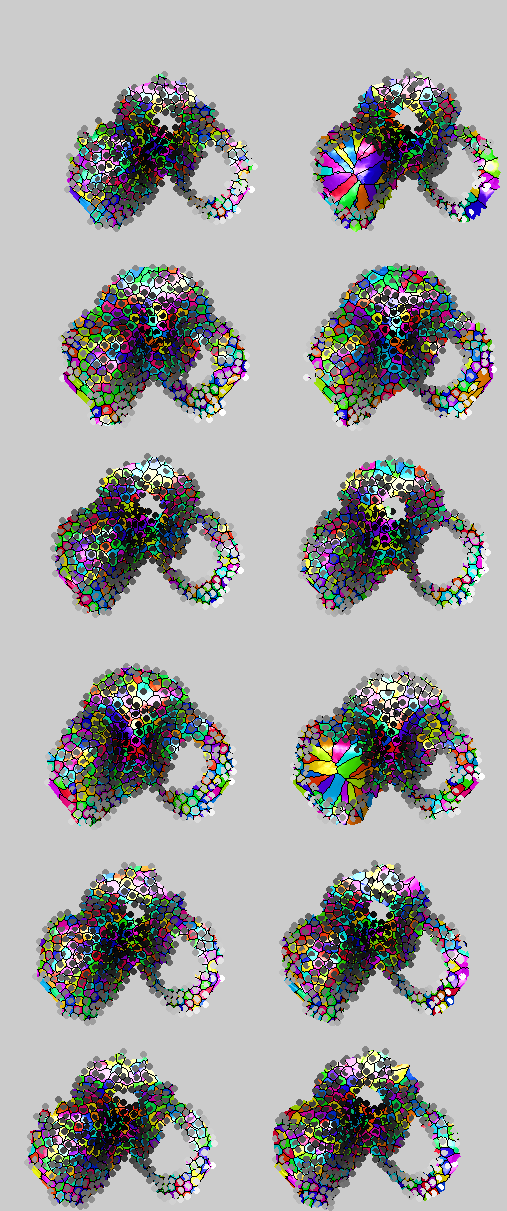
Several empirical results show that increasing the number of vertices, even doubling them, still seems not to help much in any way. So, I have isolated some difficult cases and I am trying to cut out the sources of ambiguity.


 espite the fact that I cannot rollback to old versions of the algorithm — those that worked much better — I have run experiments on half of the entire Texas database. The performance was vastly inferior because of changes that I have made over the past couple of months.


 HE task of comparing atomically-meaningful 3-D surfaces is not simple. The plethora of diffusion-based techniques have not managed to overcome the drawbacks and ever surpass the performance attained through geodesic distances. The main issue, to summarise this very briefly, is that when the differences are very small between one subject and another (no topological differences) there is not enough that can be done to distinguish by kernel-based score.

 VER the past few days