


Why It’s Justified to be a Contrarian
 Filed under:
 AST NIGHT I wrote a response to a very dear person (for whom I also took the picture above). It was long and somewhat personal, so I decided to reduce it somewhat and present it to a wider audience in this blog.
Maybe it would tactless of me to bring this up and show the contrarian side in me, but some of my stronger opinions are better off said than kept inside. I wanted to explain some of my childhood experiences and what led me to the way I am. I very much doubt professional side of my life matters here, so I will focus on inter-personal and generally social aspects.
As a young child I am said to have been very happy, but once I was no longer a baby I became a little more isolated, probably by choice (again, as confirmed by my parents). I was drawn to art and sought encouragement and reaffirmation through that. I am still quite skillful at arts and some might say “creative”, but I abandoned this later on. My mother wanted me to be an architect like her cousin in Florida, so that too penetrated my mind at an early stage. My mother was extremely kind to me in my younger days and I always credit her for that. When I grew a little older I would confront some of my classmates (1st grade at school even). My gym teacher explain to my mom that I was non-conformist — about which he was right. He said that in a positive way, as means of explaining to my mom that I did not blindly accept the norms and acted to their rhythm. I thought for myself and judged things based on reason. This characteristic of mine became both a merit and a point of uniqueness in my adult life, but it was further accentuated when I started working on my Ph.D. in extreme freedom (of expression and action). Much later, in the late 20s perhaps, my non-conformism would extend or evolve to the scepticism movement — if movement it can be called at all. Sceptics demand evidence for claims that are made and challenge dubious claims under the premise that progress will be made assuming we can discard disinformation and bad social practices (sexism, slavery, racism, et cetera). With that in mind, my place in this world since the younger days can hopefully seem clearer. My career path and spotty life of romance (hardly as many relationships as other people in my shoes) can be understood. It was not a priority.
At school I was known as the one who would defend mistreated teachers rather than mischievous students who tormented the teachers to impress peers. It sometimes seemed like my teachers loved me more than my non-friends classmates did (I still get along very well with people far older than myself). I did have a good number of friends, but those who were not my friends were often what I consider “anti-social”. I often wondered what the heck I was doing among those people, whom I did not agree with and wanted never to be associated with (based on their behaviour alone). It was not that I had adversity with modern/Western lifestyle; it was a particular behavioural pattern (partly brought from repressed nations, at least in terms of what’s accepted and endorsed) that I simply could not accept. When I was 16 I decided that I would redo my life and on my own I eventually sorted everything out to this effect. My dad’s view on this was similar to mine all along, but with 4 kids at this stage he did not have the freedom of choice that I did.
Let me explain from a somewhat cynical point of view what these anti-social (or sociopathic) aspects that I speak of are about. They are better explained by some examples of what’s socially acceptable and even commended at times.
- Speeding on the road as a matter of being cool and taking pride in it, knowing darn well that it is not just a risk to oneself but the surrounding environment too. I strongly confronted people over these issues in my mid-teens, only to be met by hostility (yes, for insisting that laws are obeyed). Yeah, how dare I stand up for legal obedience?
- Mistreating girls and objectifying them. To explain this, perhaps some contextual information is needed as these practices are in part inherited from less progressive countries, such as Saudi Arabia. In many people it is still generally “uncool” to be a gentleman, but then again, some other countries that consider themselves to be civilised have not yet dodged this medieval tendency.
- Vocalism as the norm. Raising one’s voice and descending into shouting matches is not the exception when one loses an argument, choosing animal instinct over logic. Being a calm and normally quiet person myself, to be encircled by a pack of loud hyenas can be unpleasant. It also compels one to act alike. This too seems to be part of ancient culture, not necessary Western (speaking of a geographical trend). This vocalism extends somewhat to interrupting of a peer’s speech (sometimes using the might of one’s vocal chords), but to be fair, I see some of the same behaviour here in Britain’s finest places, depending on the person/environment at hand. It’s all down to debating culture and manners. In academia, for instance, people do not act this way, but then again, a lot of their staff lived and worked in different environments too, so there is a correlation there between behaviour and eventuality/locality. In other ways, it’s a correlation of selection, not causality; calm people are finding themselves attached to like-minded people and work peers/colleagues; those whose nature is not compatible get repelled or turned away.
These are just 3 examples, but many more could be given. In the age when “bad” means “good” (especially exemplified with black dialect in the US) we lose hope in sincerely good behaviour. It’s worse than rebellion, as rebels often have just causes to support, not something to prove through mistreatment of fellow human beings.
My rejection of militarisation is a separate but important point. One has to remember that students are not taught proper history at school. The curriculum is built to brainwash children in a particular way. Except studying of ancient history, there is — in some states — bible studies and then a time leap to the 20th century. They are not properly taught the history and politicians now gain power by pretending to have am imminent threat of existence, thereby recruiting for free and highly dangerous labour a lot of young people who die for an imperialist, expansionist agenda driven by nationlism and self-righteous claims of permission from above. The people who are joining the army are too young and immature to think for themselves and they are well indoctrinated in school — to the point where resisting the unthinkable does not cross their mind. The army makes people more aggressive, brutal, merciless, and rough. This is not acceptable in my eyes and to participate in such a system is to endorse and strengthen it. This whole part of the rant could be written a lot more eloquently, but it would require more thinking to be coherent. The short story is, the Western industry is excessively reliant on production of objects that kill people (not farming that feeds people), at one stage or another in the pipeline (metal industry, software for “defence” purposes). I wish never to spoil my identity and unleash bursts guilt by associating myself with this self-justifying, over-hyped, and self-serving (to leaders in power) game of Risk. People who served any military around the world resent me for this stance, but as I keep insisting, had there been a just (defensive) war, where on purely humanist factors there was a cause in joining the diffusion of the situation, I would be the first to join and even carry a firearm (if it needs to come to this). In most cases, based on history, people in power brainwash the population into thinking there is constant threat (like the “war on terror”) as it gives those in power yet more power and distracts the population away from the real war — class war. It’s an old trick and it has been used for millennia. The last think a leadership wants or needs is an informed public, unionised, eager to address real social injustices domestically or internationally.
This leads me to the last point, which is about racism. It is not good inductive reasoning, it’s an appeal to animal instinct and perhaps a decline to barbarism. In most countries there is some notion of “underclass”, but in some places it seems further exacerbated by the open use of labels, which television and broadcast at large permit, ruining people’s brain and breaking social constructs (removing the glue us human beings naturally have, perhaps sympathy/ubuntu). It is divisive and it produces unneeded hostility. The unifying umbrella ceases to be welfare of our fellow humans to whom we are innately compassionate; instead, it becomes nationalism (“us” versus “them”, where “them” typically refers to other/neighbouring nations or another mindset).
What it all boils down to is this; one needs to think objectively of how to serve society in a humane, productive way. Life is a journey not of money-making but of harmonious living, ideally with the education of others to the point where they too can appreciate it and improve their behaviour despite the constant brainwash.
As a sort of disclaimer, it is possible that adolescents in more countries are more or less the same, but I only grew up in one country with one set environment and a good school, so I might be too hard on those whom I know when it fact it’s an age phenomenon, not a demographic one.


 OLLOWING this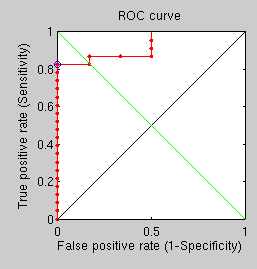
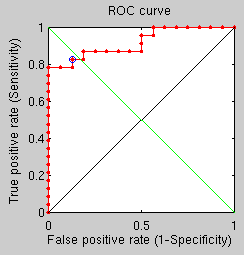
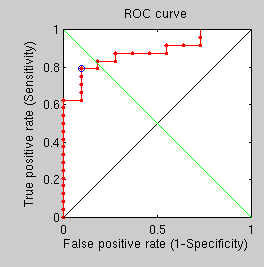
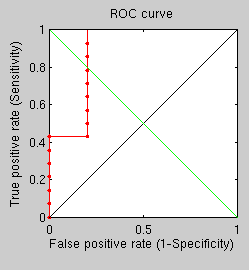
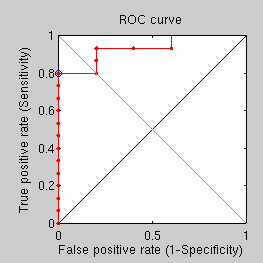
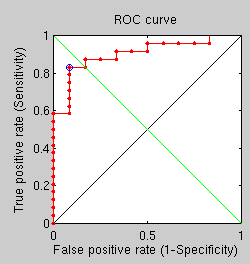
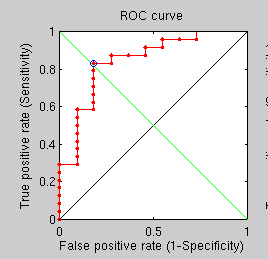
 COULD really use the advice of some people who are interested in computer graphics and vision — inverse but complementary fields, which are largely related to geometry and mathematics at large. The challenge is to compare surfaces based on their 3-D characteristics, using Euclidean, geodesic or another non-Euclidean metrics.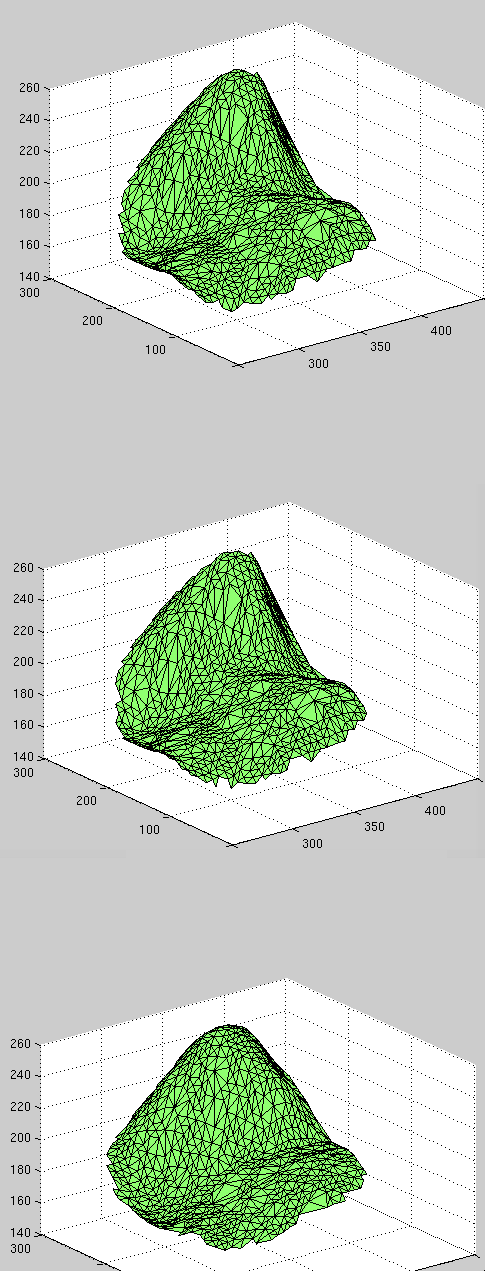
 OZILLA is arguably responsible for restoring competition on the Web browsers front and also for ensuring that Web designers target more than just one browser. For that, companies like Apple and Google have a sort of ‘debt’ to Mozilla and it’s reassuring to hear that Google funds Mozilla to a great degree, still. But Mozilla has been having issues with its browser — issues that are perhaps more perceptual than real (technical). But moreover, the peril that Mozilla is having would have to be new competitors, some of whom rely on the KHTML engine (which sort of became WebKit). KHTML and WebKit also make their way into KDE in the form of new browsers like Rekonq, which are excellent (better than Konqueror for some tasks). These integrate well with a Qt-based environment, they are lightweight, and they interact better with the K Desktop Environment (or KDE SC). For KDE users who look for a Firefox alternative,
  NE common complaint about WordPress is that it requires frequent updates. But the matter of fact is, very few of these updates nowadays are security-related, so provided one does not ride along with the treadmill, it should be possible to check the release details and see if an update is crucial for security. For over half a year (until recently) WordPress had no security updates. There were not known flaws. So for those who maintain many WordPress blogs (I run about 10) or have to manually upgrade some of them due to hosting setup, an update to WordPress should only be required once in a very long time. Nobody forces an update and provided one is comfortable lagging behind on the features, WordPress should not be marked down on the basis of release pace.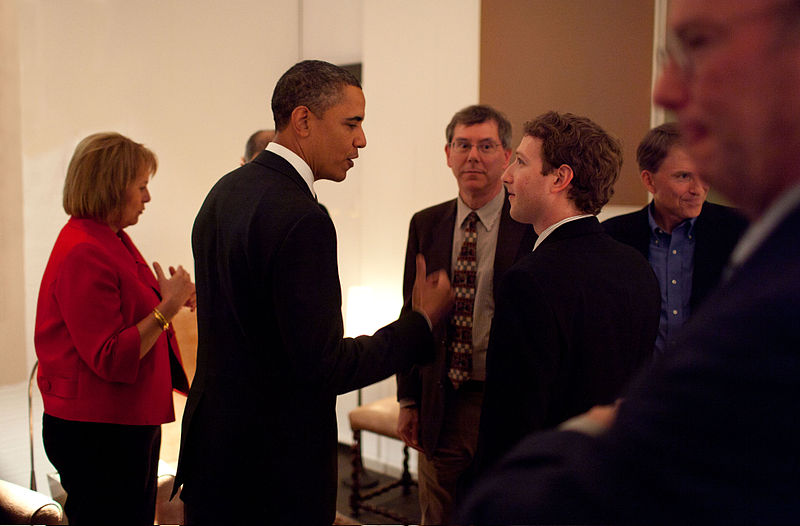
 HE BUSINESS model of Facebook is truly poison on the World Wide Web and the Internet at large. It is the very opposite of what the Web was intended to achieve. At risk of stating the obvious, Facebook is a multi-player popularity game where information about one’s real friends is hidden behind walled gardens. The access to such information is conditioned upon a sort of blackmail which is giving one’s personal details away, for advertisers to spy on individual people and in turn impose on them all sorts of proprietary lock-ins and barriers, at the behest of affiliates. Rather than a society that openly shares we become a society of cliques and stalkers — people to whom the rules of society are determined by sociopaths like Mark Zuckerberg, who calls Facebook users “dumb fucks” (real quote) for trusting him.
 VERY once in a while we hear someone tell the public that, based on anecdotal evidence alone, people leave GNU/Linux for Apple. Well, on the phone front, if not on all fronts, Linux is actually beating Apple, which is why Apple is suing like mad.