Windows Might Become a ‘US Government Thingy’
 Filed under:
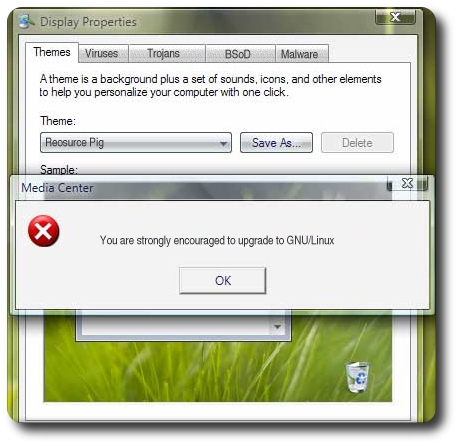
Made with the GNU
Image Manipulation Program (GIMP)
 ARELY should politicians get involved in the software industry. Ever. As a matter of fact, they generally fear that unknown as seldom will they be familiar with the latest technology. Everyone steers away from anything which can expose ignorance and lead to an embarrassment, at peer or public level.
Last Friday, however, marked a turning point — a remarkable exception. The US Government served as the spokesman of Microsoft Corp. Granted, the Department of Homeland Security encouraged people to receive some ‘binary blobs’ from our friends at Redmond. Now, I would not like to baselessly step forward and nag about nepotism and ill conduct over at Microsoft and the US Government. However, knowing the historical background of both Microsoft and — more latterly — the US Government (heavy eavesdropping comes to mind), I would barely hesitate.
Bill Gates is an immoral, irritable person. Steve Ballmer is not any better. He never steered away from or averted any controversy. Both have proven that they have a real spark for incompetence and unethical business practices. More broadly speaking, the Draconian Microsoft was never afraid of altercations or was rarely deterred to embrace questionable behaviour. Over the years they disrupted the equilibrium in industry, shrewdly exploiting loopholes in American capitalism, through apathy amongst the American government, as well as its blind eye (Gates’ grandfather was a State Senator). Fortunately, on the other side of the Atlantic, the European Commission has watched over Microsoft like a hawk. This is well overdue. The EU/EC is also fining that ‘evil empire’ for outmuscling its competition quite aggressively, as well as for hiding key information. It is doing the job that the American government was supposed to do, but chose to turn a blind eye to.
Alas, IANAL (I am not a lawyer). Discussions in some legal forums were never fruitful as they didn’t end up leaning in my favour. I hope people can judge for themselves and realise that Windows is inclined towards a spy-friendly ideaology and, for real privacy, Open Source must be welcomed with open arms. The other gripe I have with Microsoft is its ruining of the World Wide Web as it also heavily affects those who turned their back on Microsoft.
Related items: Vista Encryption and Back Doors
UPDATE: Just noticed a similar blog post somewhere else


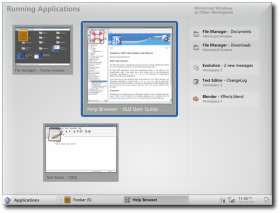
 ERE is the latest find (a video) which illustrates how beautiful and powerful Linux has become. It is a showcase of
  TEREOTYPES are hard to fight, but logical inclinations are even harder to change. Everyone wishes to push away the enemy, whatever or whoever that enemy may be. First they ignore, then they ridicule and laugh at the enemy. Finally, they fight, before inevitably conceding and losing (attribution: Ghandi was among some people to use this 4-step breakdown, but he was not necessarily the first).
 S a programmer in training and background, I have always been told that I must keep up with the latest and the greatest — technology-wise that is — in oder to remain marketable. The way I perceive it, Windows technology that excludes the competition is a dying breed. I would not want to expand my knowledge in that area, which is why I continue to urge people to upgrade to Linux. At the same time, I rarely bother to keep up with advancements in the Windows world and yet I keep an eye on features and demonstrations that permit me to make a comparative analysis.
 NE thing that keeps striking me as surprising is that people’s habits supersede all logic. I will provide an example from technology.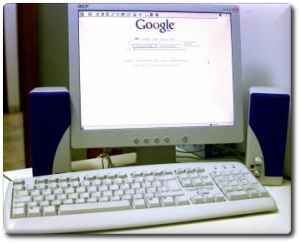

 HEN was the last time you revised your résumé? Here comes a personal rant. Explicitly putting in skills such as “Word” and “Photoshop”, rather than “office/authoring/WYSIWYG tools” and “graphical design/editing applications” (respectively), is just plain silly. Competence in industry is about skills that are independent of just one commercial application. Times are changing and preferred software changes in accordance. Businesses evolve. Adaptability and familiarity with diversity is where true merits lie. Common function names and icons can help the user quickly familiarise and re-orientate, so generic skills are what truly counts. Think memorisation of menus versus understanding. The paradigm and terminology, as well as menu layouts, will typically remain uniform, owing to the nature of the task at hand.