


Pragmatic PDA Use
 Filed under:
 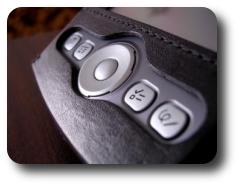 I may be an exception and perhaps even an oddity. I lost interest in PDA applications that differ from the most fundamental PIM set. Alas, I sometimes wonder if anything beyond a reliable simplicity is truly necessary. I suspect not.
I bought a Tungsten over a year ago, but I need never do anything that I could not do on the M130, which is a low-end PDA I once owned. It now sits idly and serves no-one even though it works. It has a few minor defects, but workarounds can compensate for all of them. What was its contribution to the subsequent device in the ‘upgrade cycle’? A 32 MB memory card was inherited from the M130, among a few other peripherals. A larger SD card (quarter of a gigabyte) is now available, but it rarely, if ever, gets used. Same programs are used and the capacity required is similar. So what does it all come down to?
Palm rarely ever failed me where it mattered the most: data integrity. After over 3 years of regular use of the Palm I can only vividly recall two incidents of data loss which were a nuisance. Both incidents were not at all severe and they both date back to 2003:
- Incident #1: I was editing a large memo for approximately half an hour without applying the changes. A very rare crash of Memo Pad led to the loss of all changes. A lesson was learned following this loss. As I compose this item on my Palm at the moment, I do not neglect to periodically save it.
- Incident #2: Half a day of changes were lost after restoration from desktop-side backup. Fortunately, all that was lost included a few calender entries, which I could quickly restore from fresh memory
I have had an SD Card-based backup program for over a year, but never had the chance (reason) to use it. Well done, Palm, for preserving my data and preventing me from ever pulling my hair in frustration over data disasters.
Side note: I truly hope that Palm can deliver innovation shortly. They begin to lag far behind their competitors and I am tempted to swap vendors and move to Nokia’s Linux-based tablet.


 Life involves accumulation of things, not always objects, money or recognition. Happiness, however, is dependent on the momentum (increment of pace) of this accumulation, so a step up may not necessarily entail happiness. This explains why perpetual happiness is a myth.
 recently mentioned site scrapers in the context of
 EVERAL days ago, in the context of ‘housekeeping’ computer chores, I stressed the need to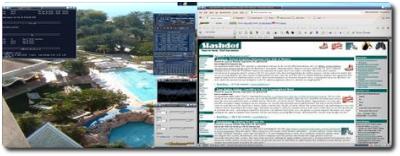
 Y new year’s resolution will have been 1600×1200, but I think I need to purchase different monitors. I recently added a 5th and 6th virtual desktop, which extends an already large workspace as described in a previous item on
 HIS morning I got myself isolated for 3-4 hours. I spent a long time mechanically erasing unwanted music. At the end, I was 5GB leaner; around 1200 unwanted files were fully disposed of. The existence of so much ‘grabage’ is an artefact of
 IRTUAL desktops are means of extending one’s workspace. Given the finite size of a monitor, one wonders if that size also imposes strict limits on the (in)visible window environment. Well, it does not. It is possible to treat the monitor as just a rectagular box or a a ‘sliding window’, which metaphrically glances at something much larger. It enables the user to view smaller segments of the whole at any one time. Most commonly, the user would watch only a quarter of the workspace at any one time.