


Trying Linux Mint for Running GNU Octave
 Filed under:
  EDORA 14 is an adorable distribution, at least on the KDE (4.5) side of it. I only had problems in the repository and ones that were not truly Fedora’s fault. Image-related functions gave me a hard time in Fedora because of a known conflict and version numbers. It was not simple to resolve even after hours of trying. I consider myself to be an expert user (not guru) and unless I start compiling from source code as I did 5 years ago, Octave will be a challenge to use. Over on a Kubuntu machine I had no such issues. As the pictures below show, things worked perfectly well without any effort at all. Say what you will about Ubuntu GNU/Linux, but it does tend to work rather well.


My goal is to do my entire daytime job under a true GNU/Linux/KDE experience with Gnash, no proprietary codecs, and even Konqueror (KIO/kio and sftp/ssh support make it indispensable) as the only Web browser along with Okular, LyX (not OpenOffice.org), and other great Qt/KDE SC programs. There are some limitations in use, but there are usually ways around those (although never as easy to install as Firefox extensions for example). In addition, advances in the Web itself can prove a tad tricky. The nature of the World Wide Web and the Web browsers which change over time is not predictable, so presentations that worked alright with background pictures in the past no longer appear correctly, unless the code is redone (I still use S5 for presentations. It is an excellent presentation tool I’ve used happily for over half a decade).
The main issue I’ve had with Fedora is to do with Octave, which I hope to replace MATLAB with. MATLAB was the last bit of proprietary software I was still using on GNU/Linux (since I began using GNU/Linux exclusively at work, around 7-8 years ago). The problem is not at all exposure to Windows or Mac OS; I never need those, but proprietary software in general is the problem here because of lock-in (practicality), which makes it not a purely philosophical argument.
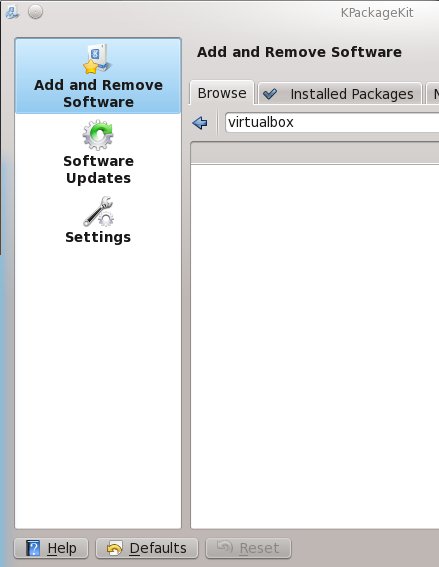
After wasting many hours trying to get Octave to work the way I want and need it to work under Fedora 14 I decided to just virtualise another distribution under Fedora. The first thing which occurred to me is that VirtualBox was not available (see below).
In the mean time I also decided to give Mint a go for the first time (I was curious after doing a special audiocast about it). That was a smooth experience luckily. Debian makes it daunting for one to download, so after a couple of minutes I left their Web site. Here’s Mint’s less-than-perfect download experience, assuming one particular route:
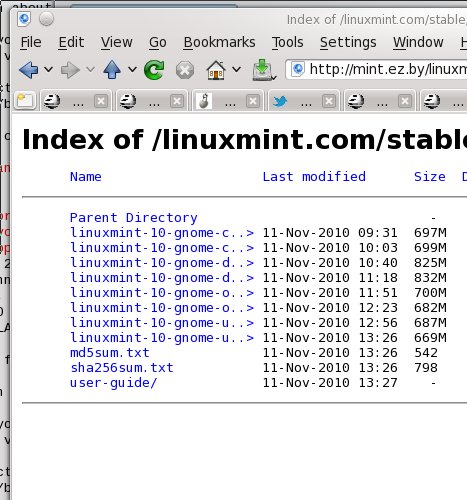
Fedora makes it a lot more user-friendly when one downloads an ISO. There are usability issues here as most people cannot tell the difference between the different files.
To run it I needed a hypervisor and here is what Fedora had under the virtualisation category (descriptions would help enw users):

In summary, it is a bit of a shame that one needs to have those barriers; using Octave is not a case of using basic applications, but I was hopeful that Fedora would make it easy. I still reject MATLAB at all costs and I avoid installing it because Octave is doing almost everything that I need. In a future post I hope to write about Linux Mint.


 few days ago I started working with Fedora 14. So far, so good, at least as far as the desktop machine goes (a laptop is another story and Kubuntu runs fine on another desktop). Something has just happened in Fedora which never happened to me before. Kate (an editor) got stuck and its memory (RAM) consumption went up through the roof to over 1.5 GB, so obviously it froze the system for a while. The process needed to be forcibly killed.
 HINK before you touch Cloud Computing. The term “Cloud Computing” is vague and broad. It refers to all sorts of things and it’s malicious in the sense that it tends to take both data and control away from the user. That’s why I call it “Fog Computing”, avoiding marketing euphemisms.
 have been a very vocal critic of the BBC, which is still perceived by many as the Auntie that can never do any wrong and can also always be trusted (de facto stance). For a variety of reasons, the BBC has been aligning with many commercial interests and you are warned that the channel (like many other broadcasting/publishing companies including Fox News and CNN) are serving agenda, not news.