Introduction About Site Map

XML
RSS 2 Feed RSS 2 Feed
Navigation

Main Page | Blog Index

Archive for the ‘Science’ Category

Geometry Gurus Needed (First Order Geodesics on Surface Pairs)

I COULD really use the advice of some people who are interested in computer graphics and vision — inverse but complementary fields, which are largely related to geometry and mathematics at large. The challenge is to compare surfaces based on their 3-D characteristics, using Euclidean, geodesic or another non-Euclidean metrics.

Here is what the surfaces look like.
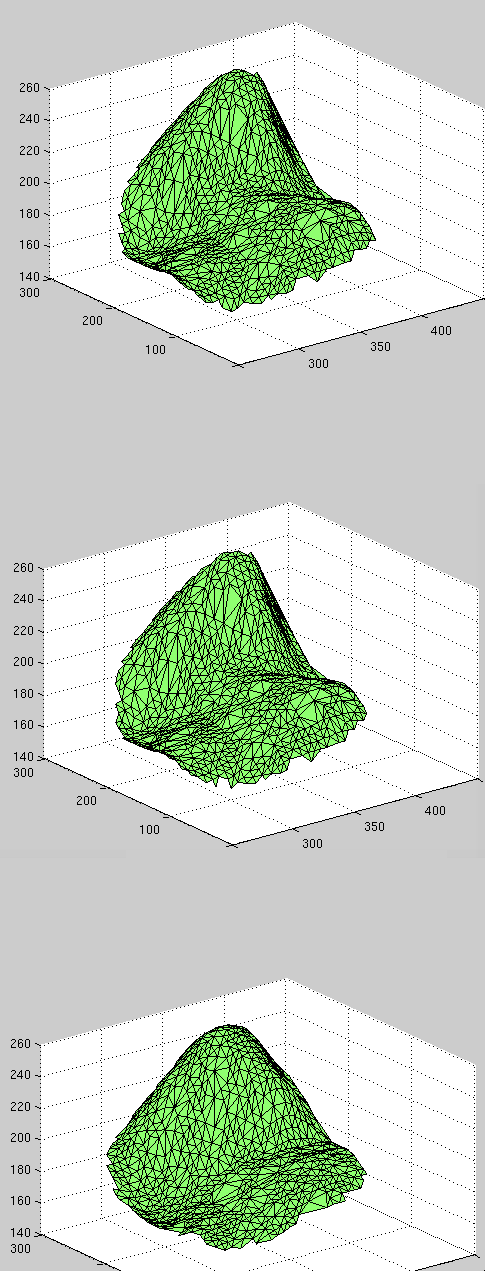
Subject surfaces

The following image represents a performance ROC curve we have.
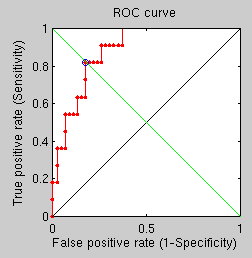
ROC curve dilation approach

In simple terms, this means that we’re able to classify correctly about 70% of the time. Having summarised a year’s work, culminating in mostly unsuccessful experiments around diffusion (around 97^ recognition rate, the above is poor, So I return to working with geodesic distances as the Swiss army knife for measurement of distances. But the approach being explored at the moment is different and with further enhancement it can hopefully yield performance higher than 97% (matching rate). The sources of limitation are generally well understood in the sense that they can be visualised and overlaid on top of the image pairs. There is no trivial and reliable way to establish multiple landmark points around which to measure distances consistently, so I am trying another way, which at a very coarse level has a matching rate of about 80% (can be significantly improved soon).

The approach attempted at this stage involves triangle comparison post- and pre-marking, but the performance attained so far is not satisfactory.

The limitation is likely inherent in the measuring of distances in FMM and the sub-sampling that results from triangulation (see image for the size of triangles to be fully appreciated).

One particular weakness of the diffusion approach to masking is that it leads to holes in the data, which invalidates some of the measures that were used routinely beforehand. In order to fuse together both geodesic and spectral measures, we now attempt to get a more symbiotic approach that carves out surfaces based on geodesic properties and then uses spectral features on these surfaces. Since ordering does not exist (e.g. point-to-point correspondences), the histogram of images is used to describe the sub-surfaces (carved out around a known correspondence). By increasing the number of rings and bins in the histogram, the performance can be varied somewhat. I was running overnight experiment to test this and got some other appalling ROC curves, such as this:
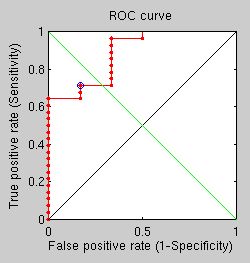
Curve dilation approach with more rings

The results from the last experiment were disappointing because they did not provide good separability. So the following morning I designed and started running an experiment that explores the potential of measuring diffusion distance between furthest points in the surface carved in accordance with geodesic boundaries (several rings). This too did not give good results. Generally speaking, diffusion distance as a measurement has not proven to be anywhere as useful as FMM so far (since December). It seems to be insensitive to small differences and it does not seem to degrade linearly, either. The next experimental design will explore another new approach, perhaps conceding the potential of diffusion being integrated into the framework’s pipeline.

So the question is this: given two surfaces that are geodetically craves around the surface, what approach would you use to compare them for similarity? We’ve tried a variety of known methods, but none seems to yield very encouraging results thus far. Thanks for any advice or pointers you may have.

Explanation of Visual Memory

PCA and Multidimensional Scaling in Shapes

This series of videos is a rough explanation of the approach taken in order to utilise principal component analysts (PCA) in the task of shape classification. This was done without preparation or second takes, so the quality and clarity are not particularly high.
PCA and Multidimensional Scaling in Shapes – Part 0

PCA and Multidimensional Scaling in Shapes – Part 1

PCA and Multidimensional Scaling in Shapes – Part 2

PCA and Multidimensional Scaling in Shapes – Part 3

PCA and Multidimensional Scaling in Shapes – Part 4

PCA and Multidimensional Scaling in Shapes – Part 5

PCA and Multidimensional Scaling in Shapes – Part 6

PCA and Multidimensional Scaling in Shapes – Part 7

PCA and Multidimensional Scaling in Shapes – Part 8

PCA and Multidimensional Scaling in Shapes – Part 9

PCA and Multidimensional Scaling in Shapes – Part 10

PCA and Multidimensional Scaling in Shapes – Part 11

PCA and Multidimensional Scaling in Shapes – Part 12

PCA and Multidimensional Scaling in Shapes – Part 13

PCA and Multidimensional Scaling in Shapes – Part 14

PCA and Multidimensional Scaling in Shapes – Part 15

Expressions Data in FRGC 2.0 (3-D)

I recently needed to gather 3-D data of different people’s faces, in order to perform experiments on these and test new algorithms that I had developed. The problem was, without some metadata regarding expressions, how might I find correct pairs suiting a particular criterion/ia? Two universities that I contacted had some data of this kind, but they were unwilling to share it (Open Data principles betrayed). So I had to do it myself using a dataset I mentioned here before [1, 2]. So far I have covered smiles and since it takes a lot of time to achieve this, I would like to share my work with those pursuing similar data.

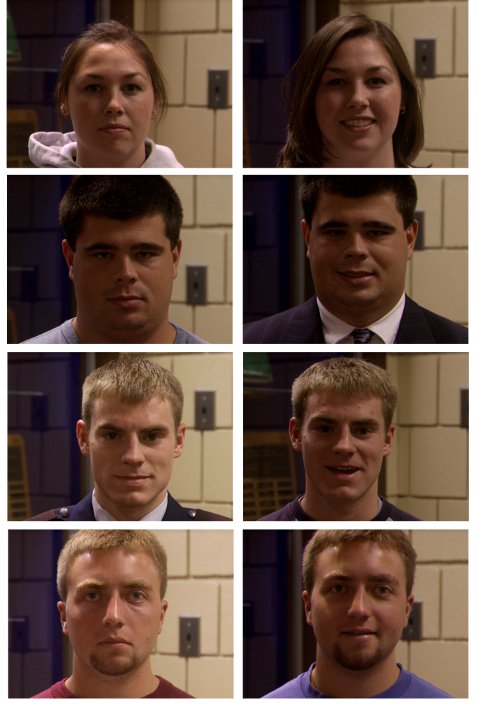
To proactively remove allegations of the set being too easy to deal with (picky-ness in peer review), the most difficult partition when it comes to acquisition quality is taken. The figure below shows some examples of pairs that are being used after being selected as not many images contain expression variation. The selection process of very tedious as very few 3-D images exist with expressions in them, especially ones from the same person (required for consistent training assuming intra-subject residues are alike for common expressions).

Face expressions
Examples of the faces used tor training and recognition, with neutrals on the left and smiles on the right (note: this is just the texture of 3-D images)

About 5 hours were spent classifying the NIST datasets for future experiments. An initial subset of it is put in loader files. From the whole 3-D data of the Face Recognition Grand Challenge, one can only find a few hundreds of distinct individuals. Not all of them have an acquisition with a smile. I found just over 80 by manually browsing everything and some will be hard to work with due to obvious cases of degraded signal. The criteria was that all parts of the face (mouth upwards) must be visible and the expression one of happiness, not necessarily a smile.

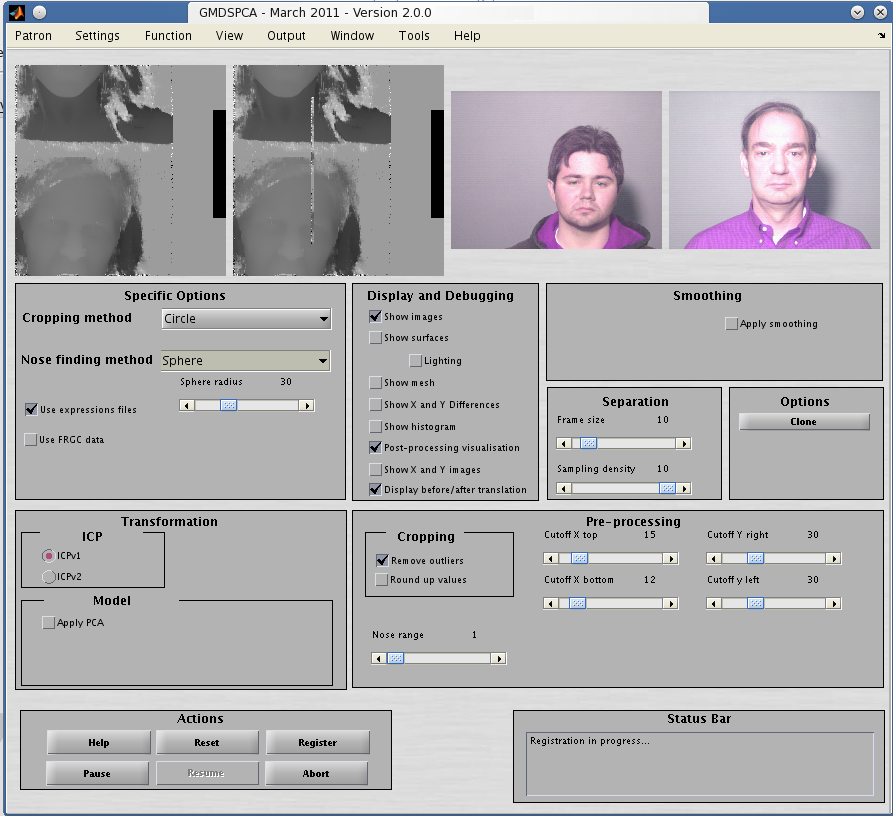
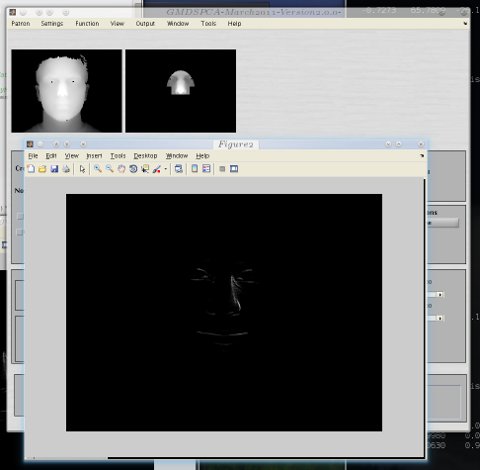
The program works reasonably well (see the figure below) with new implementations of ICP (there are two main ones from my research group) and the new data which comprises 86 pairs, or 172 images in total.

Expressions data

Examples of the program with the new data and methods in place

Here is the statement for loading the pairs of expressions in GNU Octave or in MATLAB, in case someone needs a large pile of gigabytes of consistent expressions data.

    images_list={'neutral' 
  ;'~/NIST/FRGC-2.0-dist/nd1/Fall2003range/04471d273.abs' 


  ;'smile' 
  ;'~/NIST/FRGC-2.0-dist/nd1/Fall2003range/04471d271.abs' 


  ;'neutral' 
  ;'~/NIST/FRGC-2.0-dist/nd1/Fall2003range/04472d226.abs' 


  ;'smile' 
  ;'~/NIST/FRGC-2.0-dist/nd1/Fall2003range/04472d230.abs' 


  ;'neutral' 
  ;'~/NIST/FRGC-2.0-dist/nd1/Fall2003range/04473d185.abs' 


  ;'smile' 
  ;'~/NIST/FRGC-2.0-dist/nd1/Fall2003range/04473d193.abs' 


  ;'neutral' 
  ;'~/NIST/FRGC-2.0-dist/nd1/Fall2003range/04479d222.abs' 


  ;'smile' 
  ;'~/NIST/FRGC-2.0-dist/nd1/Fall2003range/04479d224.abs' 


  ;'neutral' 
  ;'~/NIST/FRGC-2.0-dist/nd1/Fall2003range/04484d189.abs' 


  ;'smile'
  ;'~/NIST/FRGC-2.0-dist/nd1/Fall2003range/04484d191.abs'


  ;'neutral'
  ;'~/NIST/FRGC-2.0-dist/nd1/Fall2003range/04485d290.abs'


  ;'smile'
  ;'~/NIST/FRGC-2.0-dist/nd1/Fall2003range/04485d292.abs'

  ;'neutral'
  ;'~/NIST/FRGC-2.0-dist/nd1/Fall2003range/04488d286.abs'

  ;'smile'
  ;'~/NIST/FRGC-2.0-dist/nd1/Fall2003range/04488d288.abs'


  ;'neutral'
  ;'~/NIST/FRGC-2.0-dist/nd1/Fall2003range/04495d313.abs'

  ;'smile'
  ;'~/NIST/FRGC-2.0-dist/nd1/Fall2003range/04495d317.abs'


  ;'neutral'
  ;'~/NIST/FRGC-2.0-dist/nd1/Fall2003range/04496d246.abs'

  ;'smile'
  ;'~/NIST/FRGC-2.0-dist/nd1/Fall2003range/04496d250.abs'


  ;'neutral'
  ;'~/NIST/FRGC-2.0-dist/nd1/Fall2003range/04502d60.abs'

  ;'smile'
  ;'~/NIST/FRGC-2.0-dist/nd1/Fall2003range/04502d58.abs'


  ;'neutral'
  ;'~/NIST/FRGC-2.0-dist/nd1/Fall2003range/04505d218.abs'

  ;'smile'
  ;'~/NIST/FRGC-2.0-dist/nd1/Fall2003range/04505d224.abs'


  ;'neutral'
  ;'~/NIST/FRGC-2.0-dist/nd1/Fall2003range/04507d309.abs'

  ;'smile'
  ;'~/NIST/FRGC-2.0-dist/nd1/Fall2003range/04507d305.abs'


  ;'neutral'
  ;'~/NIST/FRGC-2.0-dist/nd1/Fall2003range/04509d276.abs'

  ;'smile'
  ;'~/NIST/FRGC-2.0-dist/nd1/Fall2003range/04509d282.abs'


  ;'neutral'
  ;'~/NIST/FRGC-2.0-dist/nd1/Fall2003range/04508d83.abs'

  ;'smile'
  ;'~/NIST/FRGC-2.0-dist/nd1/Fall2003range/04508d85.abs'


  ;'neutral'
  ;'~/NIST/FRGC-2.0-dist/nd1/Fall2003range/04511d178.abs'

  ;'smile'
  ;'~/NIST/FRGC-2.0-dist/nd1/Fall2003range/04511d176.abs'


  ;'neutral'
  ;'~/NIST/FRGC-2.0-dist/nd1/Fall2003range/04514d326.abs'

  ;'smile'
  ;'~/NIST/FRGC-2.0-dist/nd1/Fall2003range/04514d328.abs'


  ;'neutral'
  ;'~/NIST/FRGC-2.0-dist/nd1/Fall2003range/04513d303.abs'

  ;'smile'
  ;'~/NIST/FRGC-2.0-dist/nd1/Fall2003range/04513d309.abs'


  ;'neutral'
  ;'~/NIST/FRGC-2.0-dist/nd1/Fall2003range/04530d321.abs'

  ;'smile'
  ;'~/NIST/FRGC-2.0-dist/nd1/Fall2003range/04530d323.abs'


  ;'neutral'
  ;'~/NIST/FRGC-2.0-dist/nd1/Fall2003range/04519d204.abs'

  ;'smile'
  ;'~/NIST/FRGC-2.0-dist/nd1/Fall2003range/04519d210.abs'

  ;'neutral'
  ;'~/NIST/FRGC-2.0-dist/nd1/Fall2003range/04531d297.abs'

  ;'smile'
  ;'~/NIST/FRGC-2.0-dist/nd1/Fall2003range/04531d295.abs'


  ;'neutral'
  ;'~/NIST/FRGC-2.0-dist/nd1/Fall2003range/04537d328.abs'

  ;'smile'
  ;'~/NIST/FRGC-2.0-dist/nd1/Fall2003range/04537d330.abs'


  ;'neutral'
  ;'~/NIST/FRGC-2.0-dist/nd1/Fall2003range/04535d213.abs'

  ;'smile'
  ;'~/NIST/FRGC-2.0-dist/nd1/Fall2003range/04535d217.abs'


  ;'neutral'
  ;'~/NIST/FRGC-2.0-dist/nd1/Fall2003range/04546d75.abs'

  ;'smile'
  ;'~/NIST/FRGC-2.0-dist/nd1/Fall2003range/04546d71.abs'


  ;'neutral'
  ;'~/NIST/FRGC-2.0-dist/nd1/Fall2003range/04542d118.abs'

  ;'smile'
  ;'~/NIST/FRGC-2.0-dist/nd1/Fall2003range/04542d114.abs'


  ;'neutral'
  ;'~/NIST/FRGC-2.0-dist/nd1/Fall2003range/04556d311.abs'

  ;'smile'
  ;'~/NIST/FRGC-2.0-dist/nd1/Fall2003range/04556d315.abs'


  ;'neutral'
  ;'~/NIST/FRGC-2.0-dist/nd1/Fall2003range/04557d337.abs'


  ;'smile'
  ;'~/NIST/FRGC-2.0-dist/nd1/Fall2003range/04557d339.abs'

  ;'neutral'
  ;'~/NIST/FRGC-2.0-dist/nd1/Fall2003range/04559d314.abs'


  ;'smile'
  ;'~/NIST/FRGC-2.0-dist/nd1/Fall2003range/04559d320.abs'

  ;'neutral'
  ;'~/NIST/FRGC-2.0-dist/nd1/Fall2003range/04560d273.abs'


  ;'smile'
  ;'~/NIST/FRGC-2.0-dist/nd1/Fall2003range/04560d275.abs'


  ;'neutral'
  ;'~/NIST/FRGC-2.0-dist/nd1/Fall2003range/04569d288.abs'

  ;'smile'
  ;'~/NIST/FRGC-2.0-dist/nd1/Fall2003range/04569d286.abs'


  ;'neutral'
  ;'~/NIST/FRGC-2.0-dist/nd1/Fall2003range/04577d290.abs'

  ;'smile'
  ;'~/NIST/FRGC-2.0-dist/nd1/Fall2003range/04577d292.abs'


  ;'neutral'
  ;'~/NIST/FRGC-2.0-dist/nd1/Fall2003range/04580d299.abs'

  ;'smile'
  ;'~/NIST/FRGC-2.0-dist/nd1/Fall2003range/04580d307.abs'


  ;'neutral'
  ;'~/NIST/FRGC-2.0-dist/nd1/Fall2003range/04581d200.abs'

  ;'smile'
  ;'~/NIST/FRGC-2.0-dist/nd1/Fall2003range/04581d202.abs'


  ;'neutral'
  ;'~/NIST/FRGC-2.0-dist/nd1/Fall2003range/04588d137.abs'

  ;'smile'
  ;'~/NIST/FRGC-2.0-dist/nd1/Fall2003range/04588d135.abs'


  ;'neutral'
  ;'~/NIST/FRGC-2.0-dist/nd1/Fall2003range/04589d246.abs'

  ;'smile'
  ;'~/NIST/FRGC-2.0-dist/nd1/Fall2003range/04589d248.abs'


  ;'neutral'
  ;'~/NIST/FRGC-2.0-dist/nd1/Fall2003range/04593d200.abs'

  ;'smile'
  ;'~/NIST/FRGC-2.0-dist/nd1/Fall2003range/04593d202.abs'


  ;'neutral'
  ;'~/NIST/FRGC-2.0-dist/nd1/Fall2003range/04595d93.abs'

  ;'smile'
  ;'~/NIST/FRGC-2.0-dist/nd1/Fall2003range/04595d95.abs'


  ;'neutral'
  ;'~/NIST/FRGC-2.0-dist/nd1/Fall2003range/04596d78.abs'

  ;'smile'
  ;'~/NIST/FRGC-2.0-dist/nd1/Fall2003range/04596d84.abs'


  ;'neutral'
  ;'~/NIST/FRGC-2.0-dist/nd1/Fall2003range/04600d249.abs'

  ;'smile'
  ;'~/NIST/FRGC-2.0-dist/nd1/Fall2003range/04600d251.abs'


  ;'neutral'
  ;'~/NIST/FRGC-2.0-dist/nd1/Fall2003range/04603d141.abs'

  ;'smile'
  ;'~/NIST/FRGC-2.0-dist/nd1/Fall2003range/04603d143.abs'


  ;'neutral'
  ;'~/NIST/FRGC-2.0-dist/nd1/Fall2003range/04605d243.abs'

  ;'smile'
  ;'~/NIST/FRGC-2.0-dist/nd1/Fall2003range/04605d239.abs'


  ;'neutral'
  ;'~/NIST/FRGC-2.0-dist/nd1/Fall2003range/04609d98.abs'

  ;'smile'
  ;'~/NIST/FRGC-2.0-dist/nd1/Fall2003range/04609d100.abs'


  ;'neutral'
  ;'~/NIST/FRGC-2.0-dist/nd1/Fall2003range/04606d180.abs'

  ;'smile'
  ;'~/NIST/FRGC-2.0-dist/nd1/Fall2003range/04606d182.abs'


  ;'neutral'
  ;'~/NIST/FRGC-2.0-dist/nd1/Fall2003range/04605d255.abs'

  ;'smile'
  ;'~/NIST/FRGC-2.0-dist/nd1/Fall2003range/04605d253.abs'


  ;'neutral'
  ;'~/NIST/FRGC-2.0-dist/nd1/Fall2003range/04622d238.abs'

  ;'smile'
  ;'~/NIST/FRGC-2.0-dist/nd1/Fall2003range/04622d240.abs'


  ;'neutral'
  ;'~/NIST/FRGC-2.0-dist/nd1/Fall2003range/04619d163.abs'

  ;'smile'
  ;'~/NIST/FRGC-2.0-dist/nd1/Fall2003range/04619d161.abs'


  ;'neutral'
  ;'~/NIST/FRGC-2.0-dist/nd1/Fall2003range/04629d144.abs'

  ;'smile'
  ;'~/NIST/FRGC-2.0-dist/nd1/Fall2003range/04629d146.abs'


  ;'neutral'
  ;'~/NIST/FRGC-2.0-dist/nd1/Fall2003range/04644d204.abs'

  ;'smile'
  ;'~/NIST/FRGC-2.0-dist/nd1/Fall2003range/04644d206.abs'


  ;'neutral'
  ;'~/NIST/FRGC-2.0-dist/nd1/Fall2003range/04645d95.abs'

  ;'smile'
  ;'~/NIST/FRGC-2.0-dist/nd1/Fall2003range/04645d93.abs'


  ;'neutral'
  ;'~/NIST/FRGC-2.0-dist/nd1/Fall2003range/04697d80.abs'

  ;'smile'
  ;'~/NIST/FRGC-2.0-dist/nd1/Fall2003range/04697d78.abs'


  ;'neutral'
  ;'~/NIST/FRGC-2.0-dist/nd1/Fall2003range/04696d40.abs'

  ;'smile'
  ;'~/NIST/FRGC-2.0-dist/nd1/Fall2003range/04696d42.abs'


  ;'neutral'
  ;'~/NIST/FRGC-2.0-dist/nd1/Fall2003range/04691d50.abs'

  ;'smile'
  ;'~/NIST/FRGC-2.0-dist/nd1/Fall2003range/04691d48.abs'


  ;'neutral'
  ;'~/NIST/FRGC-2.0-dist/nd1/Fall2003range/04688d40.abs'

  ;'smile'
  ;'~/NIST/FRGC-2.0-dist/nd1/Fall2003range/04688d36.abs'


  ;'neutral'
  ;'~/NIST/FRGC-2.0-dist/nd1/Fall2003range/04684d232.abs'

  ;'smile'
  ;'~/NIST/FRGC-2.0-dist/nd1/Fall2003range/04684d234.abs'


  ;'neutral'
  ;'~/NIST/FRGC-2.0-dist/nd1/Fall2003range/04682d122.abs'

  ;'smile'
  ;'~/NIST/FRGC-2.0-dist/nd1/Fall2003range/04682d128.abs'


  ;'neutral'
  ;'~/NIST/FRGC-2.0-dist/nd1/Fall2003range/04675d251.abs'

  ;'smile'
  ;'~/NIST/FRGC-2.0-dist/nd1/Fall2003range/04675d253.abs'


  ;'neutral'
  ;'~/NIST/FRGC-2.0-dist/nd1/Fall2003range/04673d188.abs'

  ;'smile'
  ;'~/NIST/FRGC-2.0-dist/nd1/Fall2003range/04673d190.abs'


  ;'neutral'
  ;'~/NIST/FRGC-2.0-dist/nd1/Fall2003range/04699d42.abs'

  ;'smile'
  ;'~/NIST/FRGC-2.0-dist/nd1/Fall2003range/04699d44.abs'


  ;'neutral'
  ;'~/NIST/FRGC-2.0-dist/nd1/Fall2003range/04700d18.abs'

  ;'smile'
  ;'~/NIST/FRGC-2.0-dist/nd1/Fall2003range/04700d20.abs'


  ;'neutral'
  ;'~/NIST/FRGC-2.0-dist/nd1/Fall2003range/04703d46.abs'

  ;'smile'
  ;'~/NIST/FRGC-2.0-dist/nd1/Fall2003range/04703d42.abs'


  ;'neutral'
  ;'~/NIST/FRGC-2.0-dist/nd1/Fall2003range/04704d22.abs'

  ;'smile'
  ;'~/NIST/FRGC-2.0-dist/nd1/Fall2003range/04704d18.abs'


  ;'neutral'
  ;'~/NIST/FRGC-2.0-dist/nd1/Fall2003range/04711d53.abs'

  ;'smile'
  ;'~/NIST/FRGC-2.0-dist/nd1/Fall2003range/04711d47.abs'


  ;'neutral'
  ;'~/NIST/FRGC-2.0-dist/nd1/Fall2003range/04715d12.abs'

  ;'smile'
  ;'~/NIST/FRGC-2.0-dist/nd1/Fall2003range/04715d14.abs'


  ;'neutral'
  ;'~/NIST/FRGC-2.0-dist/nd1/Fall2003range/04717d49.abs'

  ;'smile'
  ;'~/NIST/FRGC-2.0-dist/nd1/Fall2003range/04717d43.abs'


  ;'neutral'
  ;'~/NIST/FRGC-2.0-dist/nd1/Fall2003range/04719d86.abs'

  ;'smile'
  ;'~/NIST/FRGC-2.0-dist/nd1/Fall2003range/04719d88.abs'


  ;'neutral'
  ;'~/NIST/FRGC-2.0-dist/nd1/Fall2003range/04721d48.abs'

  ;'smile'
  ;'~/NIST/FRGC-2.0-dist/nd1/Fall2003range/04721d46.abs'


  ;'neutral'
  ;'~/NIST/FRGC-2.0-dist/nd1/Fall2003range/04728d44.abs'

  ;'smile'
  ;'~/NIST/FRGC-2.0-dist/nd1/Fall2003range/04728d42.abs'


  ;'neutral'
  ;'~/NIST/FRGC-2.0-dist/nd1/Fall2003range/04737d38.abs'

  ;'smile'
  ;'~/NIST/FRGC-2.0-dist/nd1/Fall2003range/04737d36.abs'


  ;'neutral'
  ;'~/NIST/FRGC-2.0-dist/nd1/Fall2003range/04737d38.abs'

  ;'smile'
  ;'~/NIST/FRGC-2.0-dist/nd1/Fall2003range/04737d36.abs'


  ;'neutral'
  ;'~/NIST/FRGC-2.0-dist/nd1/Fall2003range/04749d80.abs'

  ;'smile'
  ;'~/NIST/FRGC-2.0-dist/nd1/Fall2003range/04749d82.abs'


  ;'neutral'
  ;'~/NIST/FRGC-2.0-dist/nd1/Fall2003range/04750d54.abs'

  ;'smile'
  ;'~/NIST/FRGC-2.0-dist/nd1/Fall2003range/04750d56.abs'


  ;'neutral'
  ;'~/NIST/FRGC-2.0-dist/nd1/Fall2003range/04754d78.abs'

  ;'smile'
  ;'~/NIST/FRGC-2.0-dist/nd1/Fall2003range/04754d80.abs'


  ;'neutral'
  ;'~/NIST/FRGC-2.0-dist/nd1/Fall2003range/04756d73.abs'

  ;'smile'
  ;'~/NIST/FRGC-2.0-dist/nd1/Fall2003range/04756d75.abs'


  ;'neutral'
  ;'~/NIST/FRGC-2.0-dist/nd1/Fall2003range/04762d43.abs'

  ;'smile'
  ;'~/NIST/FRGC-2.0-dist/nd1/Fall2003range/04762d41.abs'


  ;'neutral'
  ;'~/NIST/FRGC-2.0-dist/nd1/Fall2003range/04763d68.abs'

  ;'smile'
  ;'~/NIST/FRGC-2.0-dist/nd1/Fall2003range/04763d70.abs'


  ;'neutral'
  ;'~/NIST/FRGC-2.0-dist/nd1/Fall2003range/04766d24.abs'

  ;'smile'
  ;'~/NIST/FRGC-2.0-dist/nd1/Fall2003range/04766d30.abs'


  ;'neutral'  
  ;'~/NIST/FRGC-2.0-dist/nd1/Fall2003range/04767d38.abs'

  ;'smile'
  ;'~/NIST/FRGC-2.0-dist/nd1/Fall2003range/04767d36.abs'


  ;'neutral'
  ;'~/NIST/FRGC-2.0-dist/nd1/Fall2003range/04768d76.abs'

  ;'smile'
  ;'~/NIST/FRGC-2.0-dist/nd1/Fall2003range/04768d74.abs'


  ;'neutral'
  ;'~/NIST/FRGC-2.0-dist/nd1/Fall2003range/04773d84.abs'

  ;'smile'
  ;'~/NIST/FRGC-2.0-dist/nd1/Fall2003range/04773d78.abs'


  ;'neutral'
  ;'~/NIST/FRGC-2.0-dist/nd1/Fall2003range/04775d80.abs'

  ;'smile'
  ;'~/NIST/FRGC-2.0-dist/nd1/Fall2003range/04775d82.abs'


  ;'neutral'
  ;'~/NIST/FRGC-2.0-dist/nd1/Fall2003range/04777d88.abs'

  ;'smile'
  ;'~/NIST/FRGC-2.0-dist/nd1/Fall2003range/04777d84.abs'


  ;'neutral'
  ;'~/NIST/FRGC-2.0-dist/nd1/Fall2003range/04779d52.abs'

  ;'smile'
  ;'~/NIST/FRGC-2.0-dist/nd1/Fall2003range/04779d48.abs'


  ;'neutral'
  ;'~/NIST/FRGC-2.0-dist/nd1/Fall2003range/04805d60.abs'

  ;'smile'
  ;'~/NIST/FRGC-2.0-dist/nd1/Fall2003range/04805d62.abs'


  ;'neutral'
  ;'~/NIST/FRGC-2.0-dist/nd1/Fall2003range/04808d32.abs'

  ;'smile'
  ;'~/NIST/FRGC-2.0-dist/nd1/Fall2003range/04808d30.abs'


  ;'neutral'
  ;'~/NIST/FRGC-2.0-dist/nd1/Fall2003range/04821d44.abs'

  ;'smile'
  ;'~/NIST/FRGC-2.0-dist/nd1/Fall2003range/04820d36.abs'


  ;'neutral'
  ;'~/NIST/FRGC-2.0-dist/nd1/Fall2003range/04836d47.abs'

  ;'smile'
  ;'~/NIST/FRGC-2.0-dist/nd1/Fall2003range/04836d49.abs'


  ;'neutral'
  ;'~/NIST/FRGC-2.0-dist/nd1/Fall2003range/04853d50.abs'

  ;'smile'
  ;'~/NIST/FRGC-2.0-dist/nd1/Fall2003range/04853d48.abs'};

Later on I am going to publish all the code and about 100 pages of text. It needs tidying up first.

KWin Wall on Dual-Head Displays

Summary: Weakness in 3-D desktop effects in KDE4

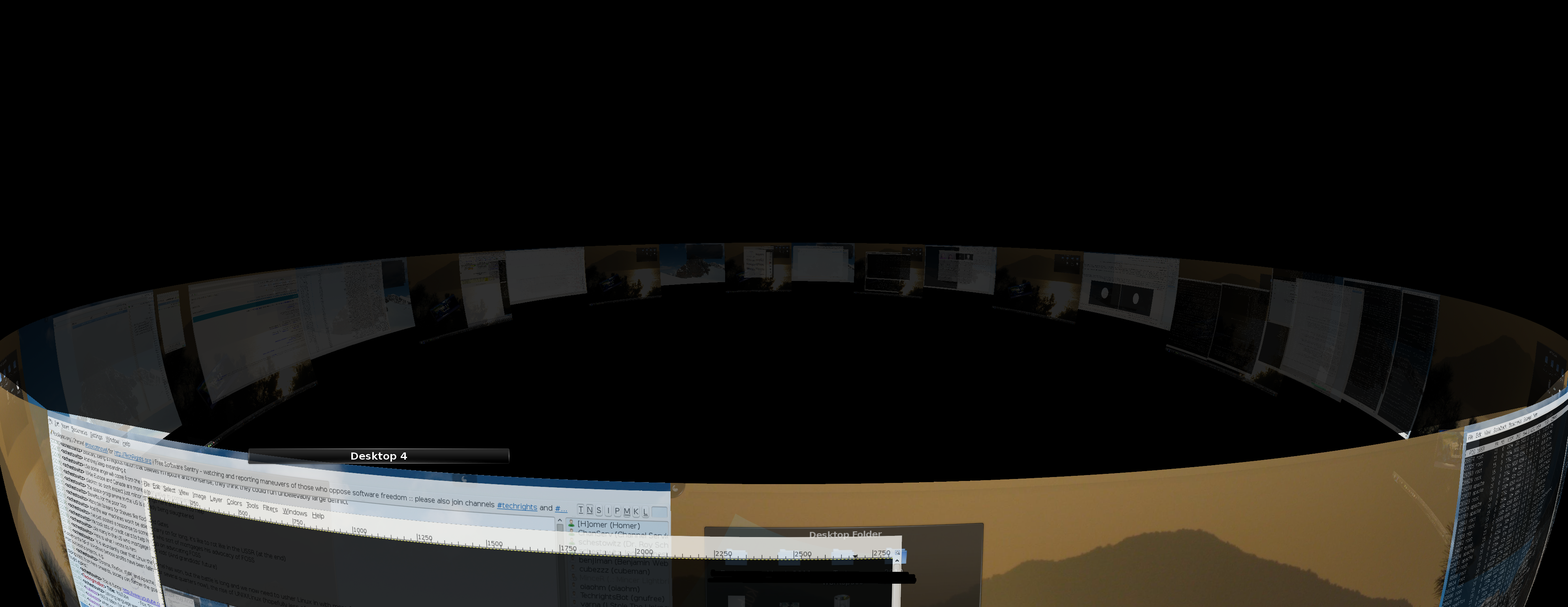
THERE seems to be a deficiency or a bug that may or may not be present upstream/in Compiz too (I seem to recall it not being present in Mandriva 2008 with KDE and Compiz). Basically, as the screenshots below show, the desktop wall separates the left and the right hand side monitors in a rather awkward way, such that they basically completely diverge and do not align horizontally, either (due to different screen sizes). For visual demonstration, here is what the wall looks like:

Scale in KDE

Here is what the sphere of my desktop looks like:

Sphere KDE

The connection between left and right is correct in this case. Scale and the other 3-D plug-ins work just fine, but the split in the wall is clearly a bug.

Outperforming PCA, Revisiting MATLAB

Post-denoising small

I currently work on a very fascinating project which deals with 3-D face recognition, as already stated back in January. Progress has been noticeable recently (easier to get coding done when the Internet is mostly unavailable due to Bad Telecom [1, 2, 3]) and the accompanying text is now about 50 pages long.

A few observations about MATLAB: the programming framework has not really developed much since 2003. It’s either quite stagnant or improved only in unseen places. I did not forget how to develop a GUI environment very rapidly.

A few observations about PCA: the method is a little antiquated and it can probably be outperformed by more problem-specific implementations of algorithms we explore.

A few observations about Bad Telecom (or Bastards Telecom, although some people view the word bastard as too strong): they only ever serve the customer properly if he/she becomes a threat to the reputation of the business. It is sad that customers must be seen as a risk before they can actually get progress made.

Contracting for Scientific Betterment

Tourists checking a map

Helping hand for Free software entrants in science

Earlier this month I wrote about a new ‘umbrella’ under which I’ll be able to accept contracts, as I’ve been doing for about a decade now. The banner chosen for it is “Scientific Freedom” and the official site for it is still not finished even though I’m reasonably happy with the state that it’s in, so it’s now public. I’m fortunate enough to have met skilled people around the Web — people with whom I can share work in case it’s geographically suitable or in cases where workload is high. So even though there’s nothing too new here, the site is new and it makes it abundantly clear that I only ever code for freedom (preferably GPLv3) because it’s beneficial to everyone, the client included.

Retrieval statistics: 21 queries taking a total of 0.105 seconds • Please report low bandwidth using the feedback form
Original styles created by Ian Main (all acknowledgements) • PHP scripts and styles later modified by Roy Schestowitz • Help yourself to a GPL'd copy
|— Proudly powered by W o r d P r e s s — based on a heavily-hacked version 1.2.1 (Mingus) installation —|