 ROWING criticism becomes apparent as personal information on the Internet breaks new boundaries. This recently had CNET ignored by Google. CNET correspondent bluntly disclosed too much information about the personal life of Google CEO, Eric Schmidt. From that damaging article, which among another things, penerated a life of an individual:
“Your search history shows your associations, beliefs, perhaps your medical problems. The things you Google for define you,” Bankston (staff attorney at the Electronic Frontier Foundation) said.
The only way to avoid nasty information from ever being dispersed across the Internet is for everyone to recognise the danger of mentioning names. However, it is possibly too late already — too late to revert things, that is. The Web Archive, as controversial as it may seem, takes snapshots of the Internet periodically and makes these snapshots publicly available. Anything that was ever public remains public, perhaps under a few extra layers. Google cache introduces similar issues.
Recruitment agents or bosses can find out a lot about an individual nowadays. As a personalised instance, a search for my name (in Google) brings up approximately 70,000 results. Adding an extra term to query, ‘roy schestowitz microsoft’, for example, will draw a vivid picture of my mental views on the company. There are nearly 1,000 results for such a Web search.
Privacy is in jeopardy and is bound to be completely compromised as time carries on. Names do not have to be ‘contributed’ by will. Rather often these days, somebody else might mention one’s name, which will later be harvested and made available to anyone who ‘googles’ the name and binds it to some context. It was not too hard to discover a fair deal about families of famous IT founders. There needn’t be the will to disclose that information either. Sooner or later it will ‘leak’ and be made easily available due to. Search on the Web, as well as blogging, are a mixture that leads to dissemination and duplication. Take the embarrassing photo of Bill Gatesas a practical example.
On a different yet related topic, search engines slowly embrace spying, whether intentionally so or not, whether it is ethical or not. It is perhaps due to pressure from investors, who urge to do all that is necessary for increased profit. An IPO is never too helpful in that sense. There is a great deal of fuss revolving around the notorious Google cookie. Microsoft have been labelled “guilty” as well for MSN targetted advertising which involves spying, as well cross-site cookies exchange. Technologies advance and allow better monitoring than ever before, which is factor that raises even more concerns.
Has your privacy been broken apart? If not, it is probably just a matter of time.


 Filed under: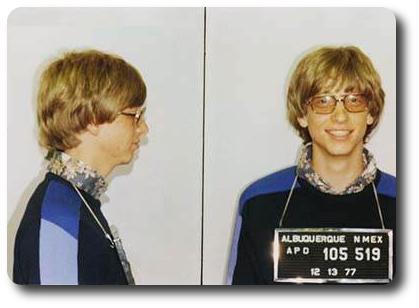


 CWORLD.COM are reporting that Google Video, a service that allows users to browse and view a large variety of videos,
  The move makes it rather clear why
 HERE has been a recent shakeup in the O/S battlescene. Many factors led to the narrow existence of Linux, Windows and the Mac in that conceptual picture which contains significant platforms. Other platforms are no longer catered for; support for them becomes a rarity.

 ANY must have wondered why the latest version of Windows, namely Windows XP, dates back to the end of 2001. Moreover, one might ask, why has it been so fragile and susceptible to attacks? Service packs were merely a plaster that covered up a variety of loopholes. Monthly security patches did not help credibility either.

 recently came across a fantastic Linux-based, pocket-sized machine which boasts several desireable features. The name of the device is the