


The Optical Fibre Experience — Part VI (I’m Canceling my Order and Why You Should Never Make the Mistake I Made)
 Filed under:
 Previously in this mini-series: Part I, Part II, What Bad BT Engineering Looks Like, Part III, Part IV, Part V
 N Part V some correspondence from BT has been shown/shared (with sensible redaction; no names and addresses included), basically explaining what a rollercoaster ride it can become when you get things wired up for fibre in 2021. In many regions/areas you become their experiment. The sales people, who try to compel you to move to fibre, make it sound like a quick and painless job (even when you challenge them on such a claim, as I did). After arguing for almost an hour on the phone (there would be more hour-long conversations with BT after that) they managed to fool me into accepting the offer by giving discounts*. Little did I know what I was truly getting myself into…
Unfulfilled promises of calls, requests that I call them, waiting at home for a person to show up at unspecified times (this limits what you can do on the day), several entirely pointless scheduled downtimes, not counting all the time spent corresponding, the hole in the wall, and strangers inside the house at a time of a major pandemic. Yes, pandemic. Which then means having to clean things up afterwards (sanitising).
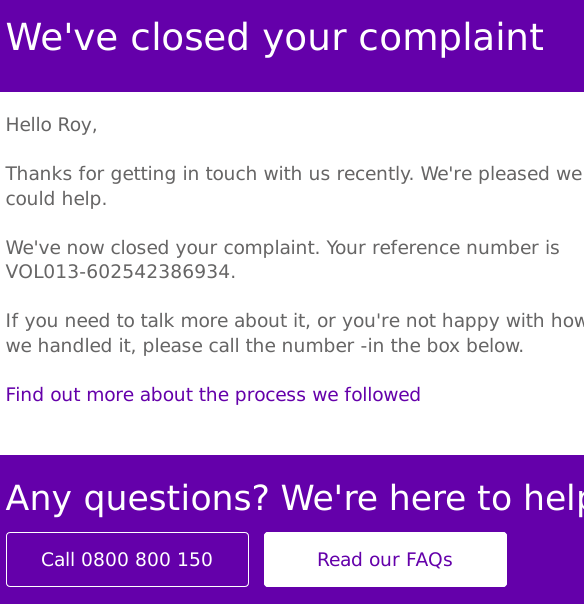
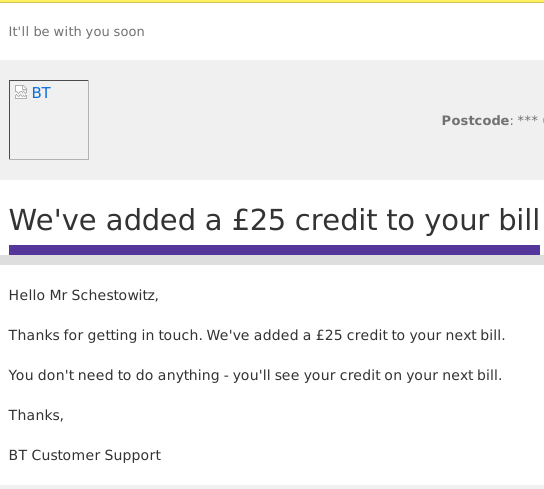
People showing up without the required (and promised) equipment, contradictory advice (they cannot even keep a consistent story), lousy compensation that’s a drop in the ocean compared to what I pay, and still no end in sight. The last thing one needs during a heatwave. I could, instead, write dozens of articles or record videos — the type of stuff I really want to do instead of making calls to phantoms and ghosts with their false promises. Closing complaints without resolutions (or without addressing the underlying issue) was the cream on the cake and serves to show a certain degree of arrogance (as if it’s for them to decide if the customer is satisfied or not).
After further considerations, taking into account the inability to reach anyone over the phone (details below in the footnote), I seriously consider just canceling the entire order. But that won’t stop there; I will actively discourage other people from falling into the trap of potentially empty promises and remorse/regret. Maybe it’s a BT problem, maybe British Internet issue (maybe Openreach), but whatever it is, I very much doubt we’re truly prepared for a smooth transition to fibre. We’re no South Korea; declaring “freedom day” (mass infection) and “independence day” (brexit for racist reasons) isn’t the same as technical excellence. And heck, even from a customer support perspective there are many failures all along the way, as hopefully documented already in Parts 1-5. If cancellation of my order goes through, this will hopefully be my last post in the series, which can instead be summed up in long video form. This 7-part series wasn’t pre-planned or anything; I sincerely hoped things would work out and go smoothly (the tone in earlier parts was a lot more understanding too; I was being very patient). As for the price of compensation, it’s not negotiable from my point of view and the level of compensation was stated very clearly over the phone (they record all the calls) by the person who assured me things would work out. They didn’t. Strike three; you’re the weakest link, goodbye.
_____
* Technically speaking, copper works well enough for me and for many others. It’s not a great technology, but as many people still depend on it the support for it can be better. Sure, it can be expensive/hard to the ISP, but that’s their problem, not ours. I never asked for an upgrade and didn’t even petition for it to become available here (it only very recently got extended to our part of town and they hand-picked me). Someone told me that “no one makes the switching equipment for copper anymore” and so even though they market fibre as ultimate benefit to clients the reality is that those ISPs look after their own interests. Judging by the way it went on so far, “they sound like they are being run by Americans,” one person told me. I told them on July 6th (on the phone) that I would be first in my area — a claim that they decline to comment on but later turned out to be true, based on what Openreach told me. I asked them, what if there’s an issue and it affects only fibre (i.e. me)? I said something along the lines us, would you fix that within minutes? I am safer with “the herd” (copper users). Sure, it’s more economic for them, not for me, to put me on a new kind of service. After speaking to the managers, oddly in the background (caused awkwardness), the sales representative said copper would be more expensive than me moving to fibre, basically convincing me to judge and decide against my intuition/gut feeling only after a discount (they said it would save me about 80 pounds in 2 years). It’s funny how fast they are to make/secure sales, but after that it goes downhill (“our advisors are available 8AM,” said an automated message/voice when I tried phoning at 5AM; I guess the sales team they have not yet sent to call centres in Asia because when it comes to money, not technical issues, they want better spokespeople/reps). Red flags all over this! What if fibre breaks down? Or the wiring has issues? I can phone any time, 24/7, and get a useless kind of technical help (person who follows a template/manual and solves nothing). Remember that a faster connection does not imply it is also more reliable. Speed and reliability aren’t opposites, but choosing something just for speed doesn’t somehow (magically) ensure it’s stable and available 100% of the time. Each time we move or transition from one generation of technology to the next there’s a period of flux with retraining, tuning, and addition of failsafe/redundancy to ameliorate/prevent future recurrence. The trade-offs may be elusive in this case (lack of data at early phases of adoption), but there’s risk associated with changes. As the saying goes, don’t try to fix what’s not broken (many sayings along those lines). From a customer service perspective, it already seems apparent that there’s a considerable gap and poor handling of a situation that’s likely to recur (e.g. if any of my neighbours tried the same, it’s guaranteed they’d go through the same pains). I wish they hadn’t picked me; make sure they don’t pick you, either. It was “planned” or “designed” to fail.


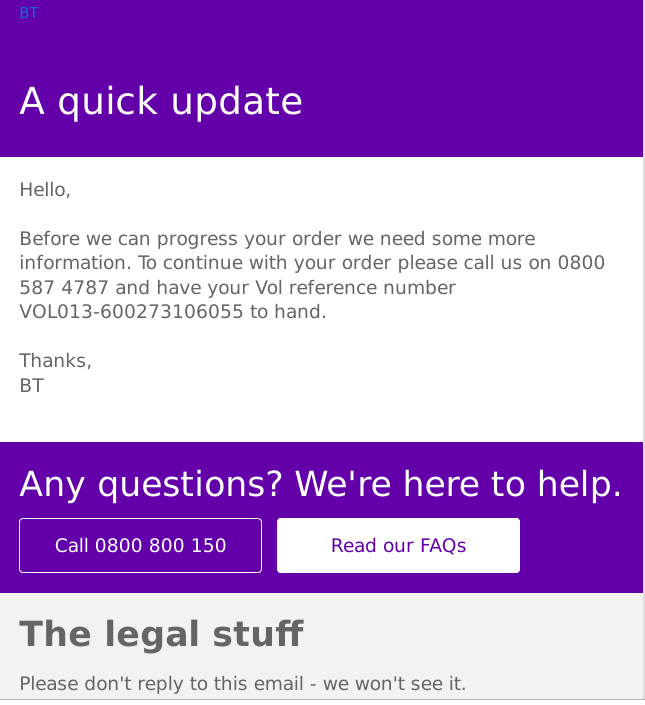
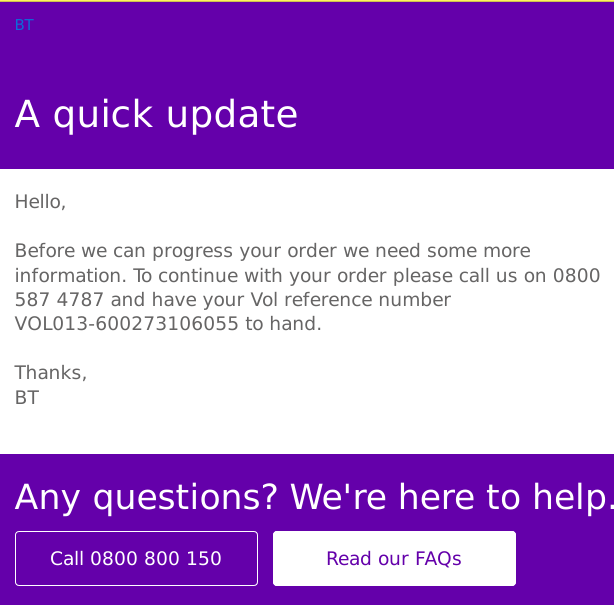
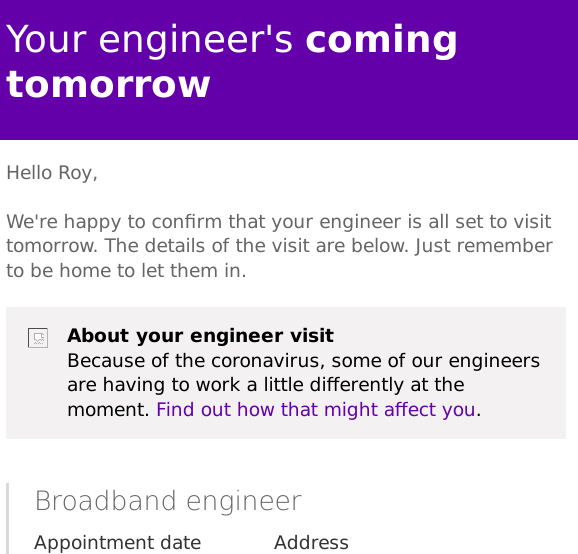
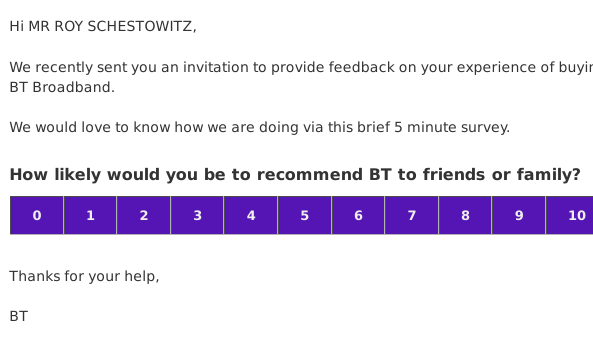
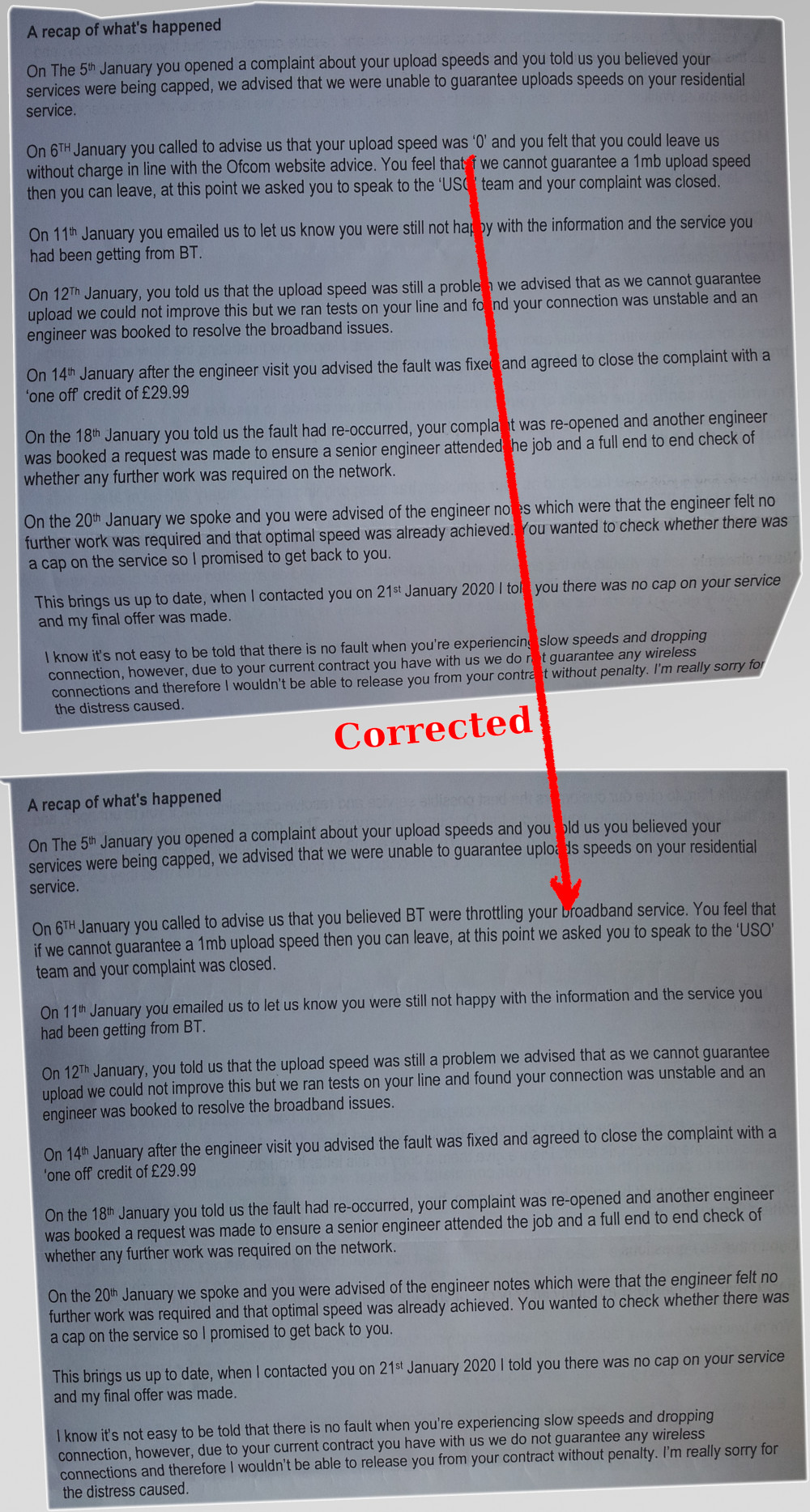
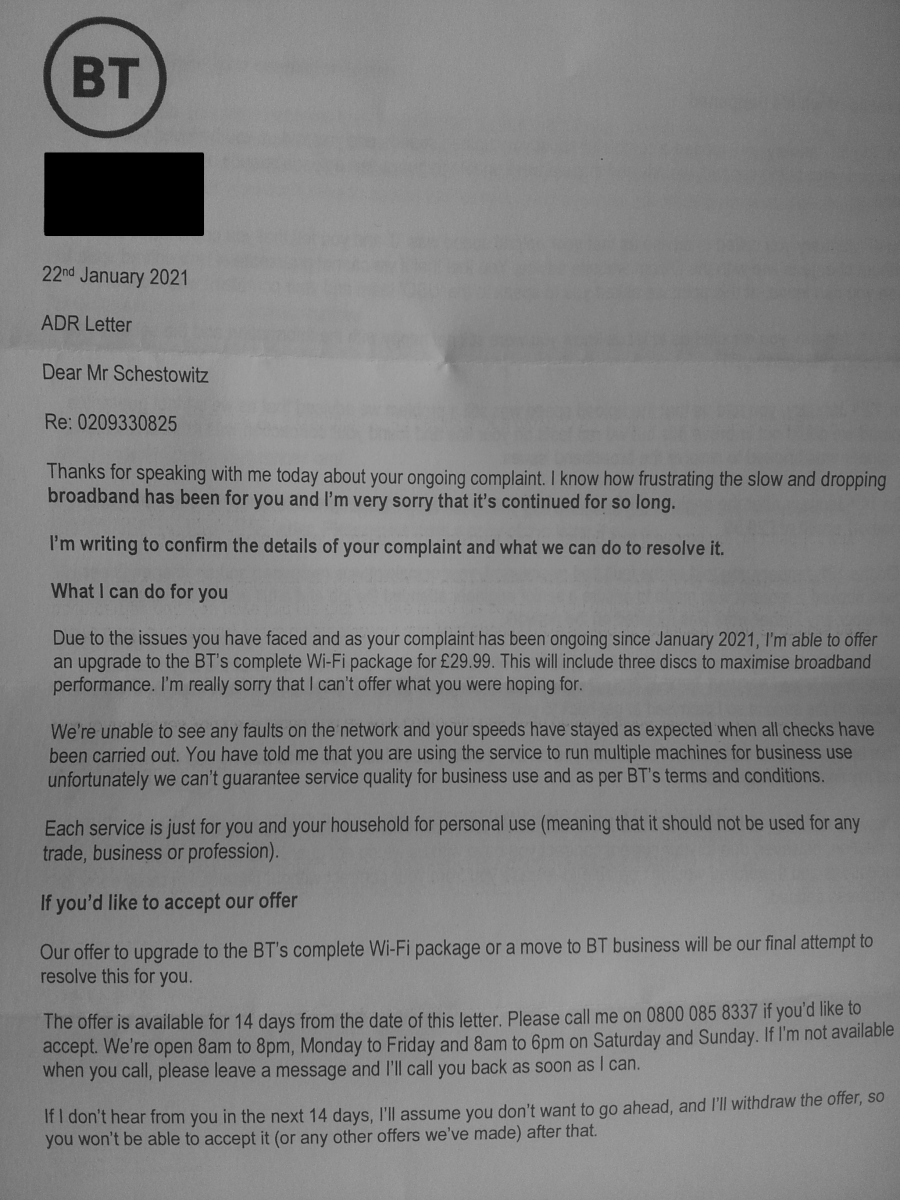
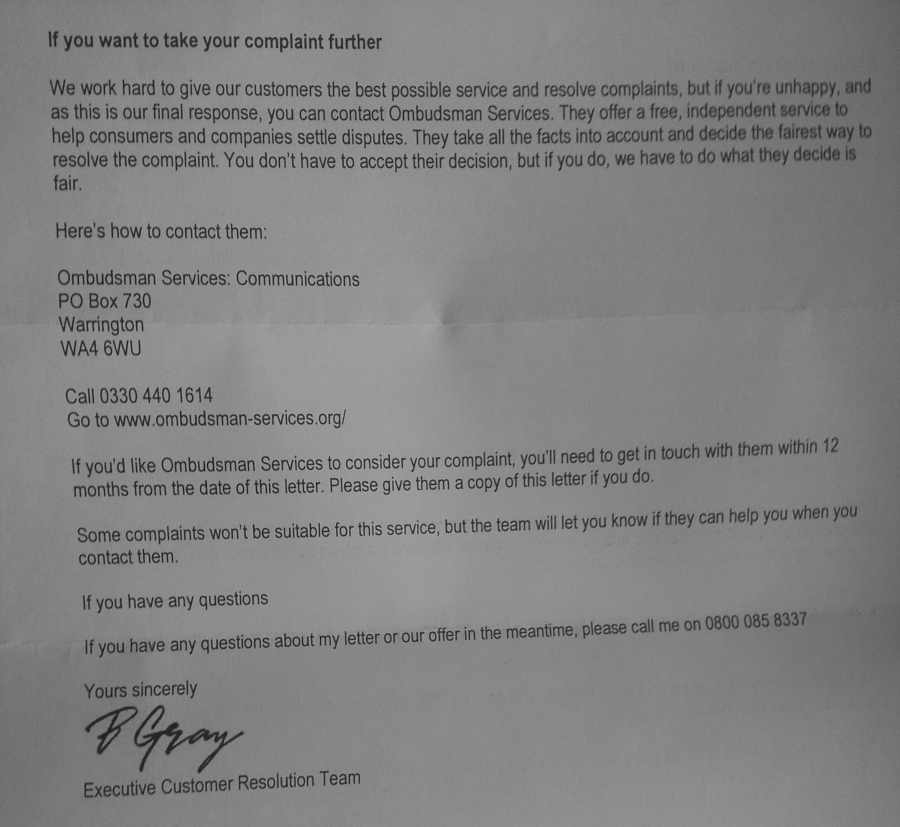
 T has failed, after 16 days, to deliver what it promised would be a trivial job. It was BT pushing me to accept the offer, which I wish I never accepted (their sales people were super-eager for me to move to fibre; I never asked for it!). In this part I want to show segments of communications, excluding addresses but not reference numbers (which BT has anyway and only BT can make sense of).




 ecently I said I would write about the
 Y ordeal with BT is not over. I wrote about it thrice already [