


Musing De Jour: Telephone vs. Keyboard
 Filed under:
 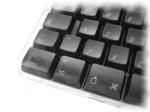 Digits on a telephone’s keypad and keyboard arrangements of numbers (the right-hand-side of standard keyboards) are inconsistent in terms of layout. Have you ever wondered why? I sure has to stop and ponder myself . I tried to flip the telephone upside down to achieve consistency, to no avail. The zero ends up at the wrong end (top) and the whole ‘image’ is reversed; “mirrored”, to be precise.
Isn’t such layout supposed to be standardised for the user’s sake? It definitely simplifies habits and make keypresses more instinctive. There must be some historical motives. The pulse phone and the dial probably predate computer keyboards. In other words, tone dialling with the modern one-stroke input came after computers, so could possibly inherit the same, perfectly-acceptable layout.
Most of us can switch easily between the two layouts. Many use both the phone and the ‘NumLock setting’ on for numerical data entry (highly popular among accountants). I hear that the same arguments apply to alternative layouts of characters, e.g. Dvorak keyboard layout, which need not necessarily interfere with QWERTY habits. QWERTY is an arbitrary scheme, which if I recall correctly was only justifiable as it avoided mechanical collisions in typewriters. It is not optimised for quick input, however, and it almost neglects entirely the frequency of keys being pressed. On the other hand, one must consider the issue of universality since not all languages use a given character at similar frequencies. it all boils down to the question: is greater (keyboard) diversity a positive thing?


 PEN formats are based upon a standardised specifications, which ensure global collaboration among applications. Without common formats, hardware are software are simply unable to communicate, unless they come from the same vendor. Formats are also analogous to the notion of a language, or technically speaking, “protocols” and “standards”. They are often agreed upon by an ample panel, which involves industry experts and industry/academy leaders.
 I have already complained about proprietary formats that lock one’s personal data. The context in this blog was
  EARCHING of the Web is no exact science. If it was, its exhaustive exploration would be infeasible. The more formidable search engines amass information from million of Web sites, each containing huge lumps of information — both textual and media. That information, in turn, could be interpreted and/or indexed in a variety of different forms. Rarely is the content truly understood, which is my personal motivating for
  Still, everyone wants to discover the perfect recipe to outperforming Google. Others try to reverse-engineer their algorithms and cheat (fame and riches owing to ‘
 ERELY everyone has come across corrective discrimination wherein gender/race quotas are specified, and in turn promote diversity. We should be taking similar principles to diversify computing. This would be an intersting experiment, from which all would benefit. The move has an increasingly-justified place in the avoidance of
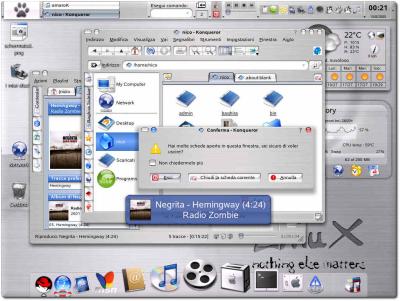
 HIS short essay describes a variety of ways which I have found to increase ‘desktop productivity’. It identifies and covers 3 aspects of customisation, albeit without much obvious connection. Think of them as streams of consciousness.
 RIVING can be a time-occupying and risky errand, which under certain circumstances is unavoidable. I got my license at the legal age (which was 17) and have not been involved in any accidents.
