Introduction About Site Map

XML
RSS 2 Feed RSS 2 Feed
Navigation

Main Page | Blog Index

Archive for the ‘Opinion’ Category

Musing De Jour: Telephone vs. Keyboard

Shortcut keysDigits on a telephone’s keypad and keyboard arrangements of numbers (the right-hand-side of standard keyboards) are inconsistent in terms of layout. Have you ever wondered why? I sure has to stop and ponder myself . I tried to flip the telephone upside down to achieve consistency, to no avail. The zero ends up at the wrong end (top) and the whole ‘image’ is reversed; “mirrored”, to be precise.

Isn’t such layout supposed to be standardised for the user’s sake? It definitely simplifies habits and make keypresses more instinctive. There must be some historical motives. The pulse phone and the dial probably predate computer keyboards. In other words, tone dialling with the modern one-stroke input came after computers, so could possibly inherit the same, perfectly-acceptable layout.

Most of us can switch easily between the two layouts. Many use both the phone and the ‘NumLock setting’ on for numerical data entry (highly popular among accountants). I hear that the same arguments apply to alternative layouts of characters, e.g. Dvorak keyboard layout, which need not necessarily interfere with QWERTY habits. QWERTY is an arbitrary scheme, which if I recall correctly was only justifiable as it avoided mechanical collisions in typewriters. It is not optimised for quick input, however, and it almost neglects entirely the frequency of keys being pressed. On the other hand, one must consider the issue of universality since not all languages use a given character at similar frequencies. it all boils down to the question: is greater (keyboard) diversity a positive thing?

Proprietary Formats and Their Sordid Mess

OPEN formats are based upon a standardised specifications, which ensure global collaboration among applications. Without common formats, hardware are software are simply unable to communicate, unless they come from the same vendor. Formats are also analogous to the notion of a language, or technically speaking, “protocols” and “standards”. They are often agreed upon by an ample panel, which involves industry experts and industry/academy leaders.

What happens, however, when a company goes astray and implements its own formats, which it is unwilling to disclose for competitive reasons? What happens when a format is extended without acceptance by others who already use and depend on it? When common language is violated, disaster is foreseen. An industrial majority (or a monopoly) can use miscommunication as a ‘tool’ which drives competitors away. The temptation to use that tool as a weapon is often there, yet the seminal formats must always be honoured. If not, conversion facilities must be made available, so that a non-lossy route can be followed to ‘sanitise’ the unknown data structures and appendages.

LockI have already complained about proprietary formats that lock one’s personal data. The context in this blog was Palm-powered devices, as well as software packages from Microsoft. It is a terrible scenario when one chooses an appliance or a software package over open formats and is thereafter obliged to use it perpetually. It is an utter lock-in, which has even reached the Web that is openness-motivated. Internet Explorer-only beame more commonplace, yet Firefox has shouted out for a change in recent years.

Let us illustrate the primary contention with the aid of yet another specific example. In question are the advantages of open fromat and exportable data, so let us consider address book (contacts) data on a variety of platforms. I currently hold my address books on Palm’s Address, KDE’s KMail, and Mozilla Thunderbird. Maybe I base my statements on the wrong factors, but experience shows that address confusion and poor organisation skills are prevalent among those that still rely on Microsoft to organise and manage their data. I used to be among those who delegate data organisation to applications (packages) rather than formats. As a consequence, I struggled to move between application, inter-operate or even decipher my own data in the absence of one particular commercial application. Sounds familiar?

In summary, as food for thoughts to ponder: maybe it’s the obscurity of moving data without adherence to standard formats. Maybe it is the lack of import/export utilities and maybe frequent hard-drive re-formatting due to virus attacks and the like. Either way, Linux and Mac users appear to have extensive data which is easily-locatable, inter-changeable, rocoverable and resilient. Openness entails true benefits, which are better understood in the long term.

Search Engines and Benchmark Subjectivity

SEARCHING of the Web is no exact science. If it was, its exhaustive exploration would be infeasible. The more formidable search engines amass information from million of Web sites, each containing huge lumps of information — both textual and media. That information, in turn, could be interpreted and/or indexed in a variety of different forms. Rarely is the content truly understood, which is my personal motivating for knowledge engines.

Mathematics and physics could be argued to be inexact sciences as well, at least when a variety of man-made, non-fundamental fields are introduced. Think of computer science, for example. Its fundamentals assimilate to this complex problem, which is searching the World Wide Web. It is associated with ad-hoc solutions. Computational theories which relate to Turing machines are not tractable enough to make a most correct and efficient algorithm ever crop up and stand out.

Don Knuth has written his popular series of books on the issues of correctness and efficiency in common algorithms. It proves an elegant reference to many computer science practitioners. Problems which are simple, such as element or number sorting, are still handled differently by different algorithms and their efficiency is dependent upon the architecture involved, the scale of the problem, and its nature. Search algorithms likewise, which is why they should be engineered differently depending on a number of key factors. Hence, judgement of the quality of search engines cannot be done objectively, but only ever be estimated using test cases and artificial scoring schemes.

Search buttonStill, everyone wants to discover the perfect recipe to outperforming Google. Others try to reverse-engineer their algorithms and cheat (fame and riches owing to ‘Google juice‘ that is channelled to one’s site/s). Many of us continue favour and recommend Google, which brings the largest number of referrals to most sites in existence. There is a danger here though. Large search engines are the main target for deceit and they are easily confused by spam inasmuch as they are inclined to pick up rare and valuable content.

Quality of search is probably in the mind of the searcher and the result of hearsay — somewhat of a ‘cattle effect’. Even engines that spit out cruft might be defended unconditionally by their innocent users. This may lead the competition to forfeiting the battle and invest fewer resources (e.g. datacentres) in the attempt to catch up. Phrases like “Google it” do not help either as they promote a search monoculture at best.

Related item: Search Engines and Biased Results

Software Discrimination

Bill Gates

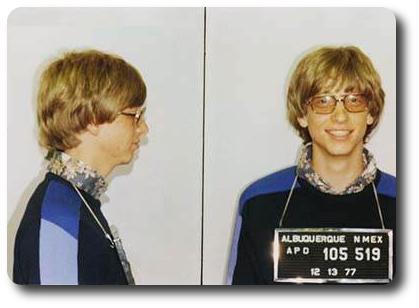
MERELY everyone has come across corrective discrimination wherein gender/race quotas are specified, and in turn promote diversity. We should be taking similar principles to diversify computing. This would be an intersting experiment, from which all would benefit. The move has an increasingly-justified place in the avoidance of software monoculture, which must no longer be accepted or even accommodated.

The results of an operating system monocolture leads to a discriminative cycle. Non-Windows users often get punished in terms of service. This must be reversed using litigious powers, much like the observation that people with special dietary requirement (e.g. vegetarians) get served first. How does one change the law? By staging a positive showcase for his/her arcane platform.

Airports, Alcohol, and Shopping Traps

Big Plane

OCCASIONALLY I feel like as though we are witness to an ethical corruption. There is a thriving industry out there that takes advantage of people being drunk or stranded. In other circumstances, social weaknesses are to be blamed, in what can only be described as ‘cattle effect. I’ll present a couple of examples.

Airports charge a lot for food from hungry people whose access to outside shops is fictional at best. These foods can have their price elevated beyond the standard rates. This includes large chains of junk food, whose price should be moderated and remain relatively consistent. Yet, their price can sometimes match that of a fine restaurant in an airport and the same rules apply to other ‘exotic’ locations like pricy resorts. Such obscene prices are tolerated owing to the lack of alternatives; the lack of choice.

Cash machines are another example. Some of them charge extra fees for withdrawals (commission) and that often exploits nights out and ‘alcohol sprees’. This extra fee is reminiscent of the existence of gambling machines that benefit from the state of one’s mind, which is possibly under the influence of alcohol.

Lastly, and on to a point which is equally important, there are example which could become generic examples in their own rights. Fashion continously changes to encourage people to buy new clothes and replace the old ones. Showing and boasting the ‘hip effect’ culture (okay, I’ll use the word “cool”) in reference to cars, lifestyle et cetera is another factor. It urges people to expend money on a variety of unneeded luxuries. Christmas is finally said to be more of a necessity to motion in industry than it is a religious holiday. But on we live, and on we spend. Industry is led to a state of contentment.

Desktop, Panels and Themes

Tiger in KDE
Spicing up a Linux desktop

THIS short essay describes a variety of ways which I have found to increase ‘desktop productivity’. It identifies and covers 3 aspects of customisation, albeit without much obvious connection. Think of them as streams of consciousness.

  • Workspace: first and foremost, use virtual desktops. The site introduced and described them before and also outlined a way of taking full advantage of them.
  • Panels and screen edges: another significant step, which I took over a year ago in all computers, is automatic hiding of all panels as to avoid distraction and visual clutter (many panels over here, 7 of them on one screen). The exceptions to automatic hidding: new mail notification widgets and a system monitor (minimalist display of processor usage, memory and swap, refreshed several times per second), among your other must-have widgets. Even a clock should only be made available on demand (e.g. when touching screen edges) as it otherwise becomes an unnecessary eye-catcher. Screen corners have no special significance, but in newer versions of KDE, movement between virtual desktop can be controlled by ‘pushing through’ the sides of the screens, which proves somewhat useful, yet can conflict with auto-hiding of panels. Be warned.
  • Theming: lastly, choose colour schemes and background pictures that suit you best. An appealing environment encourages work. I personally prefer the nocturnal, dark-coloured themes (including widgets and window decorations). Also confer: old Windows 98 example; Linux example.

Is your operating system cannot attain some of the above behaviours (or does not permit it), you may wish to consider more flexible platforms and desktop environments. My favourite is KDE on Linux. It continues to evolve very rapidly.

Drive-free Life

Accident sign
A photo of a sign which I walk by every day

DRIVING can be a time-occupying and risky errand, which under certain circumstances is unavoidable. I got my license at the legal age (which was 17) and have not been involved in any accidents.

At 18, as I finally started University, I chose to live in central places, which made driving (or let alone car ownership) an unnecessary ‘luxury’. Everywhere I needed to go was 15-minute walking distance at most (well, nearly everywhere I needed to attend got covered). This habit saved time and trouble such as maintenance (garage, washing, purchases), so I look back with no regrets.

I still drive a lot on vacations, usually with my parents’ cars. There are certain prohibition due to insurance costs, which is another deterrent that relates to ownership of any vehicle.

Retrieval statistics: 21 queries taking a total of 0.205 seconds • Please report low bandwidth using the feedback form
Original styles created by Ian Main (all acknowledgements) • PHP scripts and styles later modified by Roy Schestowitz • Help yourself to a GPL'd copy
|— Proudly powered by W o r d P r e s s — based on a heavily-hacked version 1.2.1 (Mingus) installation —|