


GPL is the Future
 Filed under:

 UITE recently, Xara Xtreme which is a popular (vector) drawing program, moved from being pricey proprietary software to the GPL. Xara may have been the victim or sufferer of bigger packages and vendors (e.g. CorelDraw, Photoshop). My guess is that, much like Netscape, they had the choice of either letting the code of that product accumulate mold or earn a large(er) audience — a large user base — to which they can then offer paid support and self-tailored extensions. Netscape achieved something similar by putting the code out there. Today we are seeing the impact of Firefox, which enjoys generous streams of revenue as well. Xara Xtreme will directly challenge Inkscape, a screenshot of which can be seen above.
In the near future, more and more companies will be facing a crossroad wherein they can either fall to oblivion or receive exposure by throwing themselves at the Open Source community. It would enough to have just a few ‘residual’ companies that fell victims to giants like Adobe, or Microsoft, or whoever. Sooner or later they can be ‘resurrected’ owing to the GPL, once they release the code and get absorbed by a crowd of Open Source advocates that contributes back. When the user base of Open Source platforms such GNU/Linux expands, this will become more financially viable and there will be an increasing incentive to go down that route.


 Patents, copyrights and trademarks serve an important role. They prevent theft of one’s methods and reputations, which often require heavy investment (not necessarily financial). But what about intellectual property which is fuzzy and not concrete? I will use a case study to exemplify this.
 would like to take a brief moment and speak about my opinion on religion, atheism, creationism, and evolution. I will do not in a nutshell since elaboration tends drive the readers away.
 OW that
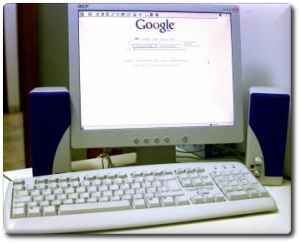
 NE part of me truly loves Google — loving Google like nobody else! Google gives me plenty of referrals: about 500 for text search and over 400 for image search every day; and that’s for my main Web site alone. So how could I ever complain? It seems to respect me and treat me so well. Then again, it is akin to having an evil spouse, whose living is made in some dishonest ways. Allow me to elaborate if I may.
 couple of months back, Vista engineers ere bragging about Intel systems architecture which would enable quick startups from memory. This sounded like “hibernation mode” rather than standby, but it was still used as Windows Vista selling point, alongside updates without reboot. So here we shall address two issues.