Tuesday, April 26th, 2005, 2:09 am
 While the title is an overstatement, it describes a trend which is yet to transform IT as we know it.
What is it all about? Moving all functionality to the Web server (analogous to computational servers), thereby using our workstation as merely a terminal to back-room dust-collecting equipment. Much like Web servers, load is better handled remotely, where parallelised infrastructures make maximal, persistent use of the hardware.
The use of AJAX-like technologies and increased bandwidth make this considerable step towards remote operating systems practical. There are a few unavoidable stepping stones though:
- More widespread high-speed connections
- Higher-capacity network backbones
- Demise of desktop-side software
- Closer Desktop-Web integration/coupling
- Decrease in cost of storage devices (e.g.
 Comments Off |
 Send this to a friend
Monday, April 25th, 2005, 3:14 am
Services that manage lists of tasks on-line spread rather quickly. Matt Mullenweg recently announced:
Someone cloned all of Ta-da List into Bla-Blah List which uses Flash for the interface instead of HTML/JS.
 A diary that is well-integrated with mail accounts and accessible via the Internet
click image to view in full size
I have come across similar features in recent versions of Horde (shown above). I truly believe that these tools can compete with PDA‘s, especially when content is edited in collaboration with a team. All software mentioned, by the way, is completely free.
Cited by: PalmAddict
Sunday, April 24th, 2005, 1:54 am
 I have just put my first batch of daily photos on-line. This includes my journey to London from 2 days ago. The presentation I gave, by the way, aroused curiosity among members of the audience.
Saturday, April 23rd, 2005, 7:13 am
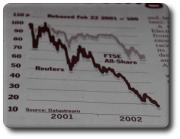 As the number of Web logs continues to rise (nearing exponential growth), an anti-climax is rapidly reached. Attention is spread among more blogs and hence feeds/spiders account for more of the traffic for most blogs.
As more users share content and publishing tools become easier to use, pages become less content-rich or genuine. Increased comment spam and compatibility for the rel="nofollow" tag attribute discourage involvement. The symptoms can be spotted already.
Will the blog phenomenon die once blogs become as widespread as E-mail accounts? The main gain from this ‘Blog Era’ is the shift of power from authorities to individual people. Anybody is capable of being heard, which is fantastic.
Friday, April 22nd, 2005, 12:06 am
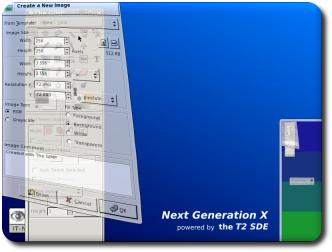
The following screenshot gallery demonstrates the features of one future desktop environment (X11). Windows exploit OpenGL for window ‘swinging’ (see the previous entry on luminocity or even bogus transparency). The effects are quite distracting, but provide that ‘wow factor’. Another long-anticipated eye candy is the spherical desktop.
Thursday, April 21st, 2005, 1:48 pm
I am going to present recent research work at UCL tomorrow. Bound to this presentation are some graphics files (with captions). Older, unused slides are available to anyone who is curious. I will most likely modify text on the train and upload the changes during the weekend.
Wednesday, April 20th, 2005, 1:27 am
 Let us consider 3 types (‘families’ or ‘classes’ if you like) of headphones:
Standard arc headphones are not very popular these days. They are relatively gigantic, at least when compared with today’s gadgets. Pros: Often come with a thick single wire that connects to one side only (this minimises wear). Cons: Large and unfashionable, susceptibility to outside noise.
 In-ear: Often cheaply made. My last set lasted only 4 days, but it had a nice mechanism for isolating noise. Many headphones these days penetrate the ears, yet research has shown that this is damaging to the ear. When I searched for a headphones replacement 5 days ago I saw an odd in-ear set which would penetrate nearly 1 inch inside the ears. My knees could bend seeing the scary otoscope-like design.
 Large headphones: my favourite type, but only suitable indoors for obvious reasons.
The bottom line: unless you foresee yourself an old person who is unable to listen to people at the table, care less about noise reduction. We are yet to discover the damaging effects on a generation of Walkmans, Discmans, Minidisks, MP3 players, etc.


 Filed under: