Introduction About Site Map

XML
RSS 2 Feed RSS 2 Feed
Navigation

Main Page | Blog Index

Archive for the ‘Linux’ Category

My First Major Disappointment in Fedora (Updated)

ABOUT three weeks ago I decided to go back to working with Fedora. This distribution served me well over the years, especially in distributed clusters. Fedora 14 looked very promising and it still is, but there are creases that are hard to undo and to hide. In order for matters to improve I will post a quick rant and hope that someone, somewhere will help address the issue that I’ve already reported (I also submit bug reports whenever that’s possible).

My main problem is package specific. The problem was first mentioned here. Thanks to a blog comment from Rahul I was made aware of fairly trustworthy repositories where packagers offer alternative packages. I soon found this newer build of Octave (needed to manually uninstall the existing one as it does not support updating existing packages). It is one of those unsigned packages, which require the user to jump through some hoops. The changelog looked promising because the latest entry mentioned exactly the bug that I was suffering from (many other people must be suffering from it too):

* Sun Feb 28 2010 Alex Lancaster <alexlan[AT]fedoraproject org> – 6:3.2.4-3
- Temporarily disable %check to enable build to complete and ensure upgrade path works. This works around a crash in the imread.m image test script, this may be the same problem as described by upstream here:

https://www-old.cae.wisc.edu/pipermail/octave-maintainers/2010-January/014891.html

So, here goes:

[root@blueberry roy]# yum remove octave
Loaded plugins: langpacks, presto, refresh-packagekit
Adding en_US to language list
Setting up Remove Process
Resolving Dependencies
--> Running transaction check
---> Package octave.i686 6:3.2.4-3.fc14 set to be erased
--> Processing Dependency: libcruft.so for package: pfstools-octave-1.8.1-1.fc14.2.i686
--> Processing Dependency: libcruft.so for package: octave-forge-20090607-17.fc14.i686
--> Processing Dependency: liboctave.so for package: octave-forge-20090607-17.fc14.i686
--> Processing Dependency: liboctave.so for package: pfstools-octave-1.8.1-1.fc14.2.i686
--> Processing Dependency: liboctave.so for package: plplot-octave-5.9.6-5.fc14.i686
--> Processing Dependency: liboctinterp.so for package: octave-forge-20090607-17.fc14.i686
--> Processing Dependency: liboctinterp.so for package: pfstools-octave-1.8.1-1.fc14.2.i686
--> Processing Dependency: liboctinterp.so for package: plplot-octave-5.9.6-5.fc14.i686
--> Processing Dependency: octave(api) = api-v37 for package: octave-forge-20090607-17.fc14.i686
--> Processing Dependency: octave(api) = api-v37 for package: plplot-octave-5.9.6-5.fc14.i686
--> Processing Dependency: octave >= 3.2.0 for package: qtoctave-0.9.1-2.fc14.i686
--> Processing Dependency: octave for package: plplot-octave-5.9.6-5.fc14.i686
--> Processing Dependency: octave = 6:3.2.4-3.fc14 for package: 6:octave-devel-3.2.4-3.fc14.i686
--> Running transaction check
---> Package octave-devel.i686 6:3.2.4-3.fc14 set to be erased
---> Package octave-forge.i686 0:20090607-17.fc14 set to be erased
---> Package pfstools-octave.i686 0:1.8.1-1.fc14.2 set to be erased
---> Package plplot-octave.i686 0:5.9.6-5.fc14 set to be erased
---> Package qtoctave.i686 0:0.9.1-2.fc14 set to be erased
--> Finished Dependency Resolution

Dependencies Resolved

=======================================================================================================
 Package                     Arch             Version                        Repository           Size
=======================================================================================================
Removing:
 octave                      i686             6:3.2.4-3.fc14                 @fedora              32 M
Removing for dependencies:
 octave-devel                i686             6:3.2.4-3.fc14                 @fedora             2.5 M
 octave-forge                i686             20090607-17.fc14               @fedora              39 M
 pfstools-octave             i686             1.8.1-1.fc14.2                 @fedora             254 k
 plplot-octave               i686             5.9.6-5.fc14                   @fedora             1.3 M
 qtoctave                    i686             0.9.1-2.fc14                   @fedora             2.9 M

Transaction Summary
=======================================================================================================
Remove        6 Package(s)

Installed size: 78 M
Is this ok [y/N]: y
Downloading Packages:
Running rpm_check_debug
Running Transaction Test
Transaction Test Succeeded
Running Transaction
  Erasing        : pfstools-octave-1.8.1-1.fc14.2.i686                                             1/6 
  Erasing        : qtoctave-0.9.1-2.fc14.i686                                                      2/6 
  Erasing        : octave-forge-20090607-17.fc14.i686                                              3/6 
  Erasing        : plplot-octave-5.9.6-5.fc14.i686                                                 4/6 
  Erasing        : 6:octave-devel-3.2.4-3.fc14.i686                                                5/6 
  Erasing        : 6:octave-3.2.4-3.fc14.i686                                                      6/6 

Removed:
  octave.i686 6:3.2.4-3.fc14                                                                           

Dependency Removed:
  octave-devel.i686 6:3.2.4-3.fc14                   octave-forge.i686 0:20090607-17.fc14             
  pfstools-octave.i686 0:1.8.1-1.fc14.2              plplot-octave.i686 0:5.9.6-5.fc14                
  qtoctave.i686 0:0.9.1-2.fc14                      

Complete!

This can be done from the GUI as well. But it’s not working. The bug still exists and prevails after the new package gets installed. To make matters worse, for some reason, yum just disallows installing unsigned packages. It does not even produce a warning with an opt-out/force option. It’s very stubborn, so I had to use the GUI. Then, running the program (the new build) showed that:

octave:4> imshow('Konqueror.jpg')
octave: magick/semaphore.c:525: LockSemaphoreInfo: Assertion `semaphore_info != (SemaphoreInfo *) ((void *)0)' failed.
panic: Aborted -- stopping myself...
Aborted (core dumped)
[root@blueberry roy]# qtoctave
[main()] Error loading the QT Translation file for locale 'en_US'.
[main()] Error loading the translation file for locale 'en_US'. Not found in /usr/share/qtoctave/lang 
[Main::Main] Building commands list.

[Main::Main] Commands list builded.
QWidget::setMinimumSize: (/QMdi::ControlLabel) Negative sizes (-1,-1) are not possible
[OctaveConnection::startOctave] Octave path: octave
[OctaveConnection::startOctave] Octave version: 3.2.4 (3.2.4)
[OctaveConnection::startOctave] Starting octave: "octave"  --eval "PS1('octave:\#>');PS2('octave:\#+>');addpath('/usr/share/qtoctave/scripts_octave/')"  --persist --no-history -i 
[OctaveConnection::startOctave] Octave running
klauncher(2168) kdemain: No DBUS session-bus found. Check if you have started the DBUS server. 
kdeinit4: Communication error with launcher. Exiting!
Segmentation fault (core dumped)

Oh, wonderful. Well, eventually I found a way to run qtoctave again. Checking the version/build names again:

[root@blueberry roy]# yum remove octave
Loaded plugins: langpacks, presto, refresh-packagekit
Adding en_US to language list
Setting up Remove Process
Resolving Dependencies
--> Running transaction check
---> Package octave.i686 6:3.2.4-3.el6 set to be erased
--> Processing Dependency: octave >= 3.2.0 for package: qtoctave-0.9.1-2.fc14.i686
--> Processing Dependency: octave = 6:3.2.4-3.el6 for package: 6:octave-devel-3.2.4-3.el6.i686
--> Running transaction check
---> Package octave-devel.i686 6:3.2.4-3.el6 set to be erased
---> Package qtoctave.i686 0:0.9.1-2.fc14 set to be erased
--> Finished Dependency Resolution

Dependencies Resolved

=======================================================================================================
 Package            Arch       Version              Repository                                    Size
=======================================================================================================
Removing:
 octave             i686       6:3.2.4-3.el6        @/2067.0.octave-3.2.4-3.el6.i686              32 M
Removing for dependencies:
 octave-devel       i686       6:3.2.4-3.el6        @/2220.0.octave-devel-3.2.4-3.el6.i686       2.5 M
 qtoctave           i686       0.9.1-2.fc14         @fedora                                      2.9 M

Transaction Summary
=======================================================================================================
Remove        3 Package(s)

Installed size: 37 M

Yes, even octave-3.2.4-3.el6.i686 has this same bug, so what gives? In Kubuntu 10.04 there is no such problem, not in the packaged version of Octave. Having to go through less official routes to unsigned packages is daunting enough for most people; finding out that it still does not work is even a lot worse. The problem here is not really Fedora but lack of coordination between octave and the magick folks. qtoctave handles this admirably well by restarting octave and not just letting the entire program crash. But still, having wasted several hours on this first looking for bugs in my code and then playing with packages rather than doing research (realising that my code was not the problem), I am left a bit bitter about my Fedora 14 experience. It is not as though I have been too lazy trying to resolve this and for the time being it seems like I will do more of my work on my Kubuntu box. It happens to have done packaging of Octave more successfully (at least that older version).

Update: not even stepping back to older versions of ImageMagic has worked and yum had the same limitations because the packages were unsigned.

[root@blueberry roy]# yum remove ImageMagick
Loaded plugins: langpacks, presto, refresh-packagekit
Adding en_US to language list
Setting up Remove Process
Resolving Dependencies
--> Running transaction check
---> Package ImageMagick.i686 0:6.6.4.1-14.fc14.1 set to be erased
--> Finished Dependency Resolution

Dependencies Resolved

=======================================================================================================
 Package                  Arch              Version                         Repository            Size
=======================================================================================================
Removing:
 ImageMagick              i686              6.6.4.1-14.fc14.1               @fedora              6.5 M

Transaction Summary
=======================================================================================================
Remove        1 Package(s)

Installed size: 6.5 M
Is this ok [y/N]: y
Downloading Packages:
Running rpm_check_debug
Running Transaction Test
Transaction Test Succeeded
Running Transaction
  Erasing        : ImageMagick-6.6.4.1-14.fc14.1.i686                                              1/1 

Removed:
  ImageMagick.i686 0:6.6.4.1-14.fc14.1                                                                 

Complete!

Then installing the older version via the GUI. Still the same issue.

[root@blueberry roy]# yum remove ImageMagick
Loaded plugins: langpacks, presto, refresh-packagekit
Adding en_US to language list
Setting up Remove Process
Resolving Dependencies
--> Running transaction check
---> Package ImageMagick.i686 0:6.6.0.2-8.fc14 set to be erased
--> Finished Dependency Resolution

Dependencies Resolved

=======================================================================================================
 Package          Arch      Version                Repository                                     Size
=======================================================================================================
Removing:
 ImageMagick      i686      6.6.0.2-8.fc14         @/2494.0.ImageMagick-6.6.0.2-8.fc14.i686      6.3 M

Transaction Summary
=======================================================================================================
Remove        1 Package(s)

Installed size: 6.3 M
Is this ok [y/N]: n
Exiting on user Command
Complete!
[root@blueberry roy]# octave
GNU Octave, version 3.2.4
Copyright (C) 2009 John W. Eaton and others.
This is free software; see the source code for copying conditions.
There is ABSOLUTELY NO WARRANTY; not even for MERCHANTABILITY or
FITNESS FOR A PARTICULAR PURPOSE.  For details, type `warranty'.

Octave was configured for "i386-redhat-linux-gnu".

Additional information about Octave is available at http://www.octave.org.

Please contribute if you find this software useful.
For more information, visit http://www.octave.org/help-wanted.html

Report bugs to  (but first, please read
http://www.octave.org/bugs.html to learn how to write a helpful report).

For information about changes from previous versions, type `news'.

octave:1> imshow('in')
octave: magick/semaphore.c:525: LockSemaphoreInfo: Assertion `semaphore_info != (SemaphoreInfo *) ((void *)0)' failed.
panic: Aborted -- stopping myself...
Aborted (core dumped)

I’m giving up. Maybe I just need to go to far older versions for compatibility, but I tried the oldest ones built for Fedora 14.

Adobe Trash (Flash) in Fedora 14, the Free Software Way (Gnash)

Summary: An era of Flash barriers is coming to an end, but Techrights is looking for free/libre VoIP/SIP recording software

A

dobe Trash (Flash) is dirt on the World Wide Web. It hinders access to data not just by humans but also by bots. Nevertheless, there are few Web sites that still depend on Flash and require the user/visitor to install it. One site that used to require it for most data (video) was YouTube, but this major site is moving to WebM, which may make Flash and its substitutes a lot less necessary (along with codecs that are not simple to obtain, at least in Fedora). Google can be expected to transcode all of its videos and make them available as WebM within weeks or just a few months. For other Web sites, Gnash, the free/libre alternative, seems to be sufficient and it is simple to install either from the package manager (e.g. KPackageKit) or the universal environment, which is the command line. The package managers vary, but the package names are usually the same (just replace yum with apt-get for example). In Fedora 14, the following commands do the job for Gnash support in Konqueror.

[roy@blueberry ~]$ su
Password: 
[root@blueberry roy]# yum install gnash-klash
Loaded plugins: langpacks, presto, refresh-packagekit
Adding en_US to language list
Setting up Install Process
Resolving Dependencies
--> Running transaction check
---> Package gnash-klash.i686 1:0.8.8-4.fc14 set to be installed
--> Finished Dependency Resolution

Dependencies Resolved

=======================================================================================================
 Package                   Arch               Version                       Repository            Size
=======================================================================================================
Installing:
 gnash-klash               i686               1:0.8.8-4.fc14                fedora               177 k

Transaction Summary
=======================================================================================================
Install       1 Package(s)

Total download size: 177 k
Installed size: 541 k
Is this ok [y/N]: y
Downloading Packages:
Setting up and reading Presto delta metadata
Processing delta metadata
Package(s) data still to download: 177 k
gnash-klash-0.8.8-4.fc14.i686.rpm                                               | 177 kB     00:00     
Running rpm_check_debug
Running Transaction Test
Transaction Test Succeeded
Running Transaction
  Installing     : 1:gnash-klash-0.8.8-4.fc14.i686                                                 1/1 

Installed:
  gnash-klash.i686 1:0.8.8-4.fc14                                                                      

Complete!
[root@blueberry roy]#  yum install gnash
Loaded plugins: langpacks, presto, refresh-packagekit
Adding en_US to language list
Existing lock /var/run/yum.pid: another copy is running as pid 31528.
Another app is currently holding the yum lock; waiting for it to exit...
  The other application is: PackageKit
    Memory :  47 M RSS ( 63 MB VSZ)
    Started: Sun Nov 21 12:28:38 2010 - 00:06 ago
    State  : Sleeping, pid: 31528
Another app is currently holding the yum lock; waiting for it to exit...
  The other application is: PackageKit
    Memory :  47 M RSS ( 63 MB VSZ)
    Started: Sun Nov 21 12:28:38 2010 - 00:08 ago
    State  : Sleeping, pid: 31528
Another app is currently holding the yum lock; waiting for it to exit...
  The other application is: PackageKit
    Memory :  47 M RSS ( 63 MB VSZ)
    Started: Sun Nov 21 12:28:38 2010 - 00:10 ago
    State  : Sleeping, pid: 31528
Setting up Install Process
Package 1:gnash-0.8.8-4.fc14.i686 already installed and latest version
Nothing to do

Or the short story:

yum install gnash-plugin 
yum install gnash-klash 
yum install gnash
 

In Ubuntu I’ve had less luck with Gnash, which was harder to successfully install and register with the Web browser. On the other hand, Fedora has some other drawbacks that are not its fault (e.g., from today [1, 2]). The bottom line though, as far as Flash content is concerned, things have improved greatly over the years. Not only is there a free substitute for Flash but Flash content itself is dying due to HTML5 (yes, some sites dump Flash in favour of HTML) and free codecs/formats such as Ogg and WebM. This opening up of the Web is further supported by the death of Silverlight and the realisation that mobile devices require access too.

As people who hang out in IRC may already know, Techrights depends on proprietary software only as far as recording is concerned because a VoIP recorder for 2 or more people simultaneously is something that we are still unable to achieve in Ekiga. Any suggestions regarding a free/libre replacement would be appreciated. Having got rid of all dependencies on proprietary software at my job (MATLAB has been the only such dependency for many years), it would be nice to make Techrights not dependent on Skype (for TechBytes) and the FSF too recognises that replacements in VoIP are a “high priority” issue.

Fedora Wishlist Feature: Old Versions

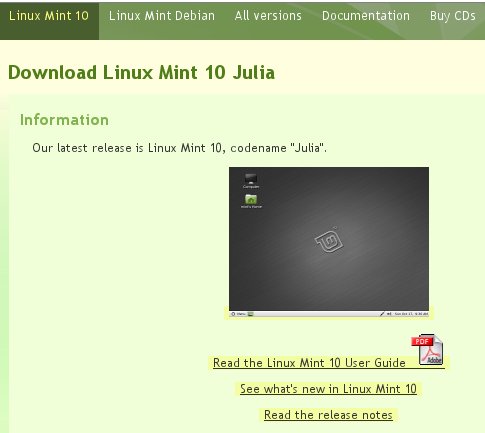
As indicated in the previous post, sometimes it is necessary to use old versions of a particular package which is not available from the repositories. The screenshot below shows what’s available in Fedora as far as Octave is concerned.

Octave package - small

It would be extremely valuable to have links to alternative repositories or even Web sites that offer previous builds of the software, even if these are not “official” and thus less safe. It is not ideal for many different reasons, but it can prevent people from searching the Web for other RPMs that come from entirely untrusted sources.

Fedora is not the problem here, but a constructive suggestion such as this one may become a selling point to some users.

Konqueror in KDE 4.5: Huge Step Forward

Konqueror

MY EARLIER experiences with Konqueror go back to ~2002 when I tried it at work under Mandrake, around the early versions of KDE3 or later KDE2. Konqueror had many menu options and was daunting in some ways compared to Netscape and Mozilla. In KDE 3.1 Konqueror had acceptance problems among Web sites that were simply IE-centric or IE- and Netscape-centric. This was not a problem in Konqueror itself, but it made life a little harder for Konqueror users like myself. I only moved to Firefox some time in 2004 and it is still my Web browser of choice, having tested Chromium and some other browsers for a while (they lack plugins).

Anyway, under Fedora 14 I am attempting to use Konqueror exclusively and it’s generally a pleasant experience. After over a week of use I’ve only experienced two issues; one is when opening a PDF which Okular tried to embed within the Web page/rendering frame (this is easily solvable by opening the PDFs in an external application like the excellent Okular); the second issue is repeatable and reproducible crashes under WordPress’ media management menu. It’s a Web application-specific issue and debugging would be needed.

Workarounds are quite simple to find and the general experience working with Konqueror is finally quite pleasant (I tried Konqueror exclusively for about half a week in KDE 4.3 but eventually gave up). Speed is not great and there is room for improvement, but for general-purpose light usage Konqueror would fit most people’s needs. Some time later this month I will write about KDE 4.5 as a whole.

SELinux: Friend or Foe?

A few days ago I started working with Fedora 14. So far, so good, at least as far as the desktop machine goes (a laptop is another story and Kubuntu runs fine on another desktop). Something has just happened in Fedora which never happened to me before. Kate (an editor) got stuck and its memory (RAM) consumption went up through the roof to over 1.5 GB, so obviously it froze the system for a while. The process needed to be forcibly killed.

Now, it’s not entirely clear what happened there (maybe a program bug), but this is unusual and it looks bad for Fedora or for KDE (or the combination in Fedora 14 KDE spin). What did happen is that SELinux came up with an error implying that it stood in Kate’s way and maybe it’s partly responsible for this type of behaviour. It yielded the following error, implying that it was trying to help when in fact it seemed like it only stood in the way.

Summary:

SELinux is preventing /usr/bin/kate (deleted) “mmap_zero” access on <Unknown>.

Detailed Description:

SELinux denied access requested by kate. The current boolean settings do not
allow this access. If you have not setup kate to require this access this may
signal an intrusion attempt. If you do intend this access you need to change the
booleans on this system to allow the access.

Allowing Access:

Confined processes can be configured to run requiring different access, SELinux
provides booleans to allow you to turn on/off access as needed. The boolean
mmap_low_allowed is set incorrectly.
Boolean Description:
Control the ability to mmap a low area of the address space, as configured by
/proc/sys/kernel/mmap_min_addr.

Fix Command:

# setsebool -P mmap_low_allowed 1

Additional Information:

Source Context unconfined_u:unconfined_r:unconfined_t:s0-s0:c0.c1
023
Target Context unconfined_u:unconfined_r:unconfined_t:s0-s0:c0.c1
023
Target Objects None [ memprotect ]
Source kate
Source Path /usr/bin/kate (deleted)
Port &ltUnknown>
Host blueberry
Source RPM Packages
Target RPM Packages
Policy RPM selinux-policy-3.9.7-3.fc14
Selinux Enabled True
Policy Type targeted
Enforcing Mode Enforcing
Plugin Name catchall_boolean
Host Name blueberry
Platform Linux blueberry 2.6.35.6-45.fc14.i686 #1 SMP Mon
Oct 18 23:56:17 UTC 2010 i686 i686
Alert Count 112
First Seen Sun 14 Nov 2010 09:35:01 AM GMT
Last Seen Sun 14 Nov 2010 09:35:17 AM GMT
Local ID 4d9759c9-e672-475d-bf61-151d1688909a
Line Numbers

Raw Audit Messages

node=blueberry type=AVC msg=audit(1289727317.378:856): avc: denied { mmap_zero } for pid=1880 comm=”kate” scontext=unconfined_u:unconfined_r:unconfined_t:s0-s0:c0.c1023 tcontext=unconfined_u:unconfined_r:unconfined_t:s0-s0:c0.c1023 tclass=memprotect

node=blueberry type=SYSCALL msg=audit(1289727317.378:856): arch=40000003 syscall=192 success=no exit=-13 a0=0 a1=100000 a2=0 a3=4022 items=0 ppid=1629 pid=1880 auid=500 uid=500 gid=500 euid=500 suid=500 fsuid=500 egid=500 sgid=500 fsgid=500 tty=(none) ses=1 comm=”kate” exe=2F7573722F62696E2F6B617465202864656C6574656429 subj=unconfined_u:unconfined_r:unconfined_t:s0-s0:c0.c1023 key=(null)

For years I’ve been working with no data loss, but this time I had to revert back to a previously-saved version of a document I worked on and then rewrite bits of it. Perhaps I had enough confidence in the system to only hit save (CTRL+S) once in a very long time. This experience has taught me to save my work more often but more importantly it showed that Fedora can act rather bizarrely where Kubuntu never did. As a result of this behaviour I was unable to save my work. SELinux implies there was an “attack” on the system, but obviously there was not.

DICOM Viewers for GNU/Linux

DICOM in Octave

DICOM in viewer

IT HAS been a while since I last did a comprehensive survey of DICOM-related software and since I am ditching MATLAB (in the quest for Free software-only research) I decided to review or at least check out what’s available at the end of 2010. Other people may find this handy.

DICOM is notorious for being the standard that’s not quite the standard and is actually somewhat proprietary and controlled by one entity. As someone pointed out the other day, DICOM is considered “extensible”, which implies that the usual type of format ‘bastardisation’ will always occur. It’s just an inconsistent data format as someone warned, so some software would cough at it and sometimes manage to salvage some data. According to Wikipedia, some tagging of the image/s is accompanied by data fields like:

Value Representation Description
AE Application Entity
AS Age String
AT Attribute Tag
CS Code String
DA Date
DS Decimal String
DT Date/Time
FL Floating Point Single (4 bytes)
FD Floating Point Double (8 bytes)
IS Integer String
LO Long String
LT Long Text
OB Other Byte
OF Other Float
OW Other Word
PN Person Name
SH Short String
SL Signed Long
SQ Sequence of Items
SS Signed Short
ST Short Text
TM Time
UI Unique Identifier
UL Unsigned Long
UN Unknown
US Unsigned Short
UT Unlimited Text

Let us say that we are more interested in the raw image data and not so much in the metadata. If that’s the case, batch conversion to a more manageable format is worthwhile. Here is the command-line converter that I use (some are for Windows only and they are proprietary) and some other options can be found on the Web through directories. There are also good software resources on scientific data formats and there is radiology CEU information regarding PACS and DICOM viewers. There is actually far more choice out there than there was a few years ago. For GNU/Linux and Free software proponents there is no lack or deficiency, either.

Moving From MATLAB to Octave

Octave sombrero

I feel as though I must apologise for hasty remarks that I made in yesterday’s audiocast when we discussed GNU Octave (so I posted an update). I was basing my assessment on a very old experience and my understanding, as I found it out today, is that more and more MALTAB users consider moving to Octave due to the increasing cost of MATLAB. Another person whose background is in Mathematica taught me some more about the state of Octave. To quote from IRC:

*Quadrescence (~Quad@unaffiliated/quadrescence) has joined #boycottnovell-social Nov 01 22:25
FurnaceBoy Quadrescence: wb // schestowitz look who’s here Nov 01 22:26
Quadrescence hi Nov 01 22:26
schestowitz Hey Nov 01 22:28
schestowitz I was contacted by octave dev Nov 01 22:28
schestowitz Did you use it? Nov 01 22:28
schestowitz I just need to be able to deal with DICOM in it Nov 01 22:28
schestowitz Problem is, octave might not have good 3d visualisation tools Nov 01 22:28
Quadrescence I am pretty sure Octave just uses gnuplot Nov 01 22:29
schestowitz sjvn: “@sjvn it’s the pet peeve of mine I told you about before. Some colleagues like Gralla and pro-Windows showing up and reducing signal for me.” Nov 01 22:29
schestowitz Quadrescence: yeah Nov 01 22:29
schestowitz which is rather primitive compared to binary junk Nov 01 22:30
schestowitz So I need to use the junk Nov 01 22:30
Quadrescence schestowitz: What do you mean? Nov 01 22:30
schestowitz “@sjvn it’s the pet peeve of mine I told you about before. Some colleagues like Gralla and pro-Windows showing up and reducing signal for me.” Nov 01 22:30
schestowitz I think it’s not true. He still boosts Windows (gralla) Nov 01 22:31
schestowitz “@schestowitz thanks anyway. I already knew about octave-bioinfo, but it’s functionality is quite limited…” Nov 01 22:31
schestowitz Quadrescence: re mathematica Nov 01 22:31
schestowitz You though of leaving it? Nov 01 22:31
schestowitz maple and matlab are similar Nov 01 22:31
Quadrescence schestowitz: Sorry, I don’t know what you mean Nov 01 22:33
Quadrescence schestowitz: Are you saying gnuplot is primitive compared to mathematica/maple/matlab? Nov 01 22:34
schestowitz for plotting I think it’s lacking in comparison Nov 01 22:35
schestowitz The octave guy admitted it Nov 01 22:35
schestowitz I work with images a lot Nov 01 22:35
schestowitz for just plain stats I could use octave Nov 01 22:35
Quadrescence Actually I’d say gnuplot is rather phenomenal. Nov 01 22:35
FurnaceBoy pics or gtfo Nov 01 22:36
Quadrescence An alternative to gnuplot would be to use Sage: http://i.imgur.com/71Hr3.png Nov 01 22:36
TechrightsBot-sc Title: Not a web page! Aborting image/png type .::. Size~: 0 KB Nov 01 22:36
Quadrescence P and Q are plots. To plot them together, just do P+Q Nov 01 22:36
Quadrescence :) Nov 01 22:36
schestowitz Nice Nov 01 22:36
schestowitz Maybe it has improved Nov 01 22:36
Quadrescence I don’t think that is gnuplot tho Nov 01 22:36
Quadrescence In fact, I know it isn’t Nov 01 22:36
MinceR gnupowder plot Nov 01 22:37
schestowitz gnuspamassassin plot Nov 01 22:37
Quadrescence gnuplot is still great: http://gnuplot.sourceforge.net/demo_svg/singulr.html Nov 01 22:38
TechrightsBot-sc Title: gnuplot demo script: singulr.dem  .::. Size~: 8.92 KB Nov 01 22:38
Quadrescence http://gnuplot.sourceforge.net/demo_svg/contours.html Nov 01 22:39
TechrightsBot-sc Title: gnuplot demo script: contours.dem  .::. Size~: 10.67 KB Nov 01 22:39
Quadrescence stuff in general: http://gnuplot.sourceforge.net/demo_svg/ Nov 01 22:39
TechrightsBot-sc Title: Demo scripts for SVG terminal in gnuplot version 4.4 .::. Size~: 5.63 KB Nov 01 22:39
Quadrescence opacity: http://gnuplot.sourceforge.net/demo/transparent_solids.2.png Nov 01 22:40
TechrightsBot-sc Title: Not a web page! Aborting image/png type .::. Size~: 0 KB Nov 01 22:40
Quadrescence Anyway, the best thing about gnuplot is that it’s incredibly fast/lightweight. Nov 01 22:41
Quadrescence Mathematica has a tendency of blowing 2GB of RAM just to get a decent surface plot Nov 01 22:41
Quadrescence MathGL is an incredible open source library for making absolutely spectacular plots: http://mathgl.sourceforge.net/pictures.html Nov 01 22:42
TechrightsBot-sc Title: MathGL – pictures .::. Size~: 4.34 KB Nov 01 22:42
Quadrescence *and* you can use it with Octave Nov 01 22:43
FurnaceBoy Quadrescence: that is impressive (the svg stuff) Nov 01 22:53
*FurnaceBoy lieks svg Nov 01 22:53
schestowitz abeNd-org: syntax compatible? Nov 01 22:56
schestowitz Quadrescence ^^ Nov 01 22:56
schestowitz Could I attempt to run old matlab programs with gnuplot and octave? Nov 01 22:57
schestowitz FurnaceBoy: <SFT have VML Nov 01 22:57
schestowitz SVG scares them cause it ain’t THEIRS. Nov 01 22:57
schestowitz *MSFT I meant Nov 01 22:57
FurnaceBoy schestowitz: fine , let it scare them Nov 01 22:58
Quadrescence schestowitz: it is mostly compatible Nov 01 22:59
*Ender2070 (~Ender2070@CPE00222d6e3608-CM00222d6e3605.cpe.net.cable.rogers.com) has joined #boycottnovell-social Nov 01 23:04
schestowitz FurnaceBoy: they ‘joined’ this year Nov 01 23:04
schestowitz Only to keep pushing VML Nov 01 23:04
schestowitz They need to intervene in the competition too Nov 01 23:04
schestowitz To bend it Nov 01 23:05
schestowitz See MSODF for example Nov 01 23:05
FurnaceBoy bend -> break. Nov 01 23:05
schestowitz Microsoft fragmented ODF Nov 01 23:05
FurnaceBoy hehe Nov 01 23:05
FurnaceBoy tried w/ java Nov 01 23:05
FurnaceBoy + html Nov 01 23:05
schestowitz got sued Nov 01 23:05
schestowitz They try again now Nov 01 23:05
schestowitz AZune [sic] cloud Nov 01 23:05
FurnaceBoy yes, they only have one trick Nov 01 23:05
schestowitz Inviting Java dvs Nov 01 23:05
schestowitz *devs Nov 01 23:05

It turns out that my employer may also allow me to move from MALTAB to Octave, thus using only Free software in my research. In fact, I’m installing Octave at this very moment.

Retrieval statistics: 21 queries taking a total of 0.112 seconds • Please report low bandwidth using the feedback form
Original styles created by Ian Main (all acknowledgements) • PHP scripts and styles later modified by Roy Schestowitz • Help yourself to a GPL'd copy
|— Proudly powered by W o r d P r e s s — based on a heavily-hacked version 1.2.1 (Mingus) installation —|