


Coping With the Loss of Personal Data
 Filed under:
  S recently as January this year, I proudly spoke about data resilience in Palm PDA‘s. Now, on the other hand, I am slightly more hesitant in making such bold statements, having screwed up big time. Allow me to elaborate in a stream-of-rage fashion (this won’t be too eloquent).
 While my general opinion (and confidence in Palm) has not changed much, this morning I was a victim of data loss. This cost me about 3 hours, a loss of data that I cannot truly recover, and a huge headache (metaphorically-speaking, through distress). To describe the ordeal in brevity, I woke up to discover that my Palm’s battery was empty. I thought the unit was dead until I had it charged and could reset it. I could soon come to grips with the fact that my main, volatile memory was void (not ROM). I then realised that the batteries got emptied without any prior notification. I left the handheld in my trousers’ packet overnight, rather than dock it on the cradle as I usually do.
The drainage took my by surprise. The last HotSync operation took place 24 hours earlier, but backup files were no good under KPilot, which can be odd and inconsistent at times, despite my praises. To make matters worse, it was the past 24 hours when I made the most changes, some of which were crucial and spanned a period of months. But it gets worse…
I attempted recovery in vain. I fortunately had one backup which was one week old in my peripheral SD card. I could recover with the loss of one week. To avoid this considerable time gap, this afternoon I bought a USB card reader. I thought it would enable me to modify the backup on the SD card using Red Feline Backup — that which I mentioned a long time ago. I wanted this backup to be be overriden by newer data which resides on the desktop. However, files were corrupt and led to a mess time after time. So no luck there, either.

All in all, I ended up losing data, some of which I could restore from short-term memory and timely backups on the desktop. It is very laborious and time-consuming though. While the loss was rather small if put in proportion (nothing on par with data loss “disasters”), this occupied a lot of my time as I was somewhat negligent (I was caught off guard due to complacency — an indication of resilience in its own right). I suspect the unit might betray me again, so I will begin backing up more frequently. The paranoid’s approach will perhaps be embraced, but what else do I have to rely on? I never want this to happen again. Ever!


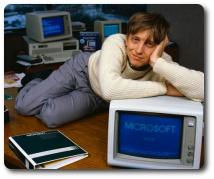
 F you listen closely, you can already some squeaks of anguish. Indeed, these are coming from Mr. Ballmer as oinks his way into a nearby office to break a chair. The prospective departure of Bill Gates has been made public, so the future of the company his jointly founded does not look bright.
 OOGLE Earth has been released for Linux (
 ODAY I was reminded why, despite the fact that I never set my hands on Windows machines, they still manage to hinder my work. I was ready to upload experimental data to personal Webspace, in order to have it transferred to a colleague down in London. I was then faced with a hot red warning message saying that the large ZIP archive appeared to be a virus (merely based on file size and file type). Renaming the data file and changing its filetype would not help. I was forced to send to the entire lump of data (4 GB, yet compress) to a different computer and then FTP it, which is a really time-consuming PITA.
 When I first joined this scene of academic research, I was somewhat surprised to reveal that genuine and original content (as opposed to gross re-use) is not only perceived as acceptable; it is sometimes encouraged, as a matter of fact. I was truly disappointed to come to grips with this mentality, wherein peers say that good text should better remain unchanged and in most cases evolve or have some fine, cosmethic changes applied. If further progress is made, it can be appended to the existing text. This robs many people out of artistic integrity, in my humble opinion. It also leads to duplication and repeatability, which can make us feel like parrots.

 HEN I was in an Art museum at Washington I suddenly realised that Open Source will affect commercial applications in the same was photography affected realistic drawings. Photography put a lot of power in the hands of common people and thereby drove down the worth of graphical reproduction. Open Source likewise. Some would say it fixes the price at 0. I, however, would argue that this move is inevitable and support will become the means to sustain businesses. Software can be duplicated; support cannot.