


 Filed under:

Friday, August 3rd, 2012, 3:39 pm
TechBytes Episode 73: Richard Stallman on Corporate Power and the US Political System

Direct download as Ogg (11:07,4.5 MB)
Summary: The last part of our interviews series with Richard Stallman
TODAY we cover some more political issues including matters of law.
Secrets
Dr. Roy Schestowitz: What is your take on the notion of “trade secret”?
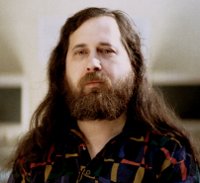 Dr. Richard Stallman: Well, since I think people have a right in general to keep secrets, that means they’re also gonna keep some trade secrets. And I don’t see any harm in this necessarily, for instance if you have a business and you don’t want to say who your customers are, well, OK, in general there is no reason why you should have to say who your customers are. On the other hand, when there is a public interest reason for certain information to be made available, that completely outweighs the businesses’ desire for secrecy. For instance, if you consider fracking, which is injecting fluids underground to push out natural gas. Well, some of those fluids are toxic and they have poisoned wells; they poisoned aquifers; they made people sick. But the companies say, “we don’t have to tell people what we’re injecting”. Well, as far as I’m concerned, what those companies want is of no importance compared with public health.
When there is an important reason companies should be ordered to say what they’re doing, because their desire is only enough in a situation where there is no particular reason on the other side. If it doesn’t matter to [the public], then sure, let them keep it a secret. But when it matters in important way to others, then the companies’ desire is not important.
Right, so basically that’s why it is diminished as soon as there is an externality.
Right, you see, when you’re doing something that’s going to affect public health, you haven’t got a right to keep a secret–not when anything important is at stake.
Right, what I mean to say, there is this thing of privacy right which corporations are not supposed to have, it’s really for people. But I suppose when there is an externality such as the public and there is an issue of public health all the taxpayers — paying the government to deal with certain companies — they do have a sense of entitlement to get information and that’s really more of the transparency…
But an important reason outweighs and unimportant one. All else being equal, I see no harm if… sorry, if there’s no powerful reason why a company should have to reveal something, then let it keep a secret if it wishes. But whenever an important reason shows up for requiring this information to be disclosed, tough on the company.
Politics
The last question I wanted ask it’s like, which is the government or state leader — either in the past or the present — that inspires you the most?
I don’t understand.
I’m just saying, which is the government or state leader — either in the past or in the present — which inspires you the most?
I don’t know how to answer a question like that. I’d have to think about it for a while to remember… you know, because if I read about some leader, that doesn’t mean I’ll remember today who that person is. And I might have felt, “wow, this is really a great example of doing the right thing,” but I don’t remember them. So my brain doesn’t work right for a question like that, sorry.
Okay, so I’ll ask a different question instead. Which is the person you would endorse for the presidency in 2012?
Oh, Jill Stein.
I know that.
In fact, I already have. She is the Green Party candidate. Well, I’d like to say why I endorse Jill Stein.
Okay, carry on.
Obama is basically right wing. He mostly does what companies want. And I won’t support a right-wing candidate. And of course Romney is even more right wing, but I’m not going to support a ring-wing candidate merely because he is a little less right wing than somebody else.
Obama protects torturers. Obama personally orders assassinations away from battle fields. Obama basically supports the banksters. Obama was bending over backwards not to prosecute them for crimes–the banks had committed gross crimes connected with foreclosures, and he wanted to impose a settlement. Some state attorneys general refused to go along with the settlement, so he had to compromise a little; he said there would be an investigation, but he gave the investigation too little funds and it looks like it’s going to really go nowhere. And this is after the banks took thousands of people’s houses based on lying in court. So he’s protecting them after they’ve committed tremendous crimes that have harmed probably hundreds of thousands of Americans (if not millions, but I don’t actually know). Then, to go beyond that, last year he joined in advocating deficit reduction as a goal when of course, when there’s a recession what’s needed is deficit spending; that’s the only way to get out of it. Of course he couldn’t force the House of Representatives, which is controlled by the Republican Party, to vote for something, but he could have championed the right policy. That he could have done by himself, but he didn’t. So he is, I’d say, a Republican although he calls himself a Democrat. And not only that but he said nothing about the danger of global heating, and he’s pushing in every possible way to build the tar sands oil pipeline from Canada to the Gulf of Mexico. He really is on the side of the oil companies, which are trying to fry our planet.

Dr. Jill Stein of the Green Party is in the trenches fighting for the people (source: AP)
Here ends the series of interviews with Richard Stallman. We’ll have more guests shortly.
We hope you will join us for future shows and consider subscribing to the show via the RSS feed. You can also visit our archives for past shows. If you have an Identi.ca account, consider subscribing to TechBytes in order to keep up to date.
As embedded (HTML5):
Tuesday, July 31st, 2012, 6:36 am
Richard Stallman Against Software Patenting
Direct download as Ogg (12:12, 4.8 MB)
Summary: The fourth part of our interviews series with Richard Stallman covers software patents opposition for the most part
TODAY we turn our attention to software patents for the most part. Here is the transcript.
Dr. Roy Schestowitz: How do you judge the reliability of a news source and which one or ones do you favour?
Dr. Richard Stallman: Well, how do I judge the reliability? To a large extent I look at the story and I try to judge based on the other things I know whether this looks like it’s bullshit or possible truth because there are news sources that I know often slant things. But that doesn’t mean that I think that their statements of facts would wrong, because I expect that they would be caught if were wrong. So, I don’t know of any news sources that I could say “that’s a good one” because they all have their positions, they all wanna say some things and not others. The question is, does it seem plausible that they would say falsehoods about facts? Because there is some embarrassment involved in getting caught in saying… in giving some news that wasn’t true. And that’s somewhat of a factor so that many places are not likely to say things that are just false. But they may draw conclusions that don’t really follows, or that reflect bias.
My next question is about the GPL. More recently there has been some exposure for what’s known as the GPL.next, which Richard Fontana…
No, no, it isn’t anymore. Basically, Richard Fontana was interested in exploring some ideas, so he started a project to get suggestions about what to put in a copyleft licence.
That name was not very nice because it implied that it would be the replacement, and of course for anyone to say “my work is going to replace your work” is a somewhat unfriendly thing to say, but that’s not what he seems to really mean, so I hope that he finds some interesting ideas through this.
My next question is, what do you consider to be the most effective strategy for elimination of software patents in the United States and worldwide as well?
Well, it depends on the country because this is a matter of political activity and how to do that effectively varies from country to country, so I can’t give authoritative advice to people in other countries. If I can even do so in the US, it wouldn’t apply to other places. I can suggest possible approaches to try, you know, meet with officials, organise and make a protest in the street, have protests at events if any officials from that part of international agencies that favour software parents are coming, protest them. If the US trade representative is visiting, or there are a thousand reasons to protest the visit of the US trade representative, what he wants is good for business and bad for people in every country including the US. So, how you influence politics in your country you’ll know probably a lot better than I do. But that’s what it involves very likely. But it may also involve legal action if your country’s courts could rule that software patents are not valid, well that’s very important. But maybe what you need is to find a lawyer to argue that case. Now, in the US, when an appeal is being heard, anyone can send a friend of the court brief, which is published presenting arguments to be considered. If you are in a country which has a practice like that, that can be helpful. But there is one point of which direction is going (?).
If the country does not have software patents, then it will work simply to make it clearer and firm that software patents are not allowed and put this into legislation so that the patent office can’t betray it. And you have to work hard making it iron-clad (?)so that the patent office can’t find an excuse to betray it. For instance, in many cases, there are countries in which computer programs can’t be patented. But the patent offices say, “we’re not issuing patents on computer programs, we’re issuing patents on techniques that can be used in computer programs.” Now, we think that those treaties and laws were meant to prevent that, but the patent offices reinterpret them in a way that means that becomes effectively void and doesn’t prevent any kind of patent that anyone would actually want to apply for. So you’ve got to be careful, you’ve got to study from a point a view, how could the patent office try to twist this?
However, there are countries which already have software parents and in those countries restricting the issuance of software patents would still leave you with maybe hundreds of thousands of existing software patents. What I recommend to the US is therefore, well, if the courts ruled that software patents were never valid, they would all disappear. So there is some hope that that may eventually happen. But what could Congress do? Congress can’t legislate the existing patents into non-existence. What it could however do is rule (or legislate) that patents are not infringed by developing, distributing or running software on general-purpose computer hardware if the hardware itself doesn’t infringe. And that way these patents would remain valid and they could be applicable to hardware devices but not to software. You see, patent systems don’t generally divide patents into software patents and hardware patents; it’s rather the patent would (?) cover a certain idea and maybe that idea is typically implemented in software, but the patent would also cover implementing it in hardware. So, we can in fact see that a certain patent is a software patent; my definition of a software patent is a patent that can prohibit programs. Because patents are not intrinsically labelled as software patents or hardware patents you can’t just say “we are going to prohibit software patents”, you got to define clearly what it is that’s not going to be issued or else legislate about where patents apply and where they don’t apply.
The next and last part will be published in a few days.
We hope you will join us for future shows and consider subscribing to the show via the RSS feed. You can also visit our archives for past shows. If you have an Identi.ca account, consider subscribing to TechBytes in order to keep up to date.
As embedded (HTML5):
Thursday, July 26th, 2012, 10:59 pm
Richard Stallman Against Mobile Phones
Direct download as Ogg (8:51, 3.5 MB)
Summary: The third part of our interviews series with Richard Stallman covers privacy in communication
In this third part we turn our attention to more political issues. I spoke to Richard Stallman about matters of privacy as he has in-depth knowledge of the facts. Here is the transcript.
Dr. Roy Schestowitz: My next question is more about surveillance because I don’t want it to be strictly about software because I know you do have the digital freedom in general and I want you to ask you about advice for trying to avert surveillance in this age where, based on the whistleblowers, we know the NSA is in fact recording vast amounts of information and data about people and also recording all the E-mails. What is your suggestion to people who try to avoid all of that?
Dr. Richard Stallman: Well, I think it’s our duty to avoid that. It’s every citizen’s duty to stick a finger in Big Brother’s eye. Now, the NSA would like us to believe that it’s doing the surveillance to protect us Americans from the terrorism, but the US regulatory accuses dissidents of being terrorists. So whenever a government says it’s fighting “terrorists” read “dissidents”. And when you look at where the danger around the world comes from, to a large extent it comes from the US. The US was behind — or carried out — a war of aggression in Iraq, a war conquest and then an occupation; as a result hundreds of thousands of Iraqis were killed. The usual figure is definitely an underestimate.
And so, really you gotta ask, who does the world need protecting from? And this is not — not to count — countries which are dictatorships that are propped up by the US, which carry out the worst kinds of atrocities but they are useful allies to the US, so the US protects them, such as Ethiopia and now Honduras. Honduras had a military coup which might have been organised by the US, but in any case it has certainly been given full support by the US since.
So, I just don’t think of that argument as valid at all. I don’t think that the NSA is on the side of the good people in the world. And so I think that it’s perfectly appropriate to do things like using Tor — and using encryption — to interfere with the NSA’a ability find out what you’re doing.
And I want to also ask you, what’s your advice about the use of mobile phones especially now that we know, at least based on Sprint, that the carriers, at least in the United States and we know here in the UK as well, are in fact collecting data on location of people, the people they phone, perhaps the address books as well. What would you say to people?
I don’t have mobile phone.
I know.
And why… it’s because mobile phones are Stalin’s dream. They are surveillance and tracking devices. They are always sending the location frequently (I think even if you don’t make a call), so your whole life is being tracked and of course if you do make a call, the system knows who you call. And now only that, most mobile phones have a universal back door, meaning that the phone company — you or someone else — can forcibly install software changes without asking your permission. This has been used to remotely convert phones into listening devices, and when that is done the phone picks up and transmits all the conversations in the vicinity whether you’re making a call or not and transmits it to someone and just pushing the button to switch it off does not necessarily really do that. So I consider this outrageous and I won’t have one. If I’m travelling around somewhere and I need to make a call I ask somebody nearby to let me make a call. That way, Big Brother doesn’t get information about me.
More insights from Stallman are to be published in the coming days.
We hope you will join us for future shows and consider subscribing to the show via the RSS feed. You can also visit our archives for past shows. If you have an Identi.ca account, consider subscribing to TechBytes in order to keep up to date.
As embedded (HTML5):
Tuesday, July 24th, 2012, 6:10 am
TechBytes Episode 70: Richard Stallman on Privacy and More
Direct download as Ogg (0:10:19, 4.2 MB)
Summary: The second part of our interview with Richard Stallman covers social networks and Web browsers
FURTHER to this interview with Richard Stallman (about UEFI) I spoke to him about another area of technology which is less to do with software and more to do with civil rights. Here is the transcript.
Dr. Roy Schestowitz: Obviously, quite famously, the FSF has made a statement about Facebook and my question was, what is your take on Google Plus? I know you’ve stated that in your Web site very briefly. And also, are there any centralised platforms that you actually deem benign?
Dr. Richard Stallman: Well, the first question is, well, the FSF doesn’t talk about Facebook too much. It’s a different issue from the Free software issue. So, I’m concerned with other issues of freedom besides that of Free versus proprietary software. So, I disapprove of Facebook because it collects a lot of personal information and I don’t think it’s good for anything to do that.
When I give a speech, at the beginning I ask people, “please don’t put a photos of me in Facebook.” And now I explain why. When you put a photo with people in it in Facebook, Facebooks asks people — asks users — to enter the names of those people. In other words, that photo gives Facebook an opportunity to do ad surveillance of those people. Those query the victim of having a photo put in Facebook. So, I would suggest that if you are friends with somebody that you treat that someone well by not putting photos of that person in Faceebook. And and in any case, I ask people not to put photos of me in Facebook. Now, there are many other bad things Facebook does. See stallman.org/facebook.html for a list of quite a few.
But what about Google Plus? Well, from what I know, which is not everything, Google Plus does some of these bad things but not all. One bad thing that they both do is require people to give their real names. Now, Google Plus says that in some cases we’re wiling to publish a pseudonym but they demand to know the person’s real name. Well, I think that’s enough reason not to use it. I urge you not to use such communication systems which demand to know who you really are. Because if they do that, they’re basically one more eye of Big Brother.
[...]
I don’t go around trying to keep track of these things. Twitter might be okay. You got to be careful how you use it. First of all, it is possible to use Twitter without running non-Free software. It wasn’t easy to make an account, but apparently it could be done through their mobile version of the site. The problem was, the regular Twitter site tries to make you run non-Free JavaScript programs. And you will notice that if you have installed the LibreJS extension of Firefox, that’s a GNU package whose purpose is to enable you to avoid running non-Free JavaScript programs and also to make it easy to complain to the Webmasters about the non-Free JavaScript programs. But it is possible to work around that, as actually sending and viewing tweets, it’s not so hard to avoid using non-Free software. So, and Twitter doesn’t require people to give their real names and if you make an effort you can avoid sending in your geographical location or anything like that, which of course is a really dumb thing to do as certain protesters, dissidents in the US have discovered. So, maybe that’s enough to make it okay. Now, Twitter the company, is doing something else that’s bad — something that Facebook (and I think Twitter is doing this, I know Facebook and Google do it) and this is the “Like” button. In Facebook’s case it’s called the “Like” button. And you find this in lots of pages, where if you visit one of those pages that means Facebook is getting information about your browsing even if you’re not a Facebook user. And Google has “1+” button and they do the same thing. And I think Twitter also has such kind of button that you would find in various pages. We are going to release a browser modified to block all those.
I think in practice one of the issues is many of the browsers these days have actually got some surveillance built in and one of the usual excuses these days is security, so they try to prevent phishing scams and things like such that are absolute; I think since Internet Explorer version 7 and Google Chrome and other browsers by default they will track the users and leave a trail, or at least provide the corporate maker of the browser, with a list with pages you visit, so the other releases…
Those are non-Free programs. Internet Explorer is non-Free and Google Chrome is non-Free. Not only that, Google Chrome has a universal back door, which is another way of saying auto-update; basically it means that Google can forcibly impose software changes and the user can’t say no. This is the same thing that Microsoft has in Windows, so Microsoft can also impose software changes. Any malicious feature that’s not in the program today could be remotely installed tomorrow. So, once a program has a universal back door, you must consider it not merely malware but universal malware.
More insights from Stallman are to be published in the coming days.
We hope you will join us for future shows and consider subscribing to the show via the RSS feed. You can also visit our archives for past shows. If you have an Identi.ca account, consider subscribing to TechBytes in order to keep up to date.
As embedded (HTML5):
Friday, July 20th, 2012, 3:04 pm
Dream Circularity

 HIS MORNING I was dreaming that I was dreaming that I was dreaming. I woke up several times, at different times, but only within the dream (or the dream about a dream), only to falsely assume it was a particular time of the day. The level of circularity was never quite so high and I took these notes after I had woken up.
I was so relived when I woke up to realise that I was dreaming about dreaming, but then I was still inside one layer of dreams and it took me quite a while to wake out of that. Confusing, eh? Anyway, dreams are a mysterious side of the human mind. They are said to have a purpose in the sense that they train our neural model of expectation for particular possible scenario, e.g. being chased by an animal in our primal past.