ith recent milestones reached and a change in publication strategy, I decided to unleash some easy-to-run code along with the 535 pages which document the code as well as experiments that have been run using this code over the past year or so. The document is not as organised as it ought to be, but I hereby make a lot of stuff available in fairly raw form. I made an HTML version to overcome file size issues that are associated with PDF, not to mention accessibility issues.
Surface Matching With Statistics and Geometry: Technical Report for 2011 (PDF – 535 pages, HTML – multi-page layout)
In summary, performance verging state-of-the-art is reached. In order to pile up and share the approach/work done thus far (before proceeding with the exploratory direction of diffusion/other), these are hastily-assembled notes that weigh 60 MB (over 500 pages for this document) which contain a lot of material that can prove useful some time along the way. Here is a previous post with some shorter documents. They are all being uploaded as HTML and PDF once they become coherent enough, soon to be indexed and made accessible through the research page and Web search as well.
Summary: Tim, Rusty and Roy join again for a sort of pilot of the second series (season equivalent, but an annual division)
This show primarily covers Linux, Android, WebOS, and gaming consoles. Soon enough we will have a new introduction and banner. The show’s layout has changed too.
AST year (or at the end of 2010 to be more accurate) I started posting a lot more often about my work in this blog. I resumed what I had done years beforehand, even if that meant a loss of focus for this personal blog. But then again, this blog hardly ever had any single point of focus, so after the upcoming release of one gigantic PDF I will resume posting updates about my research on a more regular basis. This ought to achieve a more transparent communication of ideas. It is also a departure from the disappointing pace of blogging (about a post per week as of late).
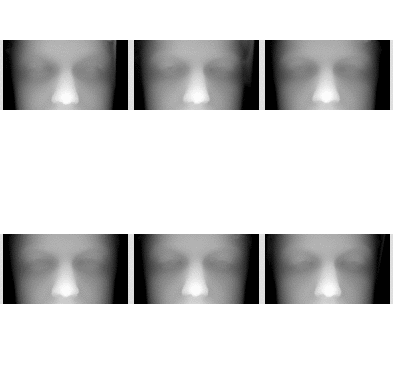
ATEX helps render for a variety of output types including posters and Web pages, not just A4 sheets. As a typesetting language it is very powerful, but for advanced functionality it requires additional packages, included in the preamble. It appears as though GIF animations are not supported in LATEX despite the fact that, if exported as Web pages for instance, the notion of animation makes sense. This is a shame really and if someone knows of a workaround, please leave a comment. I am currently writing a 400-page report which is a comprehensive summary of what I am doing and without animations it might be hard to express what is going on. For example compare the following triplet of static and dynamic (which HTML is happy with):
VER THE past 2 months I have practised very hard to improve the strength of my upper back in preparation for the competition which I have just won (and received the award for today). I was attempting to break the British record, but I did not succeed. I was two tenths of a second behind it. Nonetheless, my time was good enough to win the contest, which I added to the sports page.
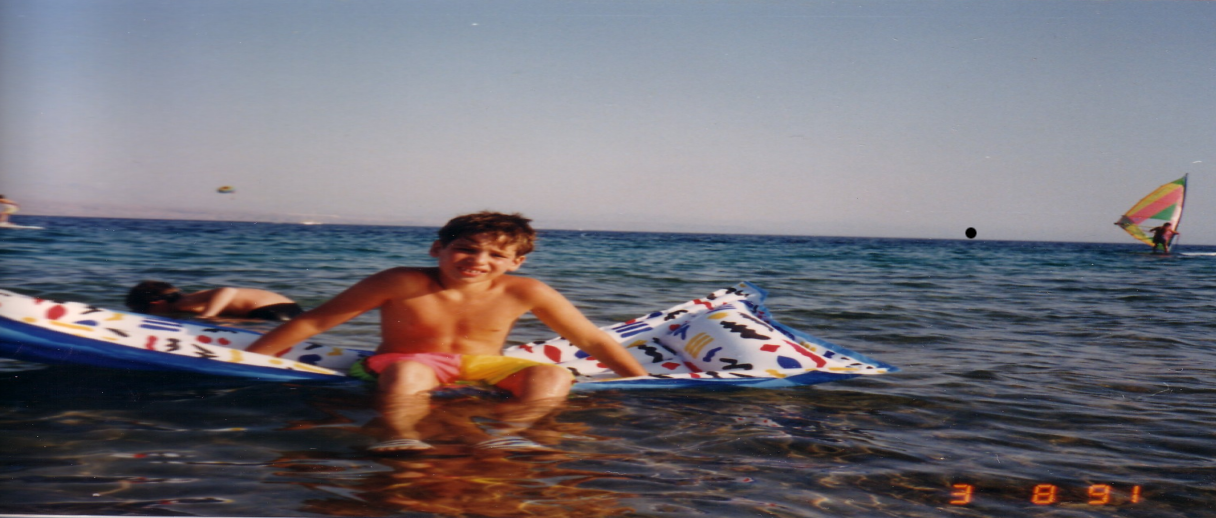
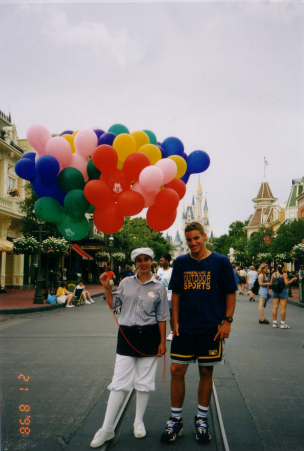
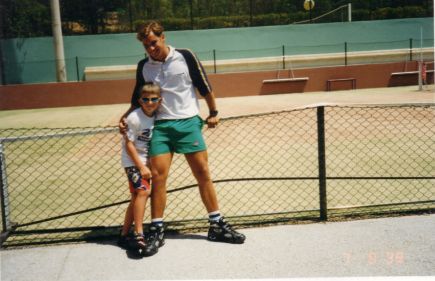
n December 17th I will turn 30 and I recently went through some old photo albums trying to gather some memories from favoured times in the past — times when life when generally quite easy and fun. This made possible and easy to assemble the following collage which spans mostly a year or more after birth, 15 years after that, and another ~15 years later, at age 29 and 11 months.
Retrieval statistics: 23 queries taking a total of 0.100 seconds • Please report low bandwidth using the feedback form
Original styles created by Ian Main (all acknowledgements) • PHP scripts and styles later modified by Roy Schestowitz • Help yourself to a GPL'd copy
|— Proudly powered by W o r d P r e s s — based on a heavily-hacked version 1.2.1 (Mingus) installation —|


 Filed under:
  ith recent milestones reached and a change in publication strategy, I decided to unleash some easy-to-run code along with the 535 pages which document the code as well as experiments that have been run using this code over the past year or so. The document is not as organised as it ought to be, but I hereby make a lot of stuff available in fairly raw form. I made an HTML version to overcome file size issues that are associated with PDF, not to mention accessibility issues.


 AST year (or at the end of 2010 to be more accurate) I started posting a lot more often about my work in this blog. I resumed what I had done years beforehand, even if that meant a loss of focus for this personal blog. But then again, this blog hardly ever had any single point of focus, so after the upcoming release of one gigantic PDF I will resume posting updates about my research on a more regular basis. This ought to achieve a more transparent communication of ideas. It is also a departure from the disappointing pace of blogging (about a post per week as of late).



 VER THE past 2 months I have practised very hard to improve the strength of my upper back in preparation for the competition which I have just won (and received the award for today). I was attempting to break the British record, but I did not succeed. I was two tenths of a second behind it. Nonetheless, my time was good enough to win the contest, which I added to