Introduction About Site Map

XML
RSS 2 Feed RSS 2 Feed
Navigation

Main Page | Blog Index

Tuesday, May 24th, 2011, 3:00 am

Virgin Trains’ Customer ‘Support’ a Waste of Time

Speeding train

A couple of months ago Virgin Trains made an error which left me with an invalid couple of tickets. I had to purchase 2 new tickets in London and be late as a result, too. At the end of the day I approached Virgin, attempting of course to resolve this over the counter, instead being referred to customer support (by snail mail to Birmingham). After carefully writing an explanation and enclosing the unusable tickets I have been writing a couple of letters to them, passing them by post at the expense of my time and patience. They later ended up sending me a survey to provide feedback on customer support (which I did send them) rather than actually write back about the case of their mishandling. The post never came from them.

To cut this long story short, this whole experience was money down the drain and then a lot of time down the drain. I probably won’t buy tickets from Virgin Trains again. It’s not even worth losing hours like this, either in vain (like in my case) or where the outcome might be rightful compensation. I can only advise others to avoid Virgin Trains as well. After they mess up, their Customer ‘Support’ team failed to pick up the pieces. It’s a recipe for unhappy clients.

Sunday, May 22nd, 2011, 1:39 pm

How We Make TechBytes

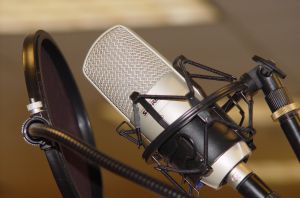
Microphone

Summary: How to make Internet-based phonecalls and also record them with Free software and open standards

TECHBYTES has had to do some research into recording shows with Free software. It was actually our intention since the early days of the show (November 2010) to look into a pipeline which is entirely Free software based. Because of convenience or laziness, we settled for and ended up recording the show under Skype, then doing the rest with Free software. We actually started by experimenting with SIP to some extent while simultaneously looking into a recorder which was compatible with Skype for GNU/Linux. As the show involved many guests (especially at the start) we needed to facilitate Skype access and curtailed the pursuit for a SIP replacement until more recently. Then came the time to record with Richard Stallman, which coincided with the disturbing rumour that Facebook would buy Skype. Eventually it was Microsoft, which can be seen as equally bad.

This post summarises my findings and to some extent Tim’s observations too. We spent many long hours researching the subject, testing many packages, testing the process inside many calls, and making a lot of test recordings, then refining them and adjusting parameters including volume levels. Some listeners provided valuable advice. Some gave application recommendations and here is what was found after a fairly thorough exploration.

SIP Communicator

I started using sip-communicator after Gordon Forbes had made the recommendation (about 4 months ago). It is pretty impressive, it is very features-heavy, and it was built with Java, which makes it somewhat heavy too. The version I use is still not very polished. It has some debugging-level code in it. The good thing about it is the built-in recording capability, webcam support (which works well, unlike Skype which never ever worked for me with any webcam), and automatic detection of all the underlying hardware. It worked with my webcam over the network, but not so consistently though. Some buttons seem to not yet have a callback function associated with them, at least in the version I have installed. It is like a development build. But, having said that, it’s a decent cross-platform application with good SIP support, assuming it can connect to the other side successfully.

Linphone

This good client does not appear to support video although Tim claims otherwise and my experience with it is very limited (the binary to run is linphone-3 on *buntu-based systems, not linphone) . It did not quite succeed with the callers I tested it with. It does have echo cancellation, just like Ekiga, which is the main application that I use.

Ekiga

So, that brings me to Ekiga. Fine application, although the toolkit it uses for the UI does not integrate so beautifully into KDE4. Even Skype sorted that out not so long ago (Qt Curve added), but Skype is out of the question here. Ekiga does everything, including video, reasonably well. Its Windows version is not so official however. When it comes to camera support, it does not consistently transport the image to the other side. Sometimes it works, sometimes it does not, for whatever reason. It worked for us with webcam over the network, but most of the time it does not.

Blink

One listener told me about Blink, which is cross-platform and quite good looking. It is abundantly easy to use. I have not had so much time to test it, having installed it from unofficially-approved repositories (quite successfully and without issues though). Its cross-platform support seems like a big advantage considering the fact that Ekiga may not support a lot of platforms reliably. Maybe the Skype exodus will motivate developers to hurry up with such development endeavours. Telephony is one of those areas where multiple sides are involved, so ports to proprietary platforms can be more easily justified.

Mumble

For a call with multiple participants this piece of software can be handy. it is cross-platform, it has wonderful setup wizards, and it is easy to use. We may use it in the future. Asterisk has a reputation of something that is hard to set up for similar tasks. Based on TLLTS, there are also recording quality issues associated with it. This downsamples everyone on the line. Of course, it is always possible to record separately on each side and then merge everything. But this is time-consuming and it requires manual synchronisation work.

Left out from this survey we have lots of GNU-affiliated packages and we of course do not bother with so-called ‘Cloud’ Computing options from Google (or Gizmo), which is Fog Computing and proprietary. It’s hardly better than Skype in that regard, as both are cross-platform.

Recording

Recording is another important part of the pipeline. As an alternative to Skype Call Recorder (which works with GNU/Linux) we considered using SIP Communicator and later Blink, which we were told has some recording facility. We have not found that in the GNU/Linux version yet. In any case, recording all system sounds from PCM seemed reasonable and alsamixer enables this to be done at some lower level, if not other mixers that are graphical. Failing to attain high quality, we may just record locally and then merge at the end, as Linux Outlaws is doing for example.

Audacity

Here are some instructions on how to get things working with Audacity. It may not work on all systems and filters might be needed to compensate for noise. But still, it is better than nothing. Since Audacity is also our editor of choice, integration of this sort is desirable.

GTK RecordMyDesktop

The package gtk-recordmydesktop is a front end to a program which requires some command-line-fu. The settings in the GUI are easy to follow and there are detailed tooltips too (optional). For additional command line options such as strict coordinates from which to capture can be specified in the GUI too, if necessary. Those who developed the product did a fine job simplifying screencasts, which is essentially how we process video-based shows. Encoding can be done at the end of recording in order to lower CPU load, especially if compression is used to compact large videos that are mostly static throughout.

Editing

For editing we have only used Audacity with a bunch of filters that we know help improve the quality of raw audio. The program is good for mixing several tracks, Except for that, my only prolonged editing experience goes back to Windows 3.11 days with Sound Blaster software. As I was about 11 or 12 at the time, that does not count for much. We are still improving and since we never edit any of the speech part (not even editing out or having second takes, the editing is mostly mixing oriented).

Encoding

To re-encode videos we use mencoder and ffmpeg, which are command line utilities that do the job pretty well. Some reasonable commands that we routinely run are gathered in a text files.

Postscript: Tim says that Linphone supports cameras and this Wikipedia page, sent by a reader while working on this text, might be handy.

Regarding phone books management, some applications were simpler to manage than others. My personal choice is Ekiga’s, which also has a complete historical calls trail. It is very useful.

If we left out important options, be sure to tell us.

Sunday, May 22nd, 2011, 1:34 am

TechBytes Episode 47: hypePads and Chromebooks

TechBytes

Direct download as Ogg (1:15:38, 16.6 MB) | High-quality MP3 (27.6 MB) | Low-quality MP3 (8.7 MB)

Summary: Tim and Roy speak about Unity, Fedora 15, Microsoft’s decline, and notebooks with Linux for Web-based services

TODAY’S afternoon show was shorter than usual and it covered few topics, mostly those that matter a bit more than others. Tim will post the accompanying show notes in the morning.

Today’s tracks are “We Should Give” by Amity, “Blackout City” by Anamanaguchi, and “She’s Got You” by Cosmo Jarvis. The latter two are part of SXSW 2010 Showcasing Artists (get the torrents legally here). We hope you will join us for future shows and consider subscribing to the show via the RSS feed. You can also visit our archives for past shows. If you have an Identi.ca account, consider subscribing to TechBytes in order to keep up to date.

As embedded (HTML5):

Download:

Ogg Theora
(There is also an MP3 version)

Monday, May 16th, 2011, 12:17 pm

Samsung Makes Cupholders

My PC is connected to a stereo system that pipes into the bathroom, bedroom, and living room. But the stereo’s CD is broken. So I started using the tray as a cupholder. It is actually quite handy and since the system is quite old, spillage would not be catastrophic.
Cupholder stereo

Monday, May 16th, 2011, 1:17 am

TechBytes Episode 46 on Skype, Linux, and Android

TechBytes

Direct download as Ogg (1:03:54, 11.6 MB) | High-quality MP3 (23.2 MB) | Low-quality MP3 (7.3 MB)

Summary: Rusty, Gordon, Tim, and Roy meet again for a discussion about Skype, copyrights, PSN downtime, GNU/Linux, and Android

THE show will be released tomorrow (update yet to follow), but we release the show as soon as possible.

Today’s tracks are “Quanto Tempo” by Doces Cariocas, “Cos I said so” by Fangs, and “Iguana” by SambaDa (I named the last song incorrectly on the show). All are part of SXSW 2010 Showcasing Artists (get the torrents legally here). We hope you will join us for future shows and consider subscribing to the show via the RSS feed. You can also visit our archives for past shows. If you have an Identi.ca account, consider subscribing to TechBytes in order to keep up to date.

As embedded (HTML5):

Download:

Ogg Theora
(There is also an MP3 version)

Sunday, May 15th, 2011, 7:18 am

TechBytes Episode 45: Skypocalypse

TechBytes

Direct download as Ogg (1:45:25, 21.1 MB) | High-quality MP3 (38.8 MB) | Low-quality MP3 (12.1 MB)

Summary: Tim and Roy have a loaded discussion about Skypocalypse, rogue PR agencies, and a variety of other topics regarding the growth of GNU/Linux and beyond

THIS show covers the Skype acquisition, Google’s GNU/Linux products, confirmed cases of AstroTurfing, and common FUD that resurfaces.

Feedback on the show can be posted in comments, in Identi.ca, and in the Techrights IRC channels (among other means of communication).

Today’s tracks are “El Camino” by No te va gustar, “Future Eyes” by Ear Pwr, and “Tokki no Rassha ” by Dolly (I made a mistake by introducing the song as “Dolly”, not the artist). We will try to include more music in the future as well, mainly from SXSW 2010 Showcasing Artists (get the torrents legally here). We hope you will join us for future shows and consider subscribing to the show via the RSS feed. You can also visit our archives for past shows. If you have an Identi.ca account, consider subscribing to TechBytes in order to keep up to date.

As embedded (HTML5):

Download:

Ogg Theora
(There is also an MP3 version)

Friday, May 13th, 2011, 11:53 am

Critique of Mobile Phones Culture

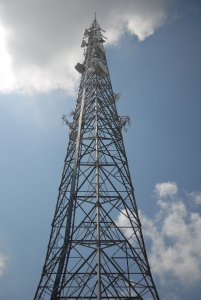
Tower

Mobile phones are a marvel of innovation and their small size is a testament to human achievement. But mobile phones as mere phones go a long way back, decades in fact. Their functionality today has hardly changed when it comes to core objectives like making and receiving calls. So how have people come to the point of treating them as accessories and status items in our increasingly superficial social system? Why are my colleagues advertising a phone brand in all their E-mails for example? Why are people without a phone (or a Facebook account for that matter) frowned upon? Must everyone be semi-detached to a phone? Is it a status symbol? Is that how it’s marketed? Wrist watches were like that sometimes, e.g. Rolex.

I personally no longer carry a mobile phone (or cellphone to Americans) for reasons that I explained a lot of times in many different places. I do, however, carry a PDA (it was even used to compose this post with a full-sized keyboard). It’s not something that I love to talk about as it is controversial and my view is an unpopular views. Usually I avoid naming the reasons in order to avoid a pointless conversation. But here is an attempt to cohesively explain some of the factors that led me to giving up mobile phones in 2003. I am unlikely to get one again as it is like an addiction in the sense that once one is purchased, it is hard to get out of the cycle, due to people expecting your number to work, the phone to always be switched on, and for you to be near a computer even when you are not. Moreover, there are strings like contracts, which give nothing other than more complications and paperwork. Getting a mobile phone is easy, but getting out/rid of it is the hard part, as I learned 8 years ago. Among the factors that cause discomfort, as mentioned earlier in other contexts, is the associated complications that resemble getting utility bills and having to challenge mistakes, set up direct debit, check billing addresses, handle repairs, etc. Another of course is the inability to distance oneself from work. People expect people with a mobile phone to be accessible anywhere, at any time. It is unreasonable given that the phone owner might not have Internet access at every moment of the day, which is crucial for some people to operate properly in a professional way. But then there are also the elephants in the room, which make people moody or confrontational when the subject is brought up. There are primarily two such elephants; the first is privacy and the second is health. Enough said, no? The industry which profits from mobile phone extravaganza funds research to deny the health implications of associated radiation, whereas almost any study not funded by those entities shows the opposite. It’s like the tobacco lobby back in the days. Please don’t attack the messengers just because the truth is not convenient. Also, do not be selective so as to fit one’s belief of choice; it’s like faith which overcomes reasoning, even confirmation bias. Regarding privacy, more people appear to be catching up with the problem, especially recently. Using triangulation it has always been possible for carriers to determine the position of the callers (geographically) and as time goes on and antennas density increases, the identification is further refined. In the past it was not as bad as before because carriers were not legally required and retain this information for the government. They are now, as friends who work for British telcos tell me with complete confidence. This is a serious step back which shows how hostile phones are becoming. This data is not there for the user, so it can mostly be used against the user. It never goes away, either. To make matters worse, even makers of the operating systems of the phone are now probing for one’s location. How can that ever be useful to the user? Marketing? To spin this attack on privacy as something positive people might say that it’s for one’s safety, in case someone gets lost/injured/abducted and becomes “missing”. In practice, however, It is rarely the case that the phone becomes a saviour unless a call is being made. So the privacy part of it (location recording with a long trail of history) is an entirely invalid point. Why retention?

The subject of privacy is better understood by those whose activities might be seen as subversive by some who themselves subvert society. The vigilant ones amongst us understand that privacy protects us from those who have too much power.

The one major circumstance where having a mobile phone would be invaluable is when trying to coordinate a meeting with someone out in town or some streets where a land line is not easily accessible. But that someone would have to be unreliable as people could arrange meetings and avoid being late long before mobile phones. Today’s generation got accustomed to the idea of using a phone to justify being late (people are still late, but they get reassurances and estimated times of arrival, which is not ideal either). If the train system was run like this, there would be considerable trouble.

The matter of fact is, a lot of people these days use their mobile phones for purposes they were not designed for, e.g. loud conversations about what’s available for lunch. It becomes an attention-seeking apparatus and less of a tool of necessity. People give away phones to workers or family in order for them to be contacted rather than in order for them to make contact and if they cannot be reached there is an unsubstantiated fear and paranoia. Rather than quell and suppress uncertainty (when someone can or cannot be reached) it just causes more anxiety.

Do you still carry a mobile phone? And if so, have you tried carrying none for a whole month as an experiment? It would probably not be an ideal experiment due to the tie-up or addiction mentioned at the start of this post. It’s a cyclic trap, more so than addictive computer games. Social interaction manifests peer pressure. The truth is, even without a mobile phone people can do all the same things; there are substitutes for everything and nothing ever rings to interrupt an epiphany.

Real-time Posts

Posts by @schestowitz

Retrieval statistics: 23 queries taking a total of 0.082 seconds • Please report low bandwidth using the feedback form
Original styles created by Ian Main (all acknowledgements) • PHP scripts and styles later modified by Roy Schestowitz • Help yourself to a GPL'd copy
|— Proudly powered by W o r d P r e s s — based on a heavily-hacked version 1.2.1 (Mingus) installation —|