Introduction About Site Map

XML
RSS 2 Feed RSS 2 Feed
Navigation

Main Page | Blog Index

Monday, October 22nd, 2007, 4:16 am

Linux Cannot be Trusted, With the Exception of Freedom

WE have entered a period when GNU/Linux desktops gradually become more widely accepted. An increasing number of people choose to migrate not only for cost savings, but also — because software takes more control of the user’s privileges over time — for freedom, which becomes attractive. To some, independence and choice are newly-realized traits and they are inherent in the software. In many cases and to many people, these traits were never understood or explored before, but they have a great deal of impact on behavioral and security. Thus, they are related to trust.

With changes in software paradigms — from closed source (proprietary) to open source — changes in mindset do not necessarily ensue. Ideological and conceptual views cannot be changed overnight. Experienced Linux users strive to find a point of balance wherein both worlds (and both mindsets) can settle and thrive together, without exclusion of peers.

It is often argued that openly sharing code leads to elegant solutions. Poor solutions perish whereas better ones evolve and spread. While many remain united by the goal of producing and supporting the best operating system and applications, there remain at least one divide; there are those who who argue in favour of full transparency and those who are more apathetic towards it.

Apathy gives more control over technical decision to parties other than the user him/herself. These leaves a door open to abuse of rights, which is usually motivated by financial interests.

Other divides involve learning curve (e.g. command-line versus GUI) and perception of intellectual property, but these divies rarely affect the development model and the quality of software. Different distributions of Linux address the needs of different users, yet there is at least one component that is shared by almost everyone — the kernel.

Computer code is hardened and bug are removed when more pairs of eyes reviewed its quality. It is a question of visibility. Visibility is trust. What happens, however, when partial visibility becomes a necessary evil? Increasingly, as the reach of Linux broadens, a desire is born to choose easier routes to working solution. As the technology-savvy crows becomes a minority among the userbase, principles are compromised.

Arguments about pragmatism arise whenever a company or an individual is unwilling to disclose secrets. If this company or individual is kind enough to meet half way, by providing a solution which enables function but insisting that this function remains cryptic, a dilemma becomes inevitable. If this gift is accepted and becomes widely adopted, it becomes difficult to beg for change.

The importance of open source drivers is largely underestimated. Due to their proximity the the core of an operating system, they can affect security, privacy, and stability. An open source platform cannot be truly understood unless subsystems are entirely visible.

A truly trustworthy system is one where there is an open route of visibility which extends downward to the lowest level. Such a system is needed to ensure that no single mind or faction is misusing its ability to embed self-serving and user-hostile code. Trust is as deep as the layer of the stack which defines separation between known and unknown — that which permits the user to access the core.

In the future, we are likely to see widespread use of free/open source BIOS, open specifications for graphics cards with an open source implementation, and processors that are open (consider Sun’s processors whose design is already licensed under the terms of the GNU GPL).

Due to the fact that Free Linux distributions take a lot of criticism, I’ve written an article. Free software is, sadly enough, largely misunderstood. Only days ago, Mark Pilgrim was ranting and Don Parris responded. My own 50 cents were posted in Datamation. The article could be called “The Importance of Gobuntu to the Goals of Linux”, but I chose a different (and more generic) headline. Gobuntu was born to serve specific needs. It is built for users to whom freedom is an important quality of the software they use. More in Datamation:

As GNU/Linux becomes more popular, the motives behind its inceptions are often forgotten. Linux is a free operating system, but its broadening userbase perceives this freedom as pertaining to cost, not rights and liberty.

Sunday, October 21st, 2007, 5:08 am

Why the Gates Foundation is Not a Charity, But a Loophole

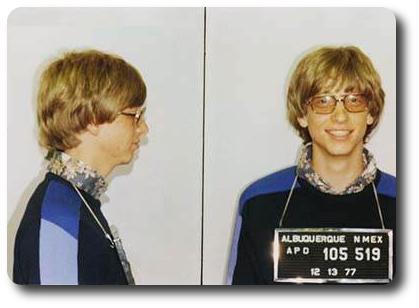
Bill Gates
Bill Gates arrested in his younger days (photo in public domain)

It is frustrating to find that some people still think that the Gates Foundation is all about altruism and good will. I’ve appended some references to support my observations below.

Mr. Gates has identified two cycles that are loopholes:

  1. The money cycle: avoid paying the money to authorities though taxation. Open a ‘charity’, dump your fortune there, give some to poor people and essentially pay poor people instead of governments that lack money to pay the poor anyway. With such money-laundering cartel, no wonder Warren has jumped on board too. Seen or read the “Perfect Crime”? How about a case Robber Barons?
  2. The brainwash cycle: use a charitable organisation to spend money on media, which gets people to believe Gates is a Saint. Then, people pay money for Microsoft products without any guilt or regret involved. This money can then be used to prolong the cycle of abuse and the Foundation is positioned in the middle of this. The Foundation is a medium that ensures money flows in thanks for brainwash and then ensures the brainwash lives on. Microsoft continues with its crimes while a fat-cat media turns a blind eye and praises Gates.

There are more cycles involved. Pyramid schemes are a funny thing. The sad thing is people’s ignorance. To Microsoft, most people are as stupid as Microsoft needs them to be, journalists are as greedy as Microsoft needs them to be, and politicians are as corrupt as Microsoft needs them to be.

Here are the promised references:

Dark cloud over good works of Gates Found

Gates Foundation Revokes Pledge to Review Portfolio

Gates sold 100,000 Univision shares-SEC filing [media company held by the Gates Foundation]

Bill Gates [Foundation] lends cash to buy newspapers ($350 million to MediaNews)

Here is a message of interest

My background is finance and accounting….

However, the Gates Buffet foundation grant is nothing more than a shell game in which control of assets for both Gates and Buffet remain the same.

THE ONLY DIFFERENCE IS THAT THE ACCUMULATION OF WEALTH BY THESE TWO WILL BE MUCH MORE MASSIVE BECAUSE THEY WILL NO LONGER HAVE TO PAY ANY TAXES.

Related blog item: The End of Corruption Assisted by Media Control

Sunday, October 7th, 2007, 10:54 pm

Erik Prince – Monopoly Abuse. Busted!

Watch this guy. He’s a nervous wreck. For context, see the page from which this comes from.

Don’t forget Bill Gates’ own grilling. Criminals in suits. Bail money is the only thing that keeps such crooks out of prison.

Sunday, October 7th, 2007, 5:23 am

Making Information Available to the Poor

Link, for gnash users

Sunday, October 7th, 2007, 3:34 am

Windows Botnets Put the Internet at Risk

WE often hear about the need to rebuild the Internet or at least rethink and revise its whole design. The problem, however, is not the Internet’s design. The Internet was built under the assumption that nodes in the network are well behaved and those that are not can be pulled out of it.

What do you get when one single node and one evil mastermind controls millions of these nodes? That’s where the poor security — a wet dream to government that wanted back doors available in every PC — comes into play. Windows is on the brink of destroying the Web. Sadly, the mainstream media does not give this much coverage, for obvious reasons. The article cited here (via one bloggers’ interpretation) talks about the Storm botnet.

“Storm” is nothing compared to the whole. Vint Cerf, one of the fathers and architects of the Internet, says there are 100-150 Microsoft Windows zombies out there. That’s a large proportion of the PCs in the world and it’s a ticking time bomb. The criminals use only a fraction of the PCs’ capacity at the moment, but they do some test runs sometimes, e.g. knocking down DNS almost, i.e. ‘killing’ the Internet. That one type of attack came from Korea about a year ago.

There were also those botmasters who were also doing some heavy spamming last Xmas (while system administrators are away). Mail servers were knocked offline and some bloggers had their accounts suspended. There is also the attack on Estonia, among many other incidents. The cyber-criminals are just afraid of getting caught, but they have enormous (and scary) potential. The only solution to botnet is probably to make Microsoft Windows obsolete. The operating system is, at present, broken beyond the point of being repairable. We are yet to suffer the consequences of this for years to come because old PCs will continue to be hijacked. They will not have secure software take over them.

Sunday, October 7th, 2007, 3:18 am

Measure the Openness of Software

IT is becoming increasingly hard to tell apart Free software from what is enterprise open source software. The two are very different, yet the terms by which they are referred to are similar. There is no subtle difference here; it’s night and day.
So how does one measure “freedom” or “openness”? Assigning a number would be a subjective thing to do (choosing weighting for factors which some people consider more important than others). All in all, you could establish something similar to a troll test (troll-o-meter) and obtain a number on a finite scale. That number, which you then attribute to some certain scale/acid test, can be used to — let us say — sort/categorise/group projects for purpose X, based on its level of openness.

How you weigh the worth of redisribution, access to all code, programming language (e.g. open source project that is tied to SharePoint ain’t quite so, is it?) is debatable, and depending on who you ask and what interest (or software) that person has, you’ll get different answers. Just look at the anomaly and differences in the ESR/RMS/Linus perspectives. This could sometimes lead to flamewars, not debates.

Sunday, September 30th, 2007, 4:30 am

The ‘World’ Has Decided That Animals Have No Place on Earth

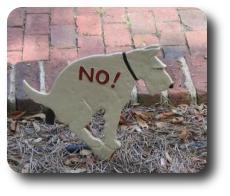
Dog sign

How precious.

People giving birth to lots more people even though the planet is overly congested. This leads to global warning and hostility among overcrowded or hungry populations. But… when it comes to animals, well… some have decided that you might as well just assassinate them just to make more space and clear up some room for people. Utterly appalling.

Adopt this dog or we’ll kill it

[...]

Those among you who remember when it was all fields round here may also recall the famous January 1973 cover of National Lampoon which carried a pic of someone holding a gun to the head of a rather worried looking mutt and the headline “If You Don’t Buy This Magazine, We’ll Kill This Dog”.

[...]

The fund’s Alex Aliksanyan told Reuters: “This is happening … in our country, in our back yard. It’s been kept underneath a blanket of niceness and sweetness. So we said, ‘Lets put the truth in front of the consumer – either do something about it, or at least realize you’re a partner.’”

How about birth control? How about going back to fostering nature? Our existence is not a race for expansion of human population size. The planet cannot contain this.

Real-time Posts

Posts by @schestowitz

Retrieval statistics: 23 queries taking a total of 0.098 seconds • Please report low bandwidth using the feedback form
Original styles created by Ian Main (all acknowledgements) • PHP scripts and styles later modified by Roy Schestowitz • Help yourself to a GPL'd copy
|— Proudly powered by W o r d P r e s s — based on a heavily-hacked version 1.2.1 (Mingus) installation —|