Monday, June 26th, 2006, 12:50 pm

 may have just helped in intercepting a key decision and plan. It was the plan of our Division to convert a Linux HPC cluster into a Windows Compute Server, deploying it across approximately 32 nodes.
Not everybody was happy with this decision which made by just one junior staff, especially after I had voiced my own opinions. That guy, a regular Windows user, was rather frustrated. He wanted to convert a perfectly-operational Linux cluster into something else. He wanted to do so because the *nix system administrator who runs the Linux supercomputer has recently left. Without much clue about the alternative route, he went ahead and made a proposition to the management, contacting Microsoft in the process.
It worries me when such decisions are pushed forward by people who are not qualified to judge. The initiator does not know anything but Windows, let alone is able to draw a comparsion between different high-performance solutions (IBM have clearly stated that Linux is superior in that arena).
The person in question was/is bound to go to a training course on using Windows supercomputing, but an afternoon IT staff meeting will review the whole plan and possibly scrape it. I feel as though I have, to some extent, prevented a huge and expensive mistake from being made. That was my Linux advocacy for today and it was done locally, where it truly matters, rather than over cyberspace.
Sunday, June 25th, 2006, 7:47 am

A sign that is sure to get people’s attention
 ESTERDAY I had a cursory look at ten tips for making your workspace more pleasant. As a gensture of reciprocity, here is the gist with warm attributions to the author, Steve Pavlina.
- Make your workspace look attractive to you.
- Clear out the clutter.
- Add plants.
- Make it smell good.
- Play relaxing music.
- Get a decent chair.
- Add a portable fan.
- Add a fountain.
- Personalize your space.
- Establish uninterruptible periods.
Points (3), (7-8) are the only ones I am in lack of. All of them involve the inclusion of objects, which I believe add to clutter (point 2).
Saturday, June 24th, 2006, 6:13 pm
 HAT a day over at
Digg.com! 3 of my story submissions have reached the front page; and the day is not over, yet.
I have recently accumulated some friends in this social networking platform and, to be honest, this sometimes makes me feel like a groupie in a game which is not democratic. People who acquire friends are more likely to have their submissions rapidly popularised. We shall see if Digg version 3, which is due to be released this Monday, will somehow correct for this tendency by deterring excessive mutual ‘digging’.
All my stories, by the way, are posted in defence of GNU/Linux and/or Open Source software. I truthfully do this in the spirit of freedom and openness.
Related items:
Update (8:35 PM): It’s now 4 (stories in the front page), with the possibility of 5 by the end of the day!
Friday, June 23rd, 2006, 3:08 pm

When Palm refuses to go right
could not resist posting this link (yay!). The target page is censored though (boo!). A couple of attractive women took a break from their UNIX-learning ordeal and decided to catch some sun. Notice the book that was lying next to them.
Is it at all surprising that the GNOME project is recruiting women? I am of course being very sarcastic. The Linux sexism myths must die. A misogynist attitude has for long been a deterrent to female computer scientists.
Friday, June 23rd, 2006, 9:39 am
ESTERDAY I found two of them toyish on-line, questionnaire-based tests. I happened to get the same result as that which led me to trying it in the first place. It made me wonder how many leaders actually exist in this ‘pool’. The survey looks rather amateur, I must confess.
So, I am equated to a scandalous man with some shady past. Well, I guess it could be much worse .
Thursday, June 22nd, 2006, 6:22 am

Not the actual box. Treat as
placeholder for illustrational purposes.
When you see a great deal, you simply know it! 149.95 dollars will buy you:
- AMD Duron 2.8 GHz Processor with 800 MHz FSB
- 180 Gigabyte Hard Drive
- 256 Megabytes of RAM
- K7MNF-64 nVidia nForce2 Socket A Motherboard
- nVidia nForce2 chipset
[...]
The machine will of course run GNU/Linux. It seems too good to be true, so I remain skeptic. Having toyed with the cart feature, it seems to be genuine though. The site statistics (Alexa, Netscraft), as well as some other available products, seem to suggest it is real.
Noteworthy: get Windows and double the cost of the worktstation…
Related item: Expensive Developers, Cheap Hardware
Wednesday, June 21st, 2006, 10:17 am
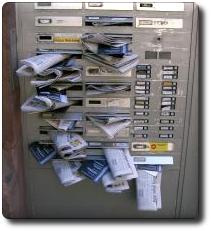
 AST year I got a bit frustrated with the nature of most E-mails that had been reaching my box. I then decided to write a short FAQ (while I was lying by a swimming pool, if I recall correctly). Over time, I found a way of reducing and managing the volume, which often led to unnecessary distractions. I even separated my E-mail into several ‘tiers’, which unlike filters, I find very handy. Some other communication was routed to Wikis.
Over two years ago I came to discover that Knuth had given up on E-mail altogether. I have just come across another nice homepage which expresses the frustration when it comes to badly-formatted E-mails, so I thought I’d share it by quoting:
E-mail is my main form of communication and the best way to reach me is to email howcome@@@opera.@com. I have used email since 1985 and, unlike Donald Knuth, I plan to continue using it in the future. I recommend these rules for writing electronic mail:
- Write e-mail messages in plain text (not HTML) with around 70 characters per line.
- When quoting other messages, insert your own text underneath the quoted text so that the logical order of the text is preserved
- Avoid e-mail attachments: send URLs pointing to your attachments instead.
- In particular, never send documents in proprietary formats as e-mail attachments. PDF is acceptable if the formatting of the documentis essential to understanding the document.
If you look at the source of the page (either the original or even this short post), you’ll find a nice trick of obfuscating E-mail addresses, which can prevent mass-harvesting by ratbot, for subsequent spamming.


 Filed under:


