Introduction About Site Map

XML
RSS 2 Feed RSS 2 Feed
Navigation

Main Page | Blog Index

Wednesday, October 19th, 2005, 5:18 am

Linux Adoption Sabotaged

Bill Gates
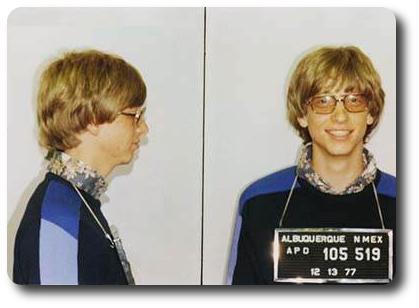
Bill Gates arrested in his younger days (photo in public domain)

JOHN H. Terpstra, a bold IT consultant, explains in an excellent article, which comes in 3 parts, how Microsoft and its disguised allies are working as a group toward abolishment of Linux on the desktop. The article presents a made-up case study and explains how some Linux incompatibilities are to be blamed for at a higher level.

Joe felt that Airgo Networks should be commended for its honorable handling of OSS, but he still had no luck there. When he called the company, he found out that no Linux drivers will be available for the Airgo chip set until late 2005 or early 2006.

The author also mentions the issue of cost, which is apparently well-controlled from up above, or contrariwise from down below, i.e. under the table.

Joe figured that since Linux is free, the cost of a laptop computer pre-loaded with Linux would cost less than one that shipped with Microsoft Windows. Wrong! The cost estimates he came up with were between $300 and $500 more for a system with Linux than for one with Windows.

Joe did a Google search to find Linux on laptop suppliers and obtained five price offers. Many Windows laptop specials offered a free bundled LCD monitor or a free bundled printer. No such offer was found for a Linux pre-loaded laptop.

It is worth referring back to an item that illustrates that fact. Dell Computers are selling an open PC (i.e. no operating system = bland hard-drive) for more than a computer with Windows pre-installed. Microsoft is apparently subsidising hardware or relishes on illegal kickbacks.

In John’s article he tends to become more political towards the end.

Joe had to pay for Microsoft Windows when he had no desire to use it, because he would have paid more for a machine without it. Why should consumers suffer cost increases to use a free operating system? Why are governments around the world so silent on this matter? Isn’t it time for the consumer to be better informed of the graft and corruption in the IT retail industry?

I, for once, could not agree more.

Tuesday, October 18th, 2005, 4:06 pm

BoxTrapper Problems

Dog scooping
Let a BoxTrapper handle the ‘poop’

bOXTRAPPERS are a mechanism for stopping large volumes of E-mail spam. The key idea is relatively simple as the following paragraph explains.

For each E-mail that comes in, require the sender to post a quick confirmation of his/her existence. The server sends the unknown sender a stub, which is then replied to as-is to complete verification. Once this is done for the first time, the sender is whitelisted and need never verify his/her identity again. Under this type of framework, untrusted senders must be accepted in order for their messages to be viewed immediately and not considered to be spam. And guess what? It works! BoxTrappers queues can be viewed periodically, just in case a genuine senders did not bother to get themselves whitelisted by replying to the verification request.

I have 3 BoxTrappers on this domains, but they are sometimes misused as spammers attempt to break them, much as they destroy anything where scams, links, and on-line shopping are involved. Spammers will often identify themselves using E-mail addresses of real people, who are not truly themselves, thereby causing traffic from the BoxTrappers (if not abusive mail from the spam recipient) to be sent to genuine innocent people and businesses. Moreover, I have recently come to grips with a trend where the spammers identify themselves as people coming from my own domain. They get whitelisted automatically in this way, so I guess they found a BoxTrapper weakness or loophole. Nonetheless, it remains easy to filter or identify such spam. It is only a shame that it can become visible by escaping the queue and thus be time-consuming.

These days, as I continue to edit this item, the spammers still manage to get past the BoxTrapper. Again, they do so by intentionally picking up E-mail addresses with my domain name, e.g. register@schestowitz.com. These come up with message bodies like “Please change you password, go to URL…” and with other username variations to register, e.g. webmaster, admin, etc.

As explained before, the domain name gets them automatically whitelisted, which is the core and very source of the trouble. These repeat almost on a daily basis (several times a day in fact) and I wonder how many Webmasters are gullible enough to fall for these scams, which I am convinced have become a widespread plague by now.

Tuesday, October 18th, 2005, 3:50 am

Desktop Environment Freedom

Desktop with previews

PDF‘s, text files, HTML‘s and
directories in the KDE Desktop with previews
(click to enlarge)

CERTAIN issues arise when habits and user orientation in his/her desktop are interfered with. Desktop environments, installers, filesystem structures, or even platforms in general are often more workable and thus successful if they comply with the expectation of new users. What if these are made too stringent by the developers, however? What if decisions and conventions are voted for without involvement of the end-user?

Many desktop environments, free ones in particular, are not made uniform. The resulting diversity and flexibility leads to difficulties in using somebody else’s settings, i.e. working in conjunction under the same session. Some GNU/Linux distributions include more or less any desktop environment which exists while settings are kept apart and well-separable for each user of the system and each desktop environment. So, where does the the problem lie? Give users more freedom, I suggest, and make that the norm. It is, after all, their own computer and they understand their needs better than the developers of the operating system.

What appears worse than all is the scenario where decisions are arrogantly by the vendor and then enforced. This is often the path that operating systems such as Mac O/S (to its varieties) and Windows do. Give the user some more choice, I say, by adding options for endless customisation that has very few boundaries, if any (Open Source). Give all users the freedom they deserve and allow them to express individuality and adapt/tailor their desktop environment to suit their needs. Menu entries and other widgets will remain unaffected, so documentation, for instance, will not suffer as a consequence.

People work differently on a variety of applications, for a wide variety of purposes. The domains in which they work differ as well. A person working with many open windows at any given time might prefer to have “focus follows mouse cursor”. Contrariwise, to some, this “focus follows mouse cursor” behaviour is highly adverse to habits. To list yet another example, a Web server needs to have a light desktop environment that is less susceptible to breakage and consumes small amounts of RAM.

These considerations are all highly defensible. If Linux was to be deployed in more public clusters, for example, choice could (and should) be given as to which desktop environment should be used. Different strokes for different folks, but all can be catered for provided that disk space is made available. The pertinent settings would reside in the home directory of each user. Thumbs up to Gnome, KDE, and the rest of the self-motivated window manager teams around the world.

Related item: KDE Versus GNOME

Monday, October 17th, 2005, 1:27 pm

Under Attack (Again)

Referrer spam

Referrer spam count in October logs (click image to see it full-sized)

SOME decent-scale DoS attacks, carried out by hijacked Windows workstations, have returned to the site. This comes after presistent attempts to take down the server, spamming it with URL‘s in the process.

This recent wave of attacks is one which can better be coped with due to experience acquired the last time. Sadly, I suspect that the attackers, whoever they may be, are reading my outcries in the blog and are getting a real kick out of it. Therefore, this will probably be my last post on the topic, however compelling the need to mention it becomes.

Monday, October 17th, 2005, 5:42 am

WikiMirror – Vile Ripoff

Sky scrapers
Content scrapers: where is the original content? Which one is the ripoff?

MUCH that we see on the Internet these days are mirrors, although we are rarely aware of it. Several crooks make good money out of it. Some search engines are crippled by the fact that they have no knowledge as to which sites are known ‘mirror culprits’ and which ones can be trusted. Consequently, search engines like Yahoo tend to return many references to content scrapers, which is a deterrent.

As I go about looking at some SERP‘s I suddenly come across a commercial site — a Wikipedia mirror — that had been registered since January 2005. Its description in Google (judge for yourselves):

Wikimirror.com – Free encyclopedia search a b c d e f g h i j k l m n o p q r s t u v w x y z _ · Google Web Encyclopedia.
 

WTF? Is the Creative Commons Licence an invitation to massive, huge-scale ripoffs? A community of WikiPedians around the world is voluntarily spending time in vain? To get somebody else rich(er)? I have had a look around the site in question. It appears like a complete mirror, which I must stress cannot be edited, unlike its much superior source. I recently discussed the issue of people mirroring the CIA Factbook, which is public content, in a relevant newsgroup. When will this end? And why has Google not banned Wikimirror.com yet? Does the domain name not say something? Helloooooo…?

I spoke to Chris Pirillo about Blogspot spam yesterday. After our discussion he posted an item that makes a nice little read. That item is titled Google: Kill Blogspot Already!!!, which is a venturous and strong title to be used by somebody as prominent as Chris.

Also while on the subject, have a look at Networkmirror.com [rel='nofollow']. In its defence, this one-among-many Slashdot mirrors does not archive content and it serves a defensible purpose — that of mirroring sites before they go down due to the Slashdot Effect. Then mirrors sites at least get exposure while they cannot cope with the demand.

UPDATE: 1-script argues that I may have been a little hasty in posting this item. The site states:

Content Credit

Wikimirror financially supports the Wikimedia Foundation. Displaying this page does not burden Wikipedia hardware resources. This article is from Wikipedia. All text is available under the terms of the GNU Free Documentation License. Contact: info [AT] wikimirror [DOT] com

As a side note, I still think that Wikipedia contributers (me included) ought to be aware of these facts (or the existence of this mirror), which may imply that their contributions become commercial and thus money-making.

Monday, October 17th, 2005, 2:04 am

Windows XP in CSS

Windows AJAX
Windows XP in AJAX

IF Windows is ever to be used, it should be standards-compliant and perhaps, just perhaps, CSS-based. Have a look at the link. It’s worthwhile, I promise you. Try clicking the “Start” button, then navigating through the menus.

Penguin swaysThat site is an invaluable resource by all means. 5 years down the line when dual-boot no longer is a necessity to most, we will still be able to recall the days when a different operating system prevailed in this world. Since it’s Web-based, no bytes will be consumed on local storage either.
Sunday, October 16th, 2005, 3:25 pm

Google Earth and Area 51

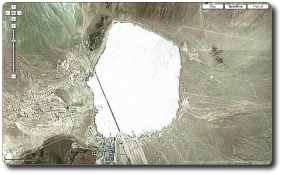
Area 51
Area 51 – used to be kept secret

IT was rather interesting to discover that high-resolution aerial footage of Area 51 had been made available via Google Maps (and its sibling toy — Google Earth). You can review a little ‘photographic summary’ from those who have had a prolonged tour from up above. Do so if you do not wish to explore yourself.

In other news, related items were flagged to for me last night: “Google Satellite Photos Worry India Leader”

The governments of South Korea and Thailand and lawmakers in the Netherlands have expressed similar concerns.

South Korean newspapers said Google Earth provides images of the presidential Blue House and military bases in the country, which remains technically at war with communist North Korea. The North’s main nuclear facility at Yongbyon is among sites in that country displayed on the service.

UPDATE: I am noticing a similar CNN story, which has just been cited by Slashdot.

“Google takes governmental concerns about Google Earth and Google Maps very seriously. Google welcomes dialogue with governments, and we will be happy to talk to Indian authorities about any concerns they may have,” Frost said in an e-mail statement Saturday.

Real-time Posts

Posts by @schestowitz

Retrieval statistics: 23 queries taking a total of 0.174 seconds • Please report low bandwidth using the feedback form
Original styles created by Ian Main (all acknowledgements) • PHP scripts and styles later modified by Roy Schestowitz • Help yourself to a GPL'd copy
|— Proudly powered by W o r d P r e s s — based on a heavily-hacked version 1.2.1 (Mingus) installation —|