Introduction About Site Map

XML
RSS 2 Feed RSS 2 Feed
Navigation

Main Page | Blog Index

Archive for the ‘Opinion’ Category

Pragmatic PDA Use

Palm TungstenI may be an exception and perhaps even an oddity. I lost interest in PDA applications that differ from the most fundamental PIM set. Alas, I sometimes wonder if anything beyond a reliable simplicity is truly necessary. I suspect not.

I bought a Tungsten over a year ago, but I need never do anything that I could not do on the M130, which is a low-end PDA I once owned. It now sits idly and serves no-one even though it works. It has a few minor defects, but workarounds can compensate for all of them. What was its contribution to the subsequent device in the ‘upgrade cycle’? A 32 MB memory card was inherited from the M130, among a few other peripherals. A larger SD card (quarter of a gigabyte) is now available, but it rarely, if ever, gets used. Same programs are used and the capacity required is similar. So what does it all come down to?

Palm rarely ever failed me where it mattered the most: data integrity. After over 3 years of regular use of the Palm I can only vividly recall two incidents of data loss which were a nuisance. Both incidents were not at all severe and they both date back to 2003:

  • Incident #1: I was editing a large memo for approximately half an hour without applying the changes. A very rare crash of Memo Pad led to the loss of all changes. A lesson was learned following this loss. As I compose this item on my Palm at the moment, I do not neglect to periodically save it.
  • Incident #2: Half a day of changes were lost after restoration from desktop-side backup. Fortunately, all that was lost included a few calender entries, which I could quickly restore from fresh memory

I have had an SD Card-based backup program for over a year, but never had the chance (reason) to use it. Well done, Palm, for preserving my data and preventing me from ever pulling my hair in frustration over data disasters.

Side note: I truly hope that Palm can deliver innovation shortly. They begin to lag far behind their competitors and I am tempted to swap vendors and move to Nokia’s Linux-based tablet.

Personal Take on Happiness

Roy as a baby smilingLife involves accumulation of things, not always objects, money or recognition. Happiness, however, is dependent on the momentum (increment of pace) of this accumulation, so a step up may not necessarily entail happiness. This explains why perpetual happiness is a myth.

To close with a quote which I strongly agree with (from Dr. Kent M. Keith):


“The good you do today will be forgotten
tomorrow. Do good anyway.”

Java Runtime Environment/Desktop

Open officeThe pact which involves Google and Sun Microsystems arouses my curiosity, particularly due to recent speculation about the Google PC and its vocation. It is no secret that Java is having tremendous impact. Nowadays, Firefox incorporates almost everything one needs, either as a joint plug-in that resides next to core, or as Web-based software, which is accessible via Web sites. Such sites are interpretable using Gecko (the rendered) or various other plus-ins for Flash, videos and the likes of them.

It is all about extensions, it seems — merely JRE applications embedded as panes in Firefox, which makes them well-integrated like the centre of all. Thunderbird does likewise and so can OpenOffice. The main implication is gaps being bridges. No more platform dependencies and filesharing protocols. Firefox makes everything transparent, or so one might assume (albeit you never know for sure with today’s Windows-only Firefox/Thunderbird themes and plug-ins).

For those who haven not heard/read yet, Firefox will soon have P2P file sharing incorporated as a plug-in. Rumours about this add-on have been circulating around the Internet for several weeks, if not even longer. There is even a screenshot. All of this commotion could attract a huge number of users from an already troubled Internet Explorer and, as browsers are used by all, this would push copyrights infringement to very worrisome levels.

Update (05/01/2006): Google renounce low-margin PC speculations

Internet Eats Industry

Google Earth
Entering the virtual world (screenshot of
Manchester snatched in June 2005, Google Earth, click to enlarge)

The Internet is bound to make most sectors of traditional industry obsolete. Below are several examples, which have begun to prove more realistic than ever before.

  • Telephone companies- suffer from VoIP for local and international calls
  • Internet Service Providers (ISP’s)- giants like Google can gnaw at their revenue by appealing to a large userbase
  • Newspapers – readers opt for the Internet, get access to blogs of many ‘flavours’
  • Television – user opts for interactive content, not one-way communication with a finite number of channels
  • Reviews move on-line – similar impact to that of digital TV (on-demand menus) on the TV guide — a river that have dried up
  • Book publishers – the impact of Wikipedia and free books in PDF format; easy printing and sharing
  • Film industry – media ‘ripping’, DRM
  • Music industry – same as before with but increased levels of piracy, also due to P2P networking
  • Classified services, real-estate (among other middlemen-type services) – superseded by eBay, classifieds service from Google, Microsoft, Craigslist, etc.
  • Banking – online banks with neither concrete branches nor assets
  • Groceries – as previously predicted (along with other wild guesses), warehouses may replace supermarkets and be managed and accessible via the Internet

What will be the outcome of this revolution? Nothing far-fetched, but nonetheless a noticeable transition. More free content, low-cost services and fierce competition among service providers, primarily left in the hands of giants.

Accessibility-Friendly Search Engines

Shop sign
A mixed message is delivered to site visitors

AS time goes by, the needs of the disabled are better realised. The Web becomes not only a mainstream phenomenon, but it is also a necessity. To many, banking, shopping and even social aspects or life are dependent on the Internet. Currently, search engines tend to concentrates on content, not on style and graphics, let alone validity of code or issues pertaining to accessibility. Might this change?
It would not be surprising if a search engine emerge , which only bothered with pages that are pure text or are built to possess good accessibility traits. Blind and handicapped people, for example, could opt for this niche-serving search engine. Large players such as Google have already catered for specific types of searches such as localised search (Google Local) and blog-exclusive search. Accessibility-type search may soon become a reality.

Tools such as The SEO Analyzer would perhaps be valuable for ranking sites. Perhaps incorporating modules such as these into crawlers is a worthwhile move. Moreover, rather than separating the engine types altogether, the user could tick a box that says ‘display only lean, stripped-down pages’1 or ‘rank pages for accessibility and sort by quality’. This will encourage better Web standards and open ‘HTTP cyberspace’ to a larger audience.

1 This exists already, I suspect. Page size in the results page provides a clue as well.

Operating System Monoculture

Bill Gates
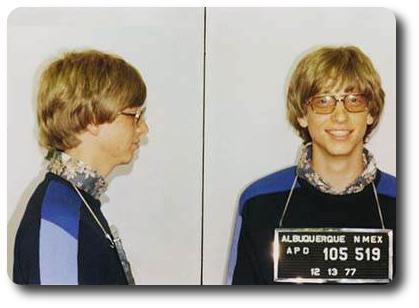
Bill Gates arrested in his younger days (photo in public domain)

OOW can Microsoft ever permit the existence of something interoperable? To a company so aggressive, interoperability is the very face of evil. It is a threat. What it comes down to is the equivalent of a destructive competition, which is counter-productive to humanity. It portrays the core danger of monopolies, whose power and scale can deter any resistance attempts. It embodies the scenario where people take risks only to avoid what is adverse to ideaology — steering away from the ‘norm’. Windows has become a norm. Its avoidance symbolises a state of social outcasting, at least in people’s perception.

Whether it was Java, or C, or even OpenGL, such technologies had to be ‘extinguished’, at least in accordance with Microsoft’s agenda. Even Adobe’s Flash (Macromedia takeover) and the PDF format are bound to be replaced according to the Microsoft Grand Plan. What about DivX and WMV? MP3 and WMA? The formats Microsoft have proposed are not only inferior in terms of performance, but also they are proprietary.

Will that trend ever stop? To critical IT professionals the current state-of-affair is like a pungent knife in an open sore. To many others, this entire manipulation from up above is misunderstood and thus perceived as innocent. The ‘cattle effect’ is to be attributed for some inertia, not to mention pre-installed software.

On to page 2

Linux Distribution Screenshots

SuSE Linux beta, KDE

OSDIR.COM have published a large number of screenshot galleries today. They all come from different ‘flavours’ of Linux: from Arabian Linux to Mandriva and even the latest of SuSE (version 10.1, shown above).

What I generally find awkward are distributions of Linux that go by names such as Linux XP 2005, and yes! They look quite similar to Windows XP as well. I guess that Apple Mac crossovers are not any better. For each his/her own.

Retrieval statistics: 21 queries taking a total of 0.088 seconds • Please report low bandwidth using the feedback form
Original styles created by Ian Main (all acknowledgements) • PHP scripts and styles later modified by Roy Schestowitz • Help yourself to a GPL'd copy
|— Proudly powered by W o r d P r e s s — based on a heavily-hacked version 1.2.1 (Mingus) installation —|