Introduction About Site Map

XML
RSS 2 Feed RSS 2 Feed
Navigation

Main Page | Blog Index

Sunday, September 10th, 2006, 6:45 pm

The ‘New Netscape’? Anything Like the ‘New Digg’?

The Digg front page

DIGG is changing. It potentially transforms itself for the better, but there are residual side effects. There will no longer be a tiered set of users. Top Diggers, including myself as a former active Digger, largely resent the new move.

To those unaware of these recent sizzling developments I’m referring to, Digg’s algorithm is being modified to be less (or more) democratic, essentially by weighting user’s votes as though they are not necessarily equal. It could bring about improvements, but it also raises many questions, affects morale, and lowers aspirations among new and senior contributers alike.

More latterly, several Digg contributers have been trying to assassin the character of Netscape, suggesting that the idea of removing avatars in protest came from Netscape or some shills it had recruited. It didn’t (see quotes below).

There are some Digg contributers who seek to blame Netscape for all the in-house trouble. But the removal of avatars, whose progress I followed from early stages, appears to have begun from the top and gone downwards with folks like DigitalGopher, P9, and George W. I didn’t realise what it was all about the first time I spotted the pattern. I thought top users were being banned or stripped of their identity. There are intersting discussion about the impact of the change.

Here’s another thought I had: if top diggers lose power and are then perceived as ordinary, that will a considerable turn-off, which is sure to stop them from participating much, let alone ‘game the system’, as Kevin Ross called it (impulsive accusation perhaps).

So what should we now expect from top contributers? Just a submission here and there to keep up appearance and be part of the scene (presence), not ‘becoming the next Albert Pacino (top all-time contributer)’, who long ago decided to hang up the towel.

Lastly, here is are some bits from an interview with the top Digger, who quit abruptly.

The other users did not remove their avatars in support of me. It was in protest of Kevin’s message as well as the verbal filth that many Digg users were spewing at Digg’s top submitters.

The #33 Digg user, Curtiss Thompson, had many of the same things to say, in an email to Wired’s Michael Calore:

The blog post by Kevin Rose in response to the Digg community’s outcry about top diggers gaming the system has caused many top diggers to be singled out from the community and buried not on the merit of their content, but on their unfounded accusations that the top Diggers were manipulating or “gaming” Digg’s democratic system. Not only was the blog post misrepresented, but it was misinterpreted, by the Internet community to support one Digg user’s claim that The Digg System Is Being Gamed By Top Users.

Side notes:

  • A Digg friend was kind enough to have me mentioned and even credited. Thanks, buddy!
  • I had an interview about my recent move to Netscape/AOL. I will post a pointer to the text (or a copy thereof) in my blog as soon as it goes live.

Update: some comprehensive, link-rich coverage has just been posted on the topic.

Sunday, September 10th, 2006, 8:02 am

Bill Gates Came From an Open Source Background

Bill Gates
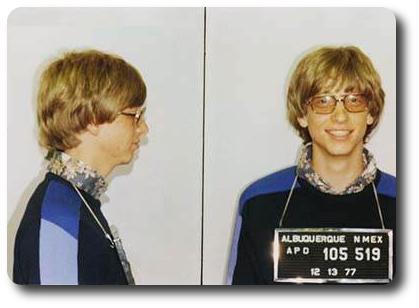
Bill Gates arrested in his younger days (photo in public domain)

From: 'Programmers at work', Microsoft Press, Redmond, WA [c1986]

Interviewer: “Is studying computer science the best way to prepare to be a programmer?”

Gates: “No, the best way to prepare is to write programs, and to study great programs that other people have written. In my case, I went to the garbage cans at the Computer Science Center and I fished out listings of their operating system.”

Not only does this confession put Gates in a position of hypricy, but this also explains Windows’ origins — the garbage cans.

Related item: Microsoft accused of software communism (totality)

Saturday, September 9th, 2006, 8:03 am

Wikis Finally Embraced by Academics

Wiki
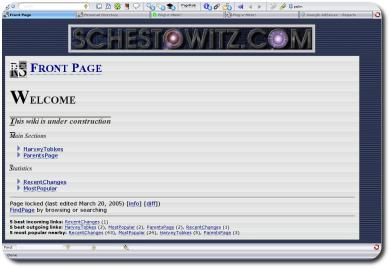
The Public Wiki section on this domain

Some good news with regards to collaboration with tomorrow’s technology (pardon the pun).

“The collaborative editorial process of wikis often results in a stunning degree of accuracy. A study by the science journal Nature found Wikipedia nearly as accurate as Encyclopedia Britannica. In fact, for summaries on niche issues and emerging interests, the biggest wiki of them all — Wikipedia — is often the best available source of information.”

It’s about time. I have been doing this for over a year, but people whom I work with refuse to embrace the concept of collaborative editing. They just toss 2 MB E-mail attachments back and fourth, bloating/clogging each other’s inboxes, still unable to spot the actual changes made.

Here is one example . The page is currently locked for editing because it’s a year and a half old, which expires its ‘shelf life’ and justifies guarading against Wiki SPAM.

Thursday, September 7th, 2006, 8:26 am

X11 Config File from the Future

Spherical desktop

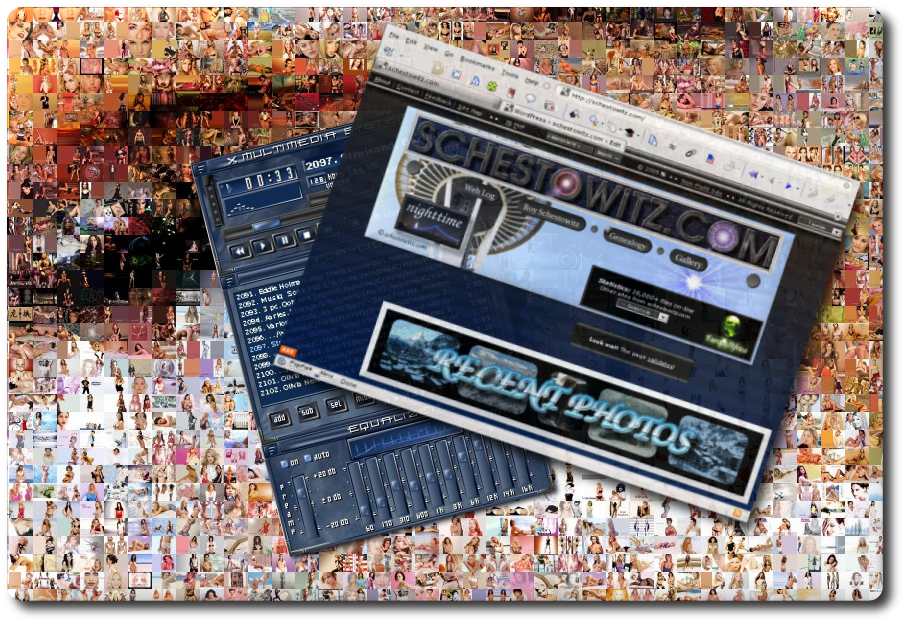
Wallpaper from Houghi (click image above
to enlarge; non-lossy PNG version)

TN ten years from now, Microsoft may have Singularity — another closed source implementation that resembles or fully mimics UNIX. But where would Linux be?

# /.../
# X11 config file


Section "InputDevice"
Driver "voice"
Identifier "VoiceServer[1]"
Option "Device" "/dev/input/vsrv0"
Option "Protocol" "Standard"
EndSection


Section "InputDevice"
Driver "glove"
Identifier "GloveRight[1]"
Option "Buttons" "50"
Option "Device" "/dev/input/glove1"
Option "Protocol" "Standard"
EndSection


Section "InputDevice"
Driver "glove"
Identifier "GloveLeft[1]"
Option "Buttons" "50"
Option "Device" "/dev/input/glove0"
Option "Protocol" "Standard"
EndSection


Section "Monitor"
DisplaySize 32000 32000
HorizSync 300-450
Identifier "Monitor[0]"
ModelName "MONITOR"
Option "DPMS"
VendorName "@@@"
VertRefresh 430-750
EndSection


Section "Screen"
DefaultDepth 128
SubSection "Display"
Depth 128
Modes "100000x90000"
EndSubSection
Device "Device[0]"
Identifier "HeadMountedDisplay[0]"
Monitor "Monitor[0]"
EndSection


Section "ServerLayout"
Identifier "Layout[all]"
InputDevice "GloveLeft[0]" "CorePointerLeft"
InputDevice "GloveRight[1]" "CorePointerRight"
InputDevice "VoiceServer[1]" "Voice"
Option "Clone" "yes, please"
Option "Xinerama" "on"
Screen "HeadMountedDisplay"
EndSection


Section "Extensions"
Option "Composite" "Enable"
Option "Taste" "Enable"
Option "Smell" "Enable"
EndSection

Tuesday, September 5th, 2006, 6:16 am

The First Linux Distribution

ManLUG

The old ManLUG Web site

The Linux Distro Timeline is a nice little project which visualises connections between the different Linux distributions as a function of time (there is also a Linux mindmap). In any event, it led me to exploring Wikipedia, which supports the argument that the first GNU/Linux distribution was developed right here where I work. Below is a snippet, extracted from some prophetic words from Owen LeBlanc.

There are now two free Unix operating systems available for PCs: Linux and 386BSD.

Linux is the more mature system, now available in it fifth public test version, 0.95a. The system requires a 386 or above, with or without a co-processor, with a minimum of 2 Mbytes of memory, and with at least 4 Mbytes recommended. The source for the operating system requires about 0.5 Mbytes, and binaries currently available (about 250 commands) require 8 to 10 additional Mbytes, although, of course, you may delete unwanted bits, or add further programs. With swap space, this means a minimum of about 20 Mbytes of hard disk space. …

Sunday, September 3rd, 2006, 12:52 pm

Does Digestion of Rivals Make You Evil?

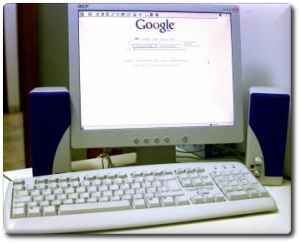
Google on a computer screen

GOOGLE is a prime example (sometimes even a role model) in various different contexts. However, Google is also known for its aggressive reach (otherwise appeal) to people who are not deservedly earned. The company has been accused of leading to ‘brain drain’ in the States, as well as disrupting operations in some companies. This was essentially caused by pulling of employees without prior notice. One notable embodiment of this behaviour is snatching of developers from Open Source projects that concern Google, e.g. Vinton Cerf, Andy Morton, and Greg Stein. There are several other VIP figures that serve as equally-valid examples.


There is no problem with this on the shallow level of principles. The developers have the will and the right to pursue their goals and follow their passions. But the snag comes at the end of my post.

Google has been thriving on three main choices/ideologies, in my opinion.

  • One smart move was the use of Linux, which increased performance, contributed to secrecy, and raised stability while reducing running costs;
  • Another was the use of new algorithms, which are very much like those you would find in academic trackers (e.g. publication farms like CiteSeer). Counting backlinks was not a hard idea to embrace or anything unprecedented, with the exception of Web search perhaps;
  • Lastly, the famous mantra and general laid-back culture put an innocent face on a to-be behemoth.

Ultimately, you may find that Google’s continued success relied on technologies that were harnessed through acquisitions (compare with Microsoft). I am not at all fond of the direction our economy takes as it evolves. It kills startups (one could spot quite a few of these Google victims on eBay) and it shrinks the level of choice in industry. I am a strong advocate of diversity and co-existence, by means of reduced aggressiveness in human resources and management. When lawyers and investors take over a pool of intellect, alarm bells should be sounded.

Saturday, September 2nd, 2006, 5:45 am

Oxford-bound, Rants Mandatory

Room in Oxford Oxford College
Some photos I took in Oxford last year

LATER this month I will present my work at Oxford University. I still have many photos from my last visit (sample above) and I also wrote some notes. The absurd thing is that, for the first time, the college where we’ll be staying does not permit jeans and T-shirts. It doesn’t sound so liberal to me.

As was the case before, another concern for me would be whether the projection facilities can handle OpenDocument format. Even if I choose to present in HTML with JavaScript, there’s no guarantee that a proper Web browser (one that supports Web standards) will be installed. In that case, I need to bring a laptop and, oddly enough, people are assumed to have the same ‘flavour’ of software. Therefore, it has become common to share the same computer in a session, passing files using USB sticks. Use of laptops is frowned upon, so ignorance in computing and standards evidently leads to inconveniences. That aside, I have little desire to travel anymore, but I am left without much choice. I’ll probably write more on this topic, nearer to the actual date of the event.

Real-time Posts

Posts by @schestowitz

Retrieval statistics: 23 queries taking a total of 0.090 seconds • Please report low bandwidth using the feedback form
Original styles created by Ian Main (all acknowledgements) • PHP scripts and styles later modified by Roy Schestowitz • Help yourself to a GPL'd copy
|— Proudly powered by W o r d P r e s s — based on a heavily-hacked version 1.2.1 (Mingus) installation —|