Friday, December 2nd, 2005, 1:43 pm

The clock ticks for Microsoft while their competition evolves
 AKERS of Windows are expected to ship its next version in line with their promises. Release dates get postponed time after time while immature products develop and skip the conventional testing cycle. Having had to re-build Windows Vista from scratch, this becomes worrisome. More worrisome if the fact that a million users migrated from Windows to Apple Mac last year alone. With a flow of critical, and yet unpatched flaws, one wonders: why has Microsoft not fixed them all?
Almost 4 years after the launch of Trustworthy Computing, I found myself wondering why am I staying up till 4:00 AM to deliver an emergency set of instructions (Home and Enterprise) to my readers because Microsoft felt it unnecessary to patch a flaw six months ago that was originally low risk but mutated in to something extremely dangerous.
Timely link: Novell: Vista to Drive User to Linux
Friday, December 2nd, 2005, 4:01 am

 HE effect of the Internet on everyone’s life intensifies. With higher-speed connections and rendering capabilities that grip a vivid reality, more and more people get entangled in a world of fascination — a world more worthy than the mundane at times. As some recent studies indicate, Internet addiction can become very severe.
Up to 10 per cent of internet users in the United States have a dependency that could be as destructive as alcoholism and drug addiction, it has been claimed.
Internet addiction disorder is being treated by some therapists in the same way as a chemical addiction.
The Proctor Hospital in Illinois is admitting patients to recover from obsessive computer use, according to the New York Times.
Experts told the newspaper that they see similar signs of withdrawal to those found in alcoholics or drug addicts – including profuse sweating, severe anxiety and paranoia.
On other unhealthy effects of the Internet:
Thursday, December 1st, 2005, 2:23 pm

More options and parameters to fine-tune
 Firefox has hidden options, which can be unveiled and altered by entering
 about:config in the address bar. For example, the browser can be configured to better exploit pipieling or put an end to the most stubborn pop-ups. What is this good for? Avoidance of arbitrary choices of values which are otherwide hard-coded and this immutable. Hidden options are allowing these to be changed, using some loose UI or commands syntax, shall that ever become a necessity.
Hidden options are an excellent idea in principle. Thunderbird enables you to enter a variety of statements into JavaScript files, thereby customising the mail client quite endlessly (introduction phrase, symbols, etc.). Whether these hidden option are implication of an advanced option that is not yet implemented, I can’t tell. Either way, it is a selling point to anyone who feels passionate about hacking or even requires certain customisations.
For example, I know I would be deterred by a client that does not handle exectutable/dynamic signatures and I also feel uncomfortable having no control over the X-headers. I currently use 3 mail clients in tandem (KMail, Thunderbird, Horde) because none offers all the required features. Thunderbird with its hidden options and plug-ins is yet the most powerful/flexible.
As regards hidden options in general, the only issue I can think of is increased complexity in the code. Many conditional statements and more parameters/values which are not hardcoded make code flow harder to keep abreast of. Support for multiple languages has a similar effect. Having said that, since broadly speaking, those to ever look at the code know what they are doing, I think it is balanced by the positive points, if not overwhelmed by them. Many would disagree nonetheless.
Thursday, December 1st, 2005, 4:48 am

The Trojan horse effect
News headlines refer to this recent critical flaw, which affects Windows users (as Internet Explorer can never be uninstalled).
The security bug, exploited by the Trojan downloader, was originally reported in May
[...]
The vulnerability puts computers running Windows 98, Windows Millennium Edition, Windows 2000 and Windows XP at risk. An attacker could gain complete control of vulnerable systems by hosting malicious code on a Web site. Once an IE user visits the site, the malicious program would run without any user interaction.
Sounds re-assuring. In the mean time, until a patch gets released, Internet Explorer users are discouraged from clicking ‘stuff’ or strongly advised to disable necessary functionality. Otherwise, the Internet may continue to suffer from the existence of Windows zombies, which persistently carry out Denial of Service (DoS) attacks.
Related items:
Wednesday, November 30th, 2005, 7:03 am
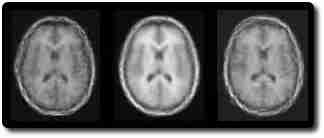
An appearance model of the brain after
perturbation has been applied to its training set
 ATER today I will deliver an important presenation on my recent research work. This work has been done in collaboration with UCL for the past few months. This comes amidst 2 days of talks (the first day was yesterday), which slow down my activity on the Internet.
The presentation file that I practice with is in OpenOffice 1 format. This relates to my discussion on one-file presentations versus the more open and sparse (and in my opinion correct) form, as argued and published a couple of days ago. In-depth details on academic progress are periodically posted in MARS, which is a separate, research-related section that jointly resides on this domain.
Wednesday, November 30th, 2005, 3:48 am

Bill Gates arrested in his younger days (photo in public domain)
From previously-cited writer comes yet another ‘killer essay’.
if (Windows Rules) then (Linux fails)
Part of the problem with the documentation and identification issues I talked about last week – and will talk about more later – is that it is very hard to separate information from disinformation.
Disinformation comes in three major forms:
- innocent mistakes;
- intentional disinformation (aka FUD); and,
- (self) delusion.
[...]
Read on…
Also see: Linux is not Windows
Tuesday, November 29th, 2005, 6:46 pm

 AID stands for Redundant Array of Independent (or Inexpensive) Disks. As yet, I find RAID somewhat redundant, at least in my individual scenarios and for my personal purposes.
RAID is associated with backups on multiple disks, which in turn enables easy data recovery. The disks may also be distributed across geographically isolated and thus independent places. RAID does not directly cater for synchronation of data, applications, settings. That, for instance, is one of the powers of on-line services and network-hosted environments. This, as a matter of fact, is what pushes computers towards becoming relics.
One question to consider in RAID is the target of a write/read operations. This point refers to where data should be fetched from or save onto and how changes should propagated among the multiple disks. These issues are easily resolved in the following way:
Let us look at this conundrum, which is flawless management of files across computers. The confusion over where data gets stored and fetched from can be resolved owing to remote login. Assuming we speak of high-bandwidth networks here (100Mbit LAN in my case), the ‘cost’ of using SSH bandwidth is almost negligible. Even 10Mbit connections would give you a very responsive UI behaviour over the network. I know this because I tried it. The exception are cases where you stream many large frames over the network (e.g. video, games).
I have never looked deep into RAID technologies. Why not just scp (or rsync) the entire content of a hard-drive periodically? I maintain files on just a single machine, which I always SSH to from elsewhere. Its contents get mirrored on two other remote machines. Files that change on a daily basis are backed on the SAN overnight using cron jobs. This simplifies life a great deal. I still see no compelling reason for using RAID, especially with the existence high-speed networks.
As for Web site backups, these can conveniently be downloaded unless an automated job is set up, which is something I hope to do one day.
Related short items:


 Filed under:
