Thursday, July 14th, 2005, 2:22 am

There is a supposedly reliable Google updates list on the Web, though its retainers are not affiliated with Google so can only make predictions. Among the updates included in this list:
- Toolbar PageRank Update
- Google Directory Update
- Backlink Update
- Algorithm Update
- Toolbar Program Update
Wednesday, July 13th, 2005, 1:28 pm
 The word on the street is that Microsoft’s CEO, Steve Ballmer, has lost a lot of weight recently. Perhaps he cannot sleep at night either, or perhaps, even more possibly, he is simply on a diet. I prefer to believe that he lost his appetite once he fully comprehended the fierce competition, which he reluctantly admitted to in a very recent interview on innovation (video in Windows-only WMV format, so see cocky comments instead). Microsoft have plenty of reasons to worry:
- Internet domination – Firefox and Google are slowly taking control of the Net. Software migrates to the Web and becomes more inter-operable. This by all means accumulates to more bad news to Microsoft.
- Mac and Tiger – Scoble of Microsoft has admitted that Mac OS is ahead of Window in terms of its capabilities. Eye candy is not the only advantage Apple have to offer.
- Security – Windows is still unable to cope with the many security flaws and viruses. The industry is getting fed up.
- Breaking proprietary – Samba has opened up network protocols, allowing file and printer sharing to be compatible with non-Windows operating systems and work in tandem. Open Office makes popular Windows formats readable under most platforms and continues to improve dramatically.
- Productivity and innovation – Longhorn offers only mere gains as all “three pillars” were conceded due to self-imposed time constraints.
- Open Source – Linux, being a source of free software substitutes, has become one of Microsoft’s biggest fears. It has gracefully been adopted recently. Michael Dell has given $100,000,000 to RedHat Linux and Fijitsu carry on with Linux, to name just a few examples that came up lately.
Wednesday, July 13th, 2005, 5:13 am
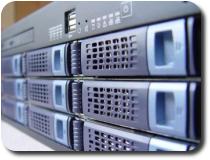
 edundancy makes computers much safer, more stable and more reliable than other aspects of our lives. Paper loss, theft — or more personally — physical damage, illness and other disastrous scenarios may be difficult to avoid. They all relate to the physical whereas information itself is metaphysical.
In IT there is rarely any need to step back and cope with losses. Only momentum can be hindered. The famous song by the Beatles suggests that the same does not hold for actual life. The phrase “How I long for yesterday” means that restoration of a past state is often not possible. On the contrary, with information stored electronically, assuming frequent backups are retained, we can fully restore what we had yesterday. We have what businesses have come to know as “damage control”.
On a more technical tone, I back up my Web servers every 2 days and my databases every single day. My entire hard-drive (excluding applications and media such as music and video) gets mirrored twice a week. Rather than overwriting old backups, I keep a stack as large as the hard drives can hold, so they are usually nearly full. More efficient backups would involve CVS-like mechanisms or tools like rsync, but practicality greatly depends on the bandwidth available.
Backup makes the haven when disaster hits. Copy, copy, duplicate and mirror. Excessive backup: no such thing. You never know how this will save you from a broken hard-drive, a mistakenly deleted directory or mysterious critical changes to settings.
Tuesday, July 12th, 2005, 4:23 pm
 he screenshot below practically illustrates why you should not always trust news sources, even if they are as big as Yahoo Inc. Some say that technical Web logs are more knowledgeable sources of information while journalists, correspondents and editors have scarce knowledge of some topics they cover. I was faced with the screen shown below when reading the Technology section in Yahoo.

Are the two processors going to fight one another by spitting heat? It should of course have been “dual-core”.
Tuesday, July 12th, 2005, 5:34 am
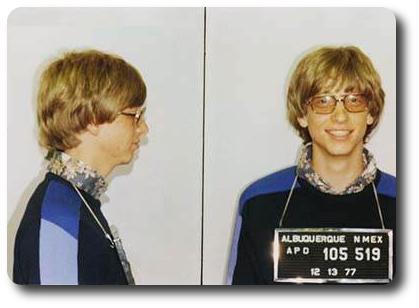
Bill Gates arrested in his younger days (photo in public domain)
Some time the past I composed a little tool from various scripts to correct for the differences between Windows and Linux servers. To quote just the gist:
The Linux filesystem behaves differently from that of Windows. For example, Linux treats index.htm and INDEX.htm as if they are separate files; Windows does not.
In the logs, I repeatedly observe errors like the following (from half an hour ago):
[Tue Jul 12 05:48:11 2005] [error] ...
[client 207.46.98.35] File does not exist: ...
/home/schestow/public_html/guestbook/spam/
The correct URL is in fact /home/schestow/public_html/Guestbook/Spam/ (note case)
Performing a reverse DNS lookup, I discovered that MSNBot was the culprit. Its Windows-egocentric requests invoke errors again and again, making false positives and adding noise to the error logs. Phrased differently, whenever requesting non-existent pages (by manipulating their names), MSNBot flags errors which result in a chaotic mess (I view my error logs several time a day).
Are Microsoft intentionally tempering with Linux servers? Are Microsoft punishing us because we did not buy their expensive server software? That’s what it boils down to.
Tuesday, July 12th, 2005, 1:39 am
 recently sought and discovered a plug-in for WordPress (a blogging tool) that generates PDF‘s from WordPress data. This eases the process of printing, viewing and sharing pages as PDF’s preserve their structure across platforms.
The WP2PDF Web site covers much of the detail and contains an on-line demo. As an example, press below (bottom-right corner) to see a PDF version of this post. If you have a hard time installing the plug-in (hand-tweaking is involved), see my notes about a possible bug and the way I got around it. Image embedment works only in the minority of cases, so if you find a solution, please post it here.
There was one particular reason for my interest such a plug-in. That reason was Mambo (picture below), which has PDF/PS support built-in. Mambo is an excellent Open Source CMS that is currently used by ManLUG, of which I am a member.

A screenshot of the Mambo installation for ManLUG
Monday, July 11th, 2005, 2:43 pm
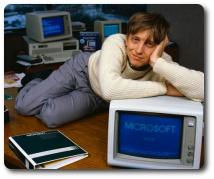
Bill Gates posing for a teen magazine in 1985
with a Mac at the back, from which he nicked the GUI
 istory certainly repeats itself. Microsoft have once again imitated the user interface of the Mac, particularly the eye candy; their beta version clearly reflects on that. This beta was only announced a day or two ago, so the leakage of screenshots was rather quick.
Also worth noticing is the stunning similarity to Windows XP, not to mention the absence of improved essence underneath, namely the three promised pillars, which were conceded due to self-imposed time constraints.


 Filed under:
