Monday, January 10th, 2005, 3:35 am
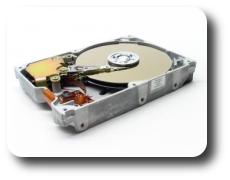
Hard-drives are far more fragile and error-prone than computer users imagine. From my survey amongst friends and colleagues, it appears that almost nobody retains a remote copy of personal data. If errors were ever to strike, the result would be devastating. I have seen people losing their in-progress Ph.D. thesis, Masters dissertation and work documents. All it takes to prevent such tragedies is one of the following routines:
- Backup on CDR.
- Backup using a remote FTP server. To store only the recent differences, search by the
last modified field.
- Free software packages like Rsync.
- Occasional hard-drive to hard-drive copy/mirror (volume sharing, redundancy).
Sunday, January 9th, 2005, 12:08 pm
 Many of us undervalue the amount of data which is available owing to technology. Eavesdropping became only a time investment issue in a world where every event is recorded with the aid of brute-force. As an example, from the month of December I have a 20+ MB text file which contains everything one needs to know. Webmasters do not bother investigating such files and neither do I. I only suggest that everyone becomes aware of the following:
In cases where curiosity pushes its limits or even wrong-doing is considered, someone, somewhere will be able to retrace your steps. In this cyber-space where privacy is compromised, always be cautious and remember which Internet domain you go under.
Example: Whatever you search Google for will become visible to others; not only to Google employees, but also to sites you subsequently enter. Familiarise yourself with the rules of the ‘game’. Be suspicious.
Sunday, January 9th, 2005, 2:25 am
Aren’t we all tired of so-called news that bring us stories about broken homes? Something in the minds of the public yearns for trouble and pain in the life of a celebrity. Indeed Brad Pitt and Jennifer Aniston split up, but are they not entitled to privacy? Much of the media sank to low levels and reported this.
Saturday, January 8th, 2005, 8:05 am
CBS News bring some marvellous pictures from the International Consumer Electronics Show in Las Vegas. Here is one considerable step towards integration of home entertainment and mobile devices:

…Consumers have already shown an appetite for mobile e-mail, Web browsing, music and video games, but many experts view the public fascination with TV and movies as an especially potent lure for premium wireless services…

Friday, January 7th, 2005, 10:37 am
This morning I wrote my first piece of PHP. I can now see why it has been awarded ‘Programming Language of 2004′. Truly deserved. For the curious, the code rotates banners in my front page depending on the time of the day. Below lies an example.
 Picture at 10AM GMT
Friday, January 7th, 2005, 12:44 am
 Scott Tobkes sent me an article from the Herald Sun and here are the interesting bits:
During a demonstration of digital photography with a soon-to-be-released Nikon camera, a Windows Media Centre PC froze and wouldn’t respond Mr Gates’s efforts to push the remote control.

Later in the 90-minute presentation, a product manager demonstrated the ostensible user-friendliness of a new video game, but the computer monitor displayed the dreaded “blue screen of death” and warned, “out of system memory”.
So, Windows is stable when put in the right hands. Correct?
Thursday, January 6th, 2005, 3:28 pm
Some excellent spam advice was passed on to me by a technology-savvy client at work. Because it has been exceptionally successful, I would like to share it:
Set up distinct E-mail accounts that are intended for (at most):
- Colleagues, family and friends
- Mailing lists
- Newsgroups
- Public enquiries, e.g. directories, Web pages
Additionally, if you can have a catch-all account, give out different E-mail addresses for different purposes and leave all messages in the same ‘pool’ (mail forwarding can be used to centralise all messages as well). If one account gets abused, it can be separated out by instantiation of its address (or by breakage of some forwarders).
 Separating boxes is the key


 Filed under: