Introduction About Site Map

XML
RSS 2 Feed RSS 2 Feed
Navigation

Main Page | Blog Index

Archive for the ‘Windows’ Category

Microsoft Target IBM

Bill Gates
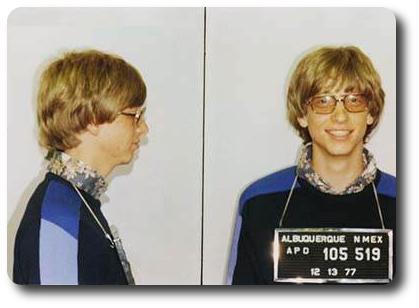
Bill Gates arrested in his younger days (photo in public domain)

WHILE one of the biggest direct threats to Microsoft is Linux (among Linux laptops in poor countries, Google on Linux), IBM are yet the biggest threat. IBM continue to urge businesses to find cheaper solutions and make use of Linux. IBM’s revenue from Linux is expected to triple within the coming year, too.

Microsoft’s latest response is an initiative to challenge IBM on their own turf, according to last night’s news. In other words, making software recommendations to customers is a task the could be delegated to a vendor. This is worrisome, to say the least.

Rise of the Zombies

ONCE again, a timely article that covers zombies (and so-called “bot armies”) — these which are being used to carry distributed denial of service (DDOS) attacks — fails to point out an important and crucial fact. It is only Windows computers that get hijacked en masse as part of extortion schemes. Snippet from the article lies below:

A new kind of denial-of-service attack has emerged that delivers a heftier blow to organizations’ systems than previously seen DOS threats, according to VeriSign’s security chief.

Not even once did the author mention the culprit. This is the third such article I come across which neither includes the word “Windows”, nor does it allude to “Microsoft” in any way. Fortunately, CNET give the E-mail address of the author, so I voiced a complaint. I still get hammered by about a thousand Windows zombies a day, which costs bandwidth. As yet, there is no sign of abatement.

I am aware that most CNET readers are using Windows, so might behave defensively and demand respect for the platform. I am also aware that the Windows EULA forbids such criticisms. Nevertheless, I think the article is flawed.

Here’s my response to the author:

I am somewhat appalled that in your article, much like in many similar articles, the main culprit is not even mentioned. All zombies are Windows. I happen to have strong feelings about this because my site has been attacked since September. The BBC are yet the only ones to have mentioned Windows in this context.

Bill Gates Ridicules $100 Laptop

Bill Gates
Bill Gates arrested in his younger days (photo in public domain)

BILL Gates has found himself subjected to heavy criticism after he had mocked an initiative to give laptops to children in third-world countries. These Linux-powered laptops were mentioned several time before in this blog. They could potentially reach half a billion children within a few years and achieve connectivity in a peer-to-peer fashion, which makes them very affordable.

To make matters worse, while mocking the low-cost laptop, Gates pulled out his own little gadget and raved about Microsoft’s Origami, as if a circa $1000 computer could ever reach every children in Africa.

PC Sales Slown

Macs cluster

REDUCTION in the number of PC sales is expected for the year to come. As well as an economical study on the matter, one can find the the corresponding evidence in the media.

What does that all mean in terms of people’s software upgrade cycle, as opposed to the hardware cycle? Since the crushing majority of all computers are being sold with Windows pre-installed, this should be good news. Rather than hopping onto a new hardware beast, people could choose operating systems which are less resource-greedy. Ubuntu comes to mind as modest although KDE-based distributions like SuSE (even with some serious ‘eye candy’) should do.

Sales of PCs worldwide will grow at a slower pace in 2006 than in 2005, partly because the replacement cycle for desktop PCs has hit a peak, market researcher Gartner said last week.

[...]

Gartner also warned that worldwide PC shipment growth could fall below the current forecast of 10.7 percent if Microsoft doesn’t set a precise release date for its new Vista operating system and if end users shy away from adopting newly-introduced Intel technologies.

It has been claimed that only half of today’s computers can cope with Windows Vista. No new machines = No Vista, which is encouraging news for the Open Source community.

It is worth mentioning that several countries around the world, government divisions includes, have begun a migration to Linux. Open Source has been making the big headlines recently.

Quick Reboots

Reload

A couple of months back, Vista engineers ere bragging about Intel systems architecture which would enable quick startups from memory. This sounded like “hibernation mode” rather than standby, but it was still used as Windows Vista selling point, alongside updates without reboot. So here we shall address two issues.
Why should one bother rebooting? Linux rarely ever requires it. Frequency of updates is low and the severity of bugs is relatively low. And again, what is there to be gained from quick reboots or even the avoidance of bootstrapping? Saving a minute a couple of times a year? It would probably take longer to just set up such quick startup facilities. The whole scheme is unnecessary with energy saving modes, so again, why ever reboot in the first place? And why bother reducing booting duration?

Google Office in the Making?

Google on a computer screen

SEVERAL months ago, Google’s co-founder denied rumours and shattered hopes of a so-called ‘Google Office’. It was by all means rumoured to be ‘in the works’. This story was alluded to in the context of Web-based Office. This was the time of Web 2.0 and AJAX hype. Many Web 2.0 startups laboured hard on Web-based, Office-like productivity tools, which were (still are) in the making, as well as began to penetrate the commercial market.

As it now turns out, Google indeed enter a territory that could potentially lead to a Web-based Office, directly challenging Microsoft’s Live Office, as well as the existing desktop-bound Office. ‘Live software’, as it has been called, has the intent of complying with Gates’ Web-ward migration memos. This move by Google will urge Microsoft to take their Office tools on-line, thereby making the Web a primary batteground, not out of choice. OpenOffice is yet another threat to Office, yet Microsoft already fight it with dirtier tactics.

Also in the news on Google: GDrive – the upcoming on-line service for storage and backup. It has already become highly controversial due to privacy concerns. The latest of Google Desktop raised similar concerns as Google may hold copies of people’s hard-drives on their servers, making it more susceptible to exposure.

IBM: Linux Migration, Vista Reluctance

Season of the playful penguins
Season of the playful penguins from Oyonale

MERELY anyone who follows the news will have come across this by now. A an intersting rumour, if not an announcement, gree legs and began running wildly. It came from IBM in Germany. It suggested that IBM would be moving to Linux rather than upgrade to Windows Vista. This initiated a storm in a teacup, but finally, IBM make a formal denial. Many questions still hang in the air.

Andreas Pleschek, IBM’s head of open source and Linux technical sales in Northern Europe, was widely misquoted this week as saying that IBM had cancelled its Windows contract with Microsoft as of October.

Retrieval statistics: 21 queries taking a total of 0.091 seconds • Please report low bandwidth using the feedback form
Original styles created by Ian Main (all acknowledgements) • PHP scripts and styles later modified by Roy Schestowitz • Help yourself to a GPL'd copy
|— Proudly powered by W o r d P r e s s — based on a heavily-hacked version 1.2.1 (Mingus) installation —|