Introduction About Site Map

XML
RSS 2 Feed RSS 2 Feed
Navigation

Main Page | Blog Index

Monday, February 20th, 2006, 9:36 am

Shy and Flattered at the Same Time

Roy as a baby
Photo from around 1984

Warning: shameless rave lies below, but it is no lie.

I sometimes wonder how my life would have turned out if I had chosen a different career path. I believe I could stick to a particular sport and make a living out of it. Yesterday, the guy at the cashout (a friendly lad) asked me if I was a bodybuilder, making me shy and flattered at the same time. He then began asking for some general guidance and workout tips, while packing the groceries very slowly with the intention of earning time.

More often than before I find myself giving others advice on fitness, diet and exercise (apart from computers). Yet, on many other occasions I sought help from personal trainers with whom I am in good terms and, as a matter of fact, it was my father who got me started with regular exercise over 10 years ago. So, I merely pass on the experience I have absorbed from others.

This year’s fitness competition is coming up and I am already obliged to sign up and participate. I was the winner in all previous contents among this series, which got me in an ecstatic mood.

Monday, February 20th, 2006, 4:25 am

‘Get the Linux Facts’ Campaign

Servers

IF your business awaits in the crossroad, having to make a choice between Linux and Windows, look no further. There has been a great deal of fuss over biased figures, which falsely showed Linux servers to be weaker than Windows counterparts. Help yourself to the true facts and do not be misled by heavily-funded propaganda.

Open Source Development Labs (OSDL) and member company Levanta have announced the free availability of an Enterprise Management Associates (EMA) study titled “Get the Truth on Linux Management.”The study re-examines previously reported, anti-Linux management claims — deriving updated analysis from in-depth research with more than 200 end users. The “Get the Truth on Linux Management” report is available in its entirety, for free download, at the Levanta website.

Related item: Microsoft-funded Benchmarks

Sunday, February 19th, 2006, 6:53 am

Code Optimisation and Miniature Web Servers

Equation

IN programming, efficiency always entails a cost. Contrariwise, simplified and inefficient code is often easier to understand. Where can balance be found? Can it ever be found? Efficiency is often preferred by so-called ‘power users’, whereas others opt for simplicity. Consequently, when negotiating projects, either at code-level or when deciding on UI design, flame wars may arise among developers or avid users.

Let us consider code optimisation. If the programmer wants to go all the way, (s)he could optimise by shortening variables, removing excessive spaces, and stripping out newlines. In such circumstances, interpreted code will be quicker, albeit less meaningful when an error arises and goes verbose. This is nothing like bytecodes and JIT, but similar rules should apply.

Good code should be well-structured, easily-readable, elegant, and well-documented. If the code is compiled, all comments should definitely stay in tact rather than ever be stripped. Automatic documentation can fit nicely in the source rather than be generated and made peripherally available, e.g. via Web pages. The only exception is debugging ‘bits’, which could definitely slow down program execution. As long as the developer keeps the original and saturated version of the code public, however, nobody need get entangled in closed-source traps.

On to an exciting prediction, with lowered file sizes and optimised code, programs could scale better on Wi-Fi-driven Web servers which run on a PDA in one’s pocket. Such server must be properly taken good care of, as well as the Internet connection, which is as vital as that of a synapse. With the growth of smaller devices, the need for efficiency is better realised.

Saturday, February 18th, 2006, 2:47 pm

The Goobunto Myth

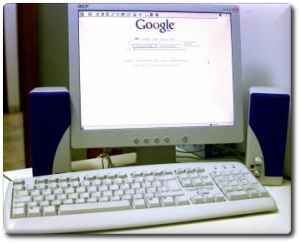
Google on a computer screen

After previous denial by Google as regards the release Ubuntu Linux variants, comes yet another clarification.

Google very likely is using the Ubuntu version of Linux internally, but Ubuntu project founder Mark Shuttleworth said this week he doubts the Internet search giant plans to turn it into a product.

“As far as I’m aware there is absolutely no truth to the rumor that Google plans to distribute a derivative of Ubuntu as a Google OS,” Shuttlworth said on his blog. “As exciting as that may be for Linux, it wouldn’t make sense for Google, and so far they’ve been pretty sensible about their projects.”

“The ‘goobuntu’ you may have heard of is just a modified version of Ubuntu,” he said. “Technically, there’s likely to be a ‘goobian’ and a ‘goohat,’ too,” referring to Linux versions from Debian and Red Hat.

Perhaps it is a shame, given Google’s personnel, skills, and budgets. Then again, no further commercialisation and privatisation of Linux is probably a positive thing.

Items on Goobuntu: Google Controversies, Google: Primary Rumours Victim

Saturday, February 18th, 2006, 5:12 am

Musing De Jour: Telephone vs. Keyboard

Shortcut keysDigits on a telephone’s keypad and keyboard arrangements of numbers (the right-hand-side of standard keyboards) are inconsistent in terms of layout. Have you ever wondered why? I sure has to stop and ponder myself . I tried to flip the telephone upside down to achieve consistency, to no avail. The zero ends up at the wrong end (top) and the whole ‘image’ is reversed; “mirrored”, to be precise.

Isn’t such layout supposed to be standardised for the user’s sake? It definitely simplifies habits and make keypresses more instinctive. There must be some historical motives. The pulse phone and the dial probably predate computer keyboards. In other words, tone dialling with the modern one-stroke input came after computers, so could possibly inherit the same, perfectly-acceptable layout.

Most of us can switch easily between the two layouts. Many use both the phone and the ‘NumLock setting’ on for numerical data entry (highly popular among accountants). I hear that the same arguments apply to alternative layouts of characters, e.g. Dvorak keyboard layout, which need not necessarily interfere with QWERTY habits. QWERTY is an arbitrary scheme, which if I recall correctly was only justifiable as it avoided mechanical collisions in typewriters. It is not optimised for quick input, however, and it almost neglects entirely the frequency of keys being pressed. On the other hand, one must consider the issue of universality since not all languages use a given character at similar frequencies. it all boils down to the question: is greater (keyboard) diversity a positive thing?

Friday, February 17th, 2006, 2:11 am

On the State of Platform Security

Bill Gates

SANY items on security were published last night. Perhaps the most prominent among these was the mentioning of a possible Mac OSX vulnerability (more details here). On yet another front, a ‘bounty hunt’ for Windows critical flaws has begun. Last but not least, Red Hat further beef up Linux desktop security.

Linux appears to be the least notable victim of vulnerabilities, despite the prevalence of Linux (and UNIX derivatives or variants) servers. A survey confirms this while debunking Microsoft’s deceiving, self-funded campaigns, which try to convince people otherwise. With that in mind, Korea plans Linux city and Novell is preparing for the big Linux adoption wave.

Previous items on Windows security (or lack thereof):

On Mac security: the BBC article which begged for an outcry.

Technology commentator Bill Thompson is worried about the lack of herd immunity among his fellow Apple Mac users.

Thursday, February 16th, 2006, 3:56 pm

Oracle Want MySQL

Crystal ball
The Oracle predicts Open Source abundance

In the headlines:

“SAN FRANCISCO–Oracle tried to acquire open-source database maker MySQL, an indication of the profound changes the software giant is willing to make as it adapts to the increasingly significant collaborative programming philosophy.”

Source: CNET

Many questions spring to mind. Among them: are Oracle out of their mind??? They have kept buying Open Source companies ever since that ground-braking statement from Larry Ellion, which called for an Open Source strategy. That recent move probably had many employees sacked, yet it can also be attributed to (or blamed on) a large merger. I personally think it would be interesting to see if Oracle transformed into a new type of company, which heavily relies on Open Source, even more than IBM do.

Oracle databases were lately shown to be poorer in terms of performance when compared against MySQL. Other commercial software fails to keep up with Open Source, so it is one example among several. Will companies like IBM, Red Hat and Novell, who make money out of Open Source, ever become the stalk of a new trend? Is it truly a commercialisation of Open Source, which only Google passionately avoid for the time being? Is it at all acceptable?

Real-time Posts

Posts by @schestowitz

Retrieval statistics: 23 queries taking a total of 0.092 seconds • Please report low bandwidth using the feedback form
Original styles created by Ian Main (all acknowledgements) • PHP scripts and styles later modified by Roy Schestowitz • Help yourself to a GPL'd copy
|— Proudly powered by W o r d P r e s s — based on a heavily-hacked version 1.2.1 (Mingus) installation —|