Introduction About Site Map

XML
RSS 2 Feed RSS 2 Feed
Navigation

Main Page | Blog Index

Monday, June 27th, 2005, 5:00 pm

Googlebot versus MSNBot

Bill Gates
Bill Gates arrested in his younger days (photo in public domain)

An item I have just come across (hat tip Justin Moore) speaks about excluding MSNBot based on poor performance. MSNBot (and Yahoo! likewise) consume a great deal of bandwidth, but are barely used as search engines by the Internet audience.

From Justin:

  • Exhibit A – MSNbot Crawl hits = 9561
  • Bandwidth used = 124.43 MB
  • Visits to wantmoore.com as a results from searches @ Google = 683* [sic.*]
  • Exhibit B – Googlebot Crawl hits = 3415
  • Bandwidth used = 51.74 MB
  • Visits to wantmoore.com as a results from searches @ MSN = 41 [sic.*]

…

So, effective immediately:

  User-agent: MSNBot
  Disallow: /

* Order of the visits is wrong and should be reversed.

I spotted similar statistics on my domain, with Google as the top referrer at almost 20,000 visits/month. MSN remain at a miserable 200 and take almost as much bandwidth as Googlebot. I have plenty of bandwidth to spare; So, I might as well let Microsoft spend crawling time in vain.

Monday, June 27th, 2005, 1:37 pm

Server in a Bubble

Bubble and server

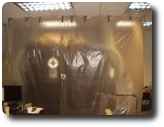
A cheaper method has been suggested for cooling down servers: warpping them in bubbles.

Is it just my imagination or is the wrapping going to warm up the server due to the ‘blanket effect’? If one of these temprature-controlling containers (like the ones astronauts use in space) gets used, does it really save energy?It turns out that air conditioners work on pumping the excess heat from the servers out so that they needn’t cool down the entire room. It makes no difference how warm the room gets outside of the bubbles, but how will the engineers feel about it? I am ‘privileged’ to have experienced the unpleasant feeling one gets in a room with hundreds of racks, namely in Manchester Computing where I work.

Monday, June 27th, 2005, 2:57 am

POVCOMP 2004

POV-Ray, an Open Source 3-D rendering package that could compete with the commercial Maya, was mentioned a while back. Some months ago a competition was run which involved POV-Ray artists and a submissions gallery has been put up.

These images serve as excellent wallpapers. Several images are of very high resolution, which works well on dual-head displays.

Kitchen
Might be hard notice that the kitchen is computer-generated
Work by Jaime Vives Piqueres

Sunday, June 26th, 2005, 1:13 pm

Satellite Maps Hit the World

High-resolution satellite pictures of the States have been available for quite a few months. These have now been extended, by Google Maps, to including other major cities, London and Manchetser included. I took screenshots of places that are familiar to me and marked up my home among other key locations. It now seems obvious how close I live to most places, with the longest walk — to the health club — which takes only 15 minutes.

Google Maps - Manchester
Click map to enlarge

Sunday, June 26th, 2005, 4:52 am

Internet Explorer 7 Screenshots

Flexbeta have published some Internet Explorer 7 screenshots, which were taken in a recent demonstration. RSS will apparently be well-integrated and sit in the core of Longhorn.

Internet Explorer 7 screenshot

Microsoft seem to be catching up and perhaps it is not too late given that Mozilla Firefox has captured only around 10% of the market. A question lingers on in many people’s mind: how can Microsoft ‘inject’ Internet Explorer 7 to the public? They have had a hard time persuading businesses to upgrade their operating system.

One final nugget: Microsoft are trying to break software of their competitors by actually ‘extending’ RSS.

Longhorn

Windows Longhorn: will it sell or perish?

Sunday, June 26th, 2005, 4:02 am

Becoming Robots

Robot-man enhancementScientists in Japan are developing equipment that can enhance human strength. Awkward as it may seem, such developments might have a positive impact. Robotic assistance to one’s muscles means that more elderly and disabled people will walk up the stairs without great difficulties. One the other hand, when power suits like that get misused, they can make us appear like bunch of supermen, powered by batteries. This funny item from the Onion in 2056 comes to mind.
Picture and information from robotory.com.


Saturday, June 25th, 2005, 12:58 pm

Music Log Files

Ever wondered how much you listened to a particular song?

XMMS possesses a great extent of flexibility. It provides facilities which, when customised appropriately, can dump complete song descriptions. XMMS can then progressively, accumulatively add song data to log files. Timestamps imply the duration of listening, which lead to possible future extensions, e.g.:

  • Automatically parse (scan, hash, then analyse) the log file/s
  • Compute an average listening time — that is before skipping to another track — for each individual song
  • Erase music that is frequently skipped or just output a ‘prospective deletion list’ to another file

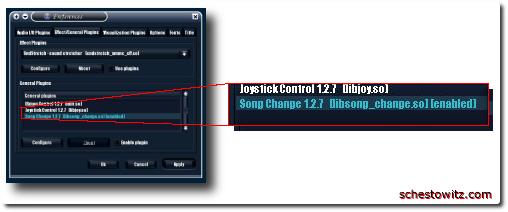
Input/output operations are made quite simple. These can be invoked as command-line strings whenever a new track begins. It is a built-in XMMS plug-in, which can be found under Preferences » Song Change » Configure (see illustration below)

XMMS menu

Add the following line to the “Song change” Command field:

(date; echo %s) >> ~/My_playlists/playlist.log

XMMS KDEI am providing an example log file, assembled naturally (not artificially. Honest!) over 20 minutes or so. I still need to get rid of the doubly appearances, apparently caused by xmms-kde in my dock (screenshot on the right). As well as giving a minimal user interface, xmms-kde enables control of the player with CTRL+SHIFT+keypad even if the player is neither visible nor in focus.

A music log file results in even more redundant data to store. According to a rough calculations, I will see it growing by 1 megabyte every month or so. Compression, however, should make it only 10-20% of its original size.

UPDATE 26/06/2005: The following command, which can be set to become a nightly cron job, will slice the large log file so that it is composed of daily ‘chunks’:

mv ~/[Path]/playlist.log ~/[Path]/playlist-`date +%Y-%m-%d`.log

This can be extended to form an annual and monthly hierarchy of directories.

See the later extension: producing history spreadsheets

Real-time Posts

Posts by @schestowitz

Retrieval statistics: 23 queries taking a total of 0.100 seconds • Please report low bandwidth using the feedback form
Original styles created by Ian Main (all acknowledgements) • PHP scripts and styles later modified by Roy Schestowitz • Help yourself to a GPL'd copy
|— Proudly powered by W o r d P r e s s — based on a heavily-hacked version 1.2.1 (Mingus) installation —|