Introduction About Site Map

XML
RSS 2 Feed RSS 2 Feed
Navigation

Main Page | Blog Index

Sunday, November 6th, 2005, 11:52 pm

Google as the Shopper’s Reference

Google Suggest
Although Google Suggest is a separate (yet tight) extension of the
search bar, its name reflects on reason for fear among giants like Wal-Mart

THE New York Times discusses the effect of ‘Googling’ things on industry. The article broadens its scope to discuss the small, the large and the intimidatingly large-scale impact.

Since many people begin their Web surfing with Google’s search page, information (or global knowledge) is somewhat controlled and centralised in Google’s datacentres. Search engines are able to provide advice to their consumers, much like trusted peers. With search engine optimisation there can be bias, which is dangerous. Moreover, with bad publicity in blogs and forums, many companies become overly concerned.

Wal-Mart, the nation’s largest retailer, often intimidates its competitors and suppliers. Makers of goods from diapers to DVD’s must cater to its whims. But there is one company that even Wal-Mart eyes warily these days: Google, a seven-year-old business in a seemingly distant industry.

…

Wal-Mart is scarcely alone in its concern. As Google increasingly becomes the starting point for finding information and buying products and services, companies that even a year ago did not see themselves as competing with Google are beginning to view the company with some angst – mixed with admiration.

…

Google, the reigning giant of Web search, could extend its economic reach in the next few years as more people get high-speed Internet service and cellphones become full-fledged search tools, according to analysts. And ever-smarter software, they say, will cull and organize larger and larger digital storehouses of news, images, real estate listings and traffic reports, delivering results that are more like the advice of a trusted human expert.

Found yesterday in Dave Winer’s blog

Sunday, November 6th, 2005, 1:10 pm

Google Reward for Firefox Downloads

Firefox in the dock
Google determinded to pull Firefox out of the bag

Earlier today I came across this observation in Slashdot:

slashkitty writes “Google updated their AdSense service to pay publishers for referrals. What’s interesting is that now they pay publishers $1 US for each FireFox download with the Google Toolbar installed. Is this the bump that Firefox needs to boost downloads? Will Google be able to pay the millions for all the downloads?”

I am very glad that Google promote Firefox. I love Firefox and have admiration for Google, but I cannot help wondering if this becomes similar to kickbacks among Microsoft and hardware vendors. Free software is one thing. Being rewarded for using a piece of software means that deep pockets warrant prolification. This might also, under particular circumstances, lead to lock-in of data and habits.

Related item: Google Goes Firefox-Only?

Sunday, November 6th, 2005, 2:53 am

Proofreading Habits

Book scanning

ONE fact which I am fully aware of is that I have typos in my blog. That is much as I expect. I regularly spot these when it is already too late to be worthwhile correcting.

I would like to write a few words on the way I check for the correctness of text. Before publishing an item in the blog, I read the whole message entirely (single proofreading pass), which includes a slack glance at the markup. Having done so, I quickly spellcheck the text and then validate the markup in order to spot structural inconsistencies or typos in the markup. Lastly, I have another quick and sloppy read, which assumes the first read was sufficient for eradication of typos.

¨Life is too short to proofread¨ is a quote/motto that I go by. ‘Typo paranoia’ can be time-consuming and is by no means enjoyable either. I am more lenient and sloppy when it comes to E-mail, mailing lists and newsgroups, with an exception where my bosses are involved. I rely mainly on the spellchecker and sometimes I re-read the text once, at the very end. By worrying less, I increase my capacity for writing, at the expense of quality.

Saturday, November 5th, 2005, 12:58 pm

Vista/IE7 Only to Support Valid Feeds

FeedLounge

FeedLounge: one among many (Web)
applications which tolerate invalid feeds

SHEER hypocrisy is the only way one can describe the latest statement from Microsoft’s RSS team. Microsoft have broken and ignored many International standards over the years. This caused many application to malfunction even when they stuck with standards. Now, when matters do not suit them, Microsoft decide to say farewell to feeds that are not well-formed XML [rel="nofollow"]. Many projects, even the tiniest among them, have tolerated malformed RSS feeds. Yet, this appear to be too much to ask from biggest standards-breaking criminal of all.
Potentially, Windows Vista and Internet Explorer 7 will simply refuse to handle anything that does not adhere to or complies with standards. Need I even mention that Microsoft are set to ‘extend’ RSS, thus breaking RSS protocols?

Our years of experience in with HTML in Internet Explorer have taught us the long-term pain that results from being too liberal with what you accept from others. Hence, we%u2019ve adopted the following overriding principle for IE 7 and RSS platform in Windows Vista:

We will only support feeds that are well-formed XML.

Saturday, November 5th, 2005, 4:45 am

Microsoft Gain Full Control of Platform?

Bill Gates
All your bases to belong to Gates

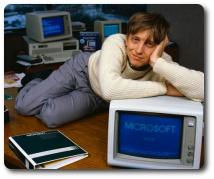
I recently wrote about Microsoft Singularity O/S and the implication it may have on the slightly shattered Longhorn/Vista. As a new initiative is launched off the ground, I immediately get unnerving reflexes. What is most disturbing is Microsoft’s history of pushing companies away from their platform in what can be described as the “embrace, extend and extinguish” tactic. Will Singularity make the transition in strategy, namely being more ‘kind’ to third-party software, or will it only re-enforce the ‘iron fist’ regime and render third-parties obsolete?

Microsoft’s history and current practices have led to friction with the European Commission. With anti-trust ignited in Korea lately, some speculate that it could lead to a quicker spread of Linux in far east Asia. Korea have requested the removal of some bundled, pre-installed software. Microsoft, in turn, threatened to take their toys and go back home.

More recently we heard that Microsoft will push towards their own implementation of anti-virus software for their own platform. By doing so, they are pushing aside companies and vendors that have taken care of that market so far, essentially making up for Microsoft’s mistakes and flaws. Ironically, Microsoft will have incentive for bug creation. After all, it will be them who can charge to have that fixed, by selling anti-virus software. In recent hours we have heard about Microsoft’s entry into VoIP — the means being a takeover of another small company.

Microsoft Office 12 is said to support PDF creation in the trunk, which has so far been possible only using Adobe’s professional and premium software. Thus, Microsoft merely take food from the mouths of Adobe developers, much like they did to Netscape. They seem determinded to intercept or steal the popular PDF format. Office which exports PDF’s is merely an unneeded bloat, as well as an imitation (see screenshot alongside more examples). For imitation and theft, Microsoft have recently lost some cases in court too. Office is no more functional than Open Office, which many still wrongly perceive as Office in a brown paperbag. Office itself evolved from existing applications that emerged in the 70′s and 80′s and it continues to be the primary money-making cow.

Any innovative software on the Windows platform is pushed outside by imitation, bundling, extension and introduction of mysterious proprietary formats. Adobe, a giant that has merged with Macromedia, are facing yet another threat from Microsoft — a Flash alternative.

Some would say that Microsoft also snub OpenGL in their next version of Windows, possibly to be dropped in favour of Microsoft´s DirectX. Some time ago I read that no support for Palm handhelds will be included in Vista either. As for the ‘Internet front’, there seems to be a push towards ASP and .Net, not to mention opaque sites that are made strictly MSIE-compatible.

What will Microsoft do about Google Desktop 2, which has just come out? Google appear to invade Microsoft’s territory and I can’t imagine that Microsoft are too happy about it. In fact, Google are their worst fear (confer Winner Takes All). The year to come will be an intersting one to observe. With Linux, Firefox and Google (among many more) spreading and reaching Average Joe’s desktop, we are yet to see changes that are difficult to ignore.

Related items:

Recommended (contextually-related) reading:

Friday, November 4th, 2005, 4:18 pm

Supercomputing and Medical Imaging

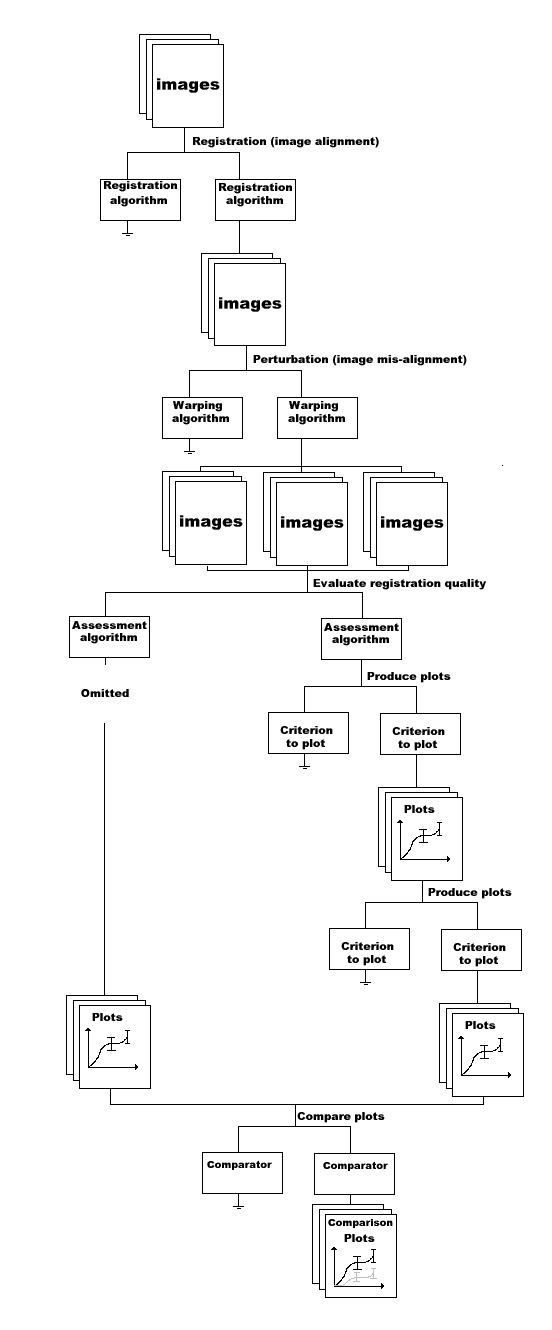
THIS item is about my personal research and, in particular, its recent development and progression, which may take it in a different and exciting direction. I currently work on assessment of registration algorithms, which I have described in some depth over at MARS — my research-related publishing platform. The latest item discusses everything at a more technical level.

Below lies the diagram which describes a possible framework, which is still at its ‘propsal stage’. The ultimate aim is to provide an e-Science workbench for medical image analysis. My experiments account for a mere subset, where image/volume sequences need be aligned.

Registration framework
Click image for full-sized version

Friday, November 4th, 2005, 10:36 am

Google Blind to Controversy

Book shelfThe memo/statement titled “Reining in Google” is becoming rather popular in cyberspace. It discusses Google’s attempt to re-write copyright laws or at least reach a point of acceptance through persistence. They have already begun scanning books in 3 large libraries despite the looming lawsuits. I recently mentioned an item which Google had posted in defence of Google Print, but has it not gone out-of-hand already?

Where is the Google that I used to know? The Google that vowed not to do evil and even considered employing me as a system administrator. I am filled with mixed emotions. Before the IPO, Google reflected on Page and Brin. It is now that lunatic Schmidt and thousands of greedy investors.

UPDATE (05/11/2005): With reference to a previous mentioning of Microsoft book scanning, it is now official. Microsoft begin digitising books as well.

Real-time Posts

Posts by @schestowitz

Retrieval statistics: 23 queries taking a total of 0.112 seconds • Please report low bandwidth using the feedback form
Original styles created by Ian Main (all acknowledgements) • PHP scripts and styles later modified by Roy Schestowitz • Help yourself to a GPL'd copy
|— Proudly powered by W o r d P r e s s — based on a heavily-hacked version 1.2.1 (Mingus) installation —|