Sunday, January 15th, 2006, 10:27 am
 Season of the playful penguins from Oyonale
 ECENTLY, there have been various articles about the need for Linux in China. It is a rapidly-growing country where roughly 90% of software involves piracy. The Chinese have just committed themselves to contributing to Linux enormously.
The world’s second Linux international standard testing lab was set up in China’s capital of Beijing on Friday.
Sponsored by China’s Information Industry Ministry, the lab was jointly established by China Electronics Standardization Institute (CESI) and Intel Corporation.
Saturday, January 14th, 2006, 8:16 pm

‘You want the truth? You can’t handle the truth!”
 ARTICULAR behavioural patterns (exclusively in humans) can become rather intriguing. In support, for instance, sometimes you give people an honest answer and that answer is not what they were wishing to hear. They then attempt to challenge your analysis, of which you are certain. Hopefully for them, eventually this analysis will be changed or at the least softened. The adamant mind does not permit for inner conflicts.
Finally, that ‘status-quo’ suits their wishful thinking, so the answer becomes a reality or sometimes stands, at least in their own stubborn minds. It is a deliberate obfuscation of the truth, from which many are fearful. This explains many bad habits and detriments in society: design choices, war, smoking.
Let us learn to listen, to accept and to embrace.
Saturday, January 14th, 2006, 10:55 am

 HAT if we ever reached a state where we had full ‘O/S freedom of choice’? What if we were endowed freedom as to which operating system got used on any machine whenever booting?
It wasn’t too long ago that Ubuntu made a version of Linux which is compatible with PowerPC, which made Ubuntu runnable on older (and otherwise legacy) Macs. It also wasn’t too long ago that Mac unveiled their Intel-based Macs, which makes them accessible to both Linux and Windows, or various different versions of Windows, or different Linux distributions. This also caters for seamless purposeless separation into several partitions, provided some partitioning software.
Some time in the past, shortly after Apple had announced their move to Intel chips, people ran Mac OS X on standard (non-Apple) hardware, which was not as expensive as that which is typically provided by Apple Computers. It is now reported that a certain proportion of all Mac users might opt to dual-boot their Macs. This way, they can run Windows, as well as the native operating system in tandem.
Dual-partition and dual-boot hard-drives have become rather common in recent years, predominantly owing to progressive and staged Linux migrations. It is probably only a matter of time until triple-boot machines become widespread. Such machines would run Linux, Mac OS, and Windows. It is an interesting vision. Legally, the three could only be run on Apple hardware, but in practice, who can tell?
Michael Dell once offered Steve Jobs to port Mac OS X and have it run on Dell hardware. Is the vision of Mac OS on potentially any computer (also legally so) nearing a reality?
Saturday, January 14th, 2006, 7:36 am
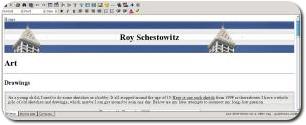 WYSI(not)WYG, so better use plain-text (click to enlarge)
 HERE is most definitely no perfect editor, regardless of which platform one uses. Nonetheless, while Linux has some very powerful text editors, different ones should be used under different circumstances. In this item, I concentrate on editors (primarily my favourite one) for development work.
If one ever made a transition to Linux, my suggestion for an editor would be Kate/KWrite, among more. KWrite, which is the editing component of Kate (typically KDE-only), is a good editor for developers — either Web developers or programmers. KWrite incorporates knowledge of markup and syntax for many programming languages, which would be valuable to the P/L-polyglots.
I recently made a permanent transition to KWrite and I continue to explore Kate, which integrates seamlessly with FTP, much like the rest of the desktop environment. It becomes an important trait if you develop on a remote computer, which for me is essential due to parallel computing.
The MATLAB editor, for example, I recently conceded in favour of KWrite. It was slow and it hadawkward and unconventional keyboard accelerators, probably owing to interoperability. The accelerators were an oddity and a real pain to adapt to. Above all, the editor was an unbelievable bloat over SSH. It was not too responsive, yet it had built-in debugging capabilities, which I never bothered to use as it had been aimed at unexperienced users.
BBedit is said to be a good editor for developers on the Mac, but it is costly. For Windows, there are many free editors that replace the weak Notepad — that which is included by default in Windows.
Friday, January 13th, 2006, 5:34 pm
LUG-INS have become very popular among Open Source projects. They enable an application to be extended endlessly by its community without getting bloated at the very core. At present, you can come across a large variety of plug-ins for the Mozilla family and many of these plug-ins tend to be more playful than practical. They serve no pragmatic purpose or even a purpose other than amusement. Most of them offer nothing beyond an enjoyable 1-minute time-burning. Examples from Mozilla Firefox:
- Extension to display your IP address
- Extension to diplay the Google icon in the status bar whenever you visit Google
- National security threat level in your panel
All of these plug-ins simply do what they claims to be doing. No more, no less. These are ‘proof of concept’ examples; very basic examples, almost as fundamental as the infamous “hello world”, but ones which exploit the Firefox API‘s for independent developers. These often get unjustifiable low ranks, which criticise their presence rather than quality. This bugs me at times.
Plug-ins are indeed sometimes pointless, but they should do what they say on the tin. Why do people install such plug-ins and then whine about them? If you don’t need a plug-in, don’t get it installed in the first place, I say. I continue to see review of what is admittedly incomplete or lacking. Better not review or not download literature and code if the description does not sound pleasing. Review is unfortunately used as means of punishment for time-consuming activities or dissapointments, which were all along called for (and voluntary). Rank, popularity and value must be separated altogether.
Friday, January 13th, 2006, 7:55 am
If you are switching from Windows to Linux, be warned. An independent, small-scale study concludes that migrating from Linux (back) to Windows is hard. As Windows lacks the power and user-friendliness that Linux offers, frustration should be anticipated.
 A similar and older article uses sarcasm and outlines reasons not to use Linux. In practice, both articles which are cynical serve as primers to the advantages of using Linux.
If you choose to upgrade to Linux, be aware that rather than reading surveys, you can use a questionnaire-type utility to determine which Linux distribution suits you best.
Also see: 25 Reasons to Convert to Linux
Friday, January 13th, 2006, 3:01 am

One of the most unusual drives
 T is worth bringing to people’s attention a new concept in computing: portable applications. Applications reside on a USB drive and can be run and used anywhere, any time on any modern computer which is capable of a USB boot. Data files can be stored on the device, unlike for example, most Live CD’s. The portable application Web site offers a large variety of programs. Below is the list of portable applications with equivalents on Sourceforge, some of which are under development:
- For browsing: Firefox
- For communication: Gaim
- For Web development/design: NVU
- As an office productivity tool: OpenOffice.org and AbiWord
- For diary/scheduling/PIM: Sunbird
- As a mail client: Thunderbird
It is not only applications that get mounted onto USB devices nowadays. Entire operating systems, notably Linux distributions, have become portable as well. I once mentioned this as an expectation for he near future in Computers as Relics and Computer Become Host. That’s where I expressed similar ideas that envisioned a USB-based or portable hard-drive-based operating systems. The concepts, which are very reminiscent of a Live CD, were brought to my attention via a reader’s comment.


 Filed under: